

Quick answer: what do these channel letter manufacturing cases show?
These factory process cases show how HLW Sign approaches four real letter constructions: trimless front-lit letters, backlit halo letters, front-perforated starry letters and side-perforated RGB letters. Each case lists the verified material, size, stroke, depth and lighting starting points. They are manufacturing references, not fictional client case studies.
The purpose of this page is to show the construction logic behind the product range, not to publish invented customer names, locations or performance results. A true client case study requires approved project photos and real installation information. These factory references are useful for designers, installers and importers who need to understand what is being built and what must be checked before production.
Case 1: trimless front-lit channel letters


Verified construction range
- Face: 5, 8, 10, 12 or 15 mm acrylic.
- Minimum stroke: 20 mm.
- Character height: standard English letters from 70 mm; artistic fonts from 200 mm.
- Return: 50 mm at 20–40 cm; 60 mm at 40–60 cm; 60–80 mm at 60–70 cm; 80–100 mm above 70 cm.
- Available body material: galvanized steel, stainless steel or aluminium.
- Outdoor option: waterproof LEDs, sealed wiring and outdoor-rated power supplies.
This case demonstrates why a trimless face cannot be specified from a font size alone. The face needs enough internal LED and wiring space, and the acrylic must maintain a clean, even appearance at the selected depth. Read the trimless channel letter product specification for the complete product detail.
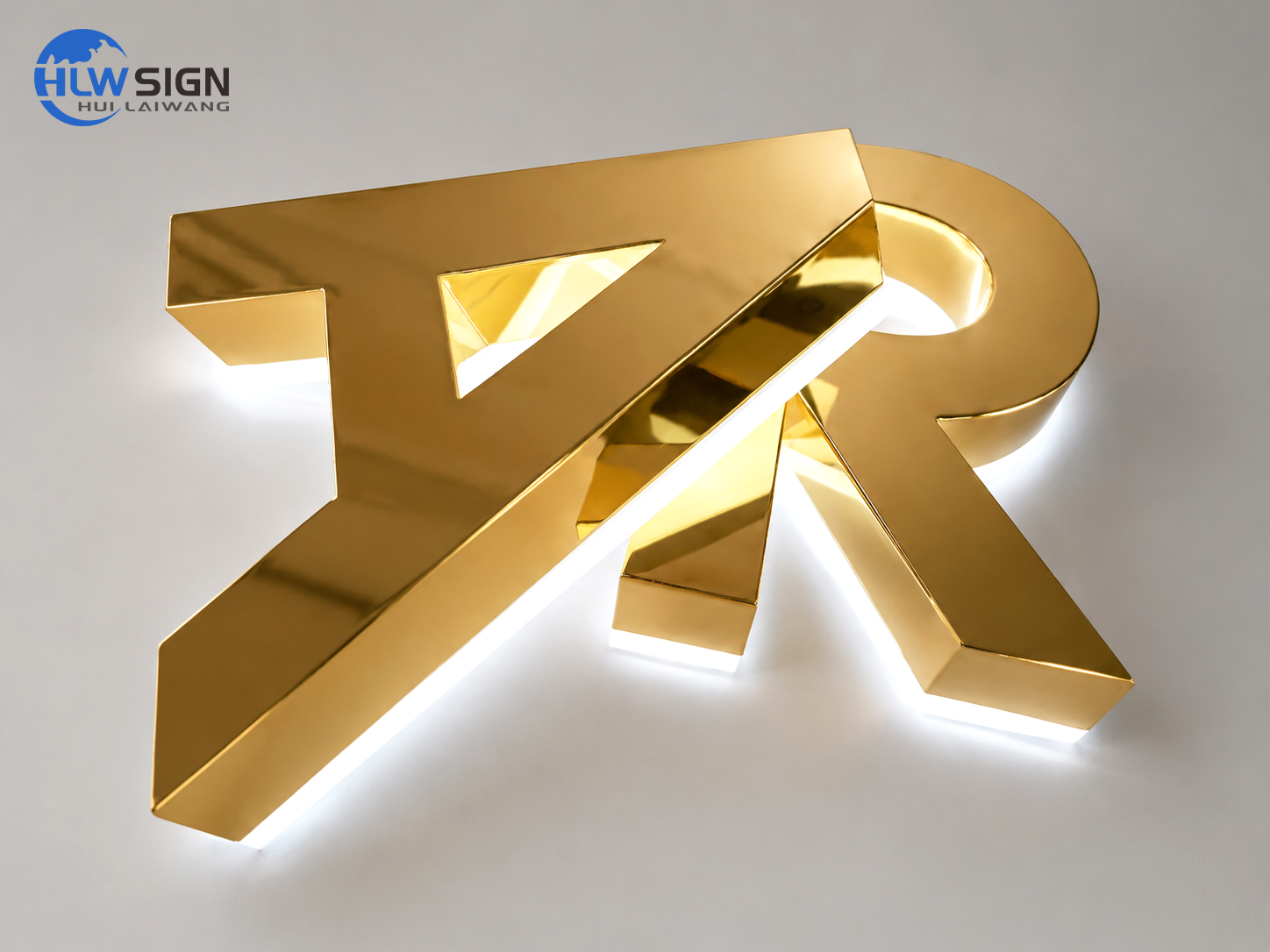
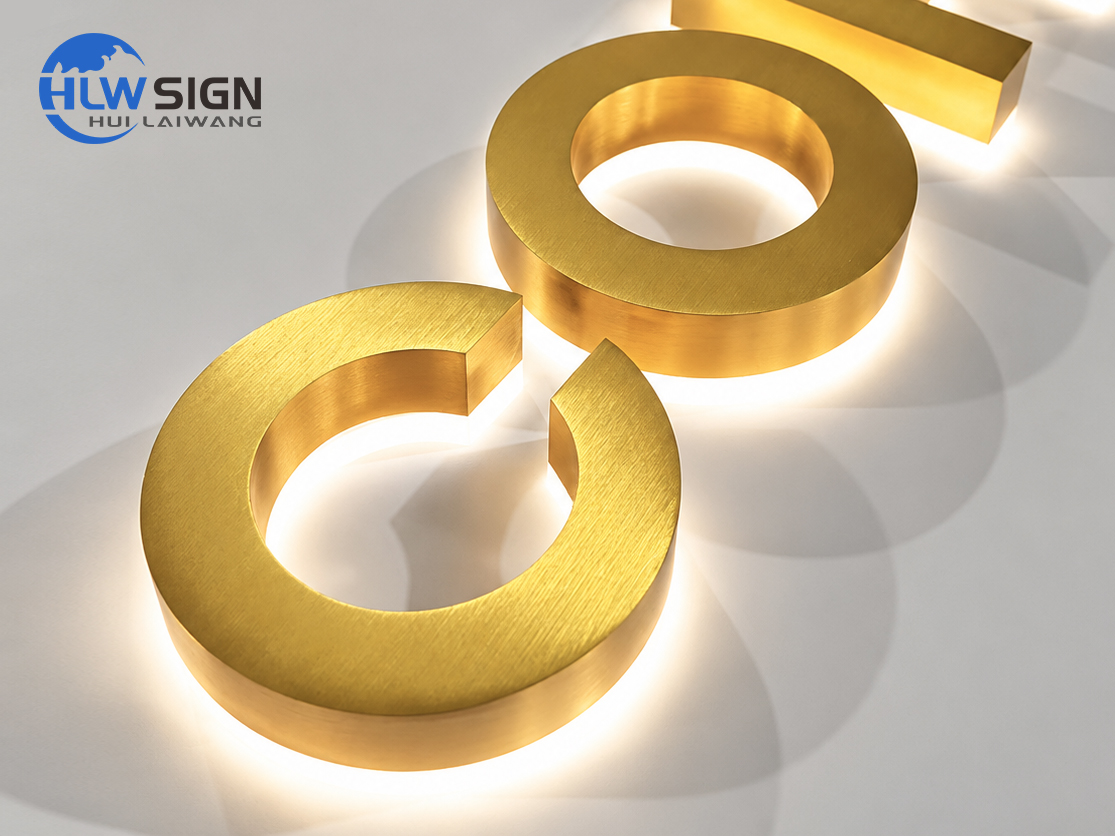
Case 2: backlit halo letters with frosted acrylic
Verified construction range
- Face and back panel: 12, 15 or 20 mm frosted transparent acrylic.
- Minimum stroke: 10 mm.
- Character height: sans-serif English over 60 mm; artistic fonts from 150 mm; heights above 1,200 mm require structural review.
- Return: 20 mm at 10–40 cm; 30 mm at 40–60 cm; 40 mm at 60–80 cm; 50 mm above 80 cm.
- Body: stainless steel or aluminium structure.
- Halo gap planning: 20–30 mm for a tight indoor halo, 40–60 mm for a balanced halo and 70–100 mm for a softer exterior effect.
This case demonstrates the difference between return depth and halo gap. A deeper return does not automatically create a better halo; the LED pitch, diffuser, wall finish and viewing distance must be matched. See the backlit halo gap guide for the full decision process.
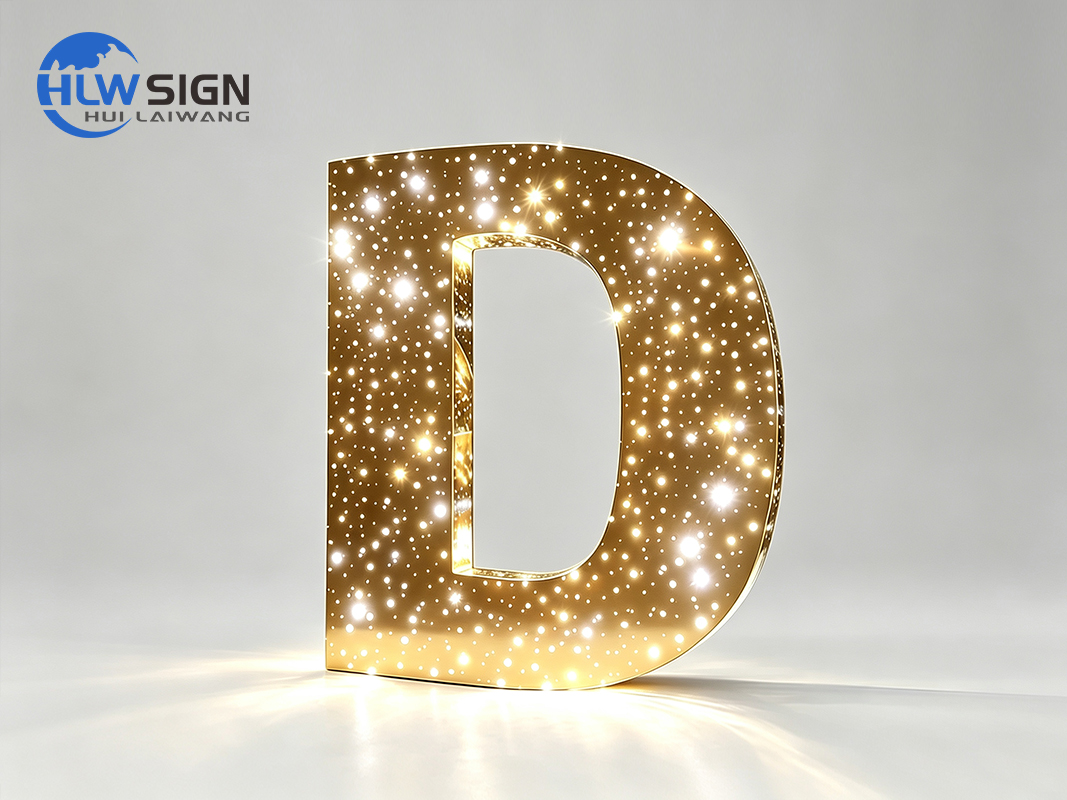
Case 3: front-perforated starry letters
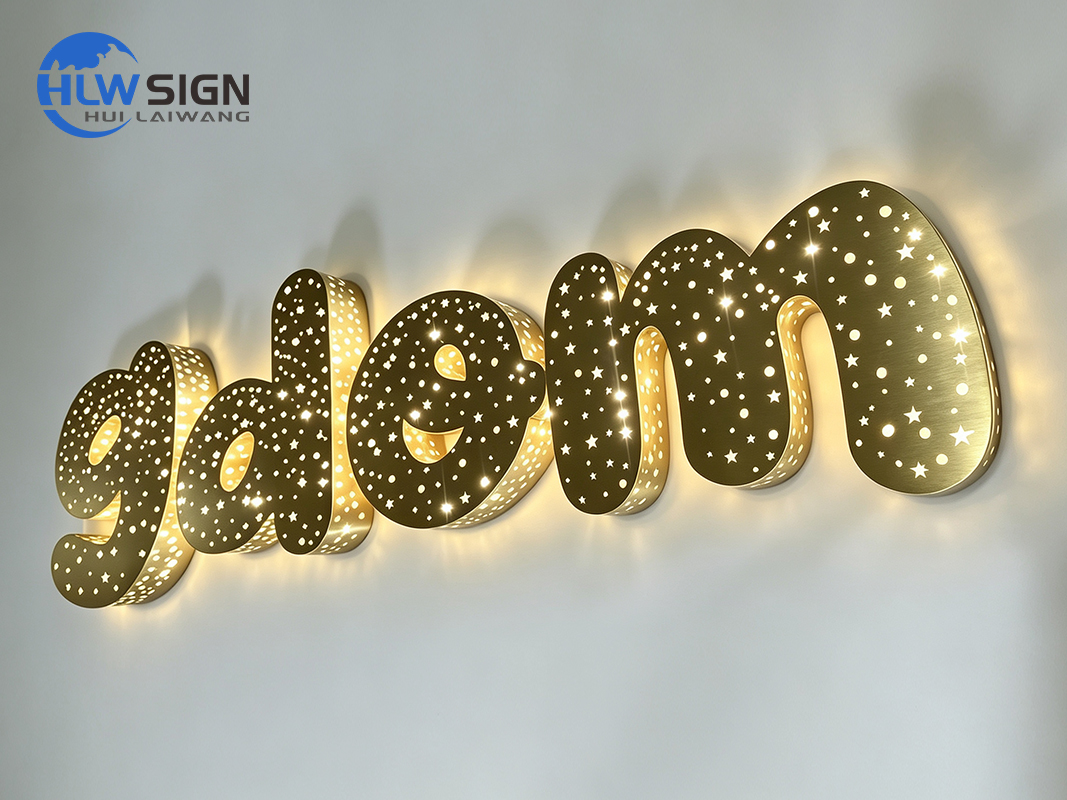
Verified construction range
- Front panel: 1.0 mm stainless steel.
- Metal returns: 0.6 mm stainless steel.
- Back panel: PVC or galvanized steel.
- Minimum stroke: 10 mm, subject to the pattern and internal LED space.
- Character height: bold English over 60 mm; artistic fonts from 150 mm.
- Return: 20 mm at 10–40 cm; 30 mm at 40–60 cm; 40 mm at 60–80 cm; 50 mm above 80 cm.
This case demonstrates why a starry pattern is a production drawing, not a generic texture applied to a letter. The hole layout must leave enough structure around the openings and enough internal room for the LED modules and wiring. See the front-perforated starry letter specification and the complete starry effect guide.
Case 4: side-perforated starry and RGB letters
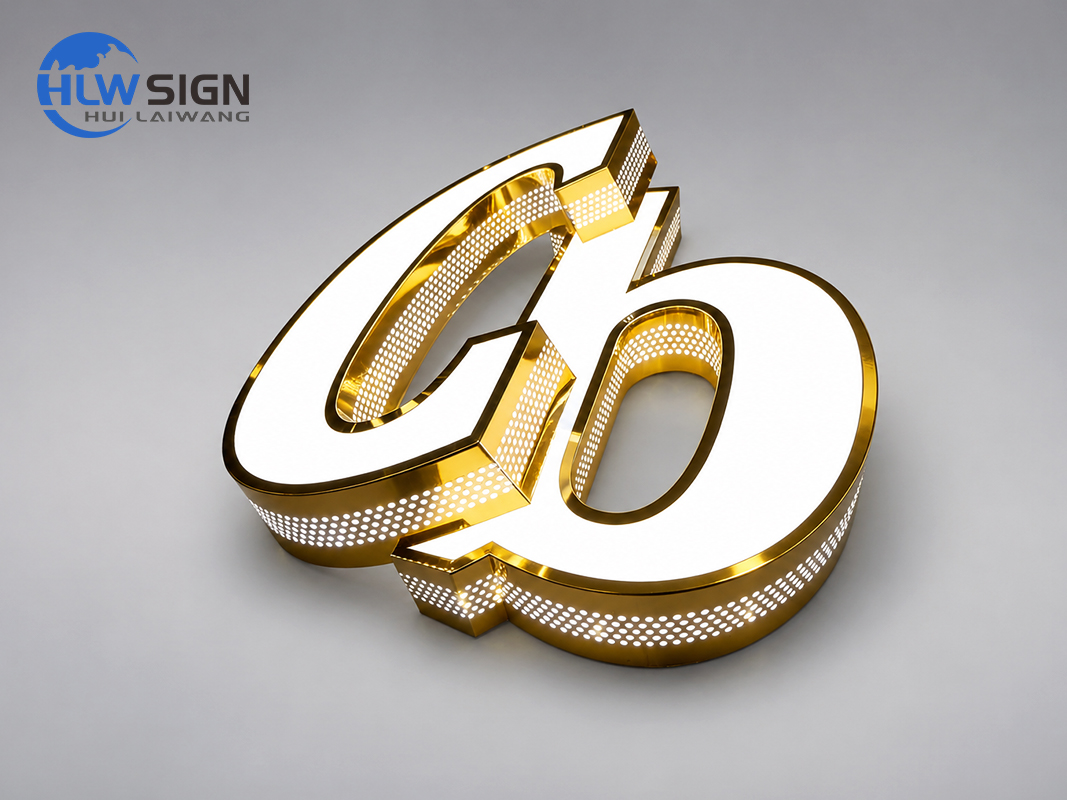
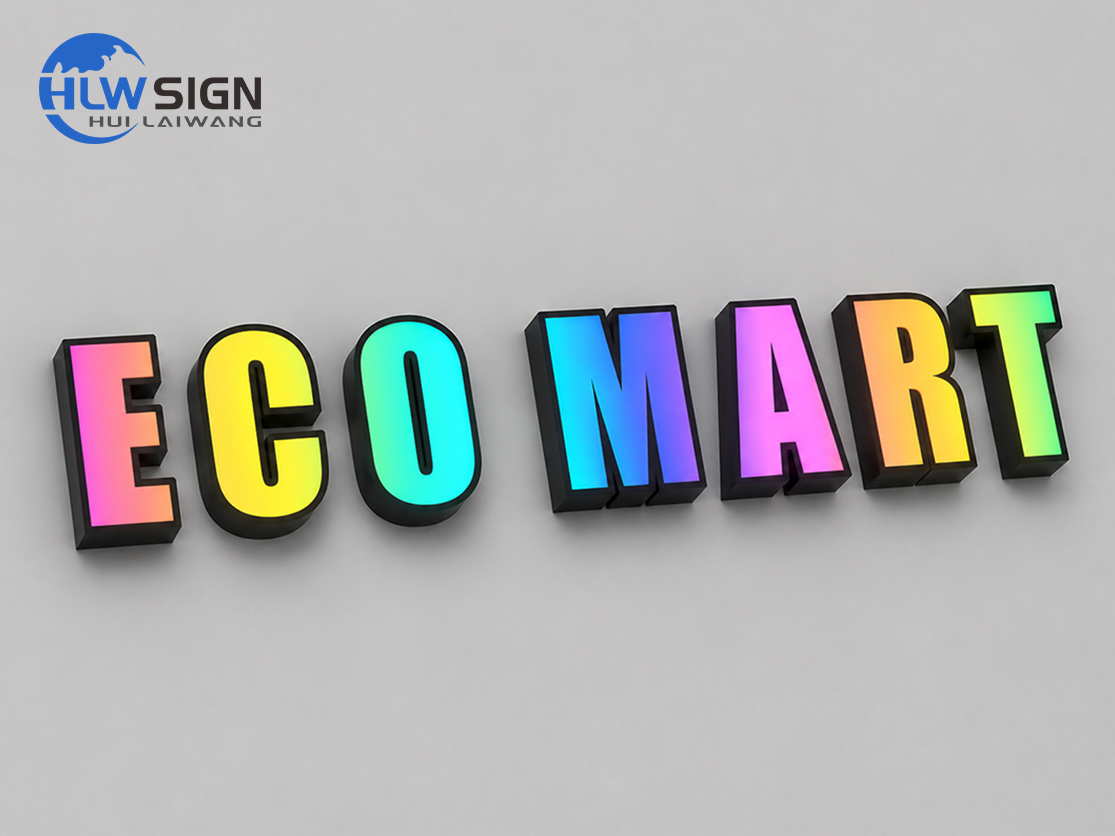
Verified construction range
- Face: 3–5 mm acrylic with perforated stainless-steel sides.
- Lighting: single-colour or RGB LED strips; RGB options use 12 V or 24 V modules and a compatible DMX/TTL/SPI controller.
- Minimum stroke: 20 mm for the side-perforated construction.
- Character height: standard English from 70 mm; artistic fonts from 200 mm.
- Return: 50 mm at 20–40 cm; 60 mm at 40–60 cm; 60–80 mm at 60–70 cm; 80–100 mm above 70 cm.
- RGB LED planning: 15–20 mm standard pitch or ≤10 mm high-density option; overall RGB letter thickness typically 22–30 mm.
This case demonstrates how lighting architecture changes the fabrication. A fixed-white sign can use a simple driver and fixed LED layout. RGB and RGBW signs need channel capacity, scene control, voltage-drop planning and a serviceable controller location. See the side-perforated product specification and the RGB, RGBW and RGBIC comparison.
What is checked before release?
| Check | Why it matters | Evidence requested |
|---|---|---|
| Vector artwork and stroke | Confirms that the logo can accommodate LEDs and internal wiring | Approved vector file and dimension drawing |
| Lighting layout | Controls brightness uniformity and avoids dark strokes | LED pitch, module type and driver load |
| Return depth | Affects the face, halo, structure and installation distance | Dimensioned shop drawing |
| IP and wiring | Matches the complete sign to the real exposure | Module rating, cable entries, sealing and drainage |
| Finish and face protection | Controls scratches, colour and long-term appearance | Material sample, finish photo and film specification |
| Export packing | Protects faces, returns, wiring and accessories in transit | Packing drawing and staged photos |
The channel letter specification builder can turn a basic brief into a starting specification, and the technical reference provides the wider material and export tables.
Important scope note
These are factory process references, not fake customer stories. We do not publish a client name, city, project result or installation date unless the evidence and approval exist. When a real project is available, the same structure can be expanded into a full case study with properly credited photos, actual dimensions and installation details.
For a new build, send the vector logo, dimensions, facade photo, installation exposure, destination country and required lighting effect through our project enquiry form. Installers and distributors can also use the trade partner enquiry route.