
Choosing a light box sign for a shop is mostly a mounting decision. The same graphic can become a double-sided side-mounted box that projects over a pavement, a slim wall-mounted panel in a reception area, or a suspended hanging box in a mall. Each format changes the viewing angle, light spread, structure and maintenance access.
This guide compares outdoor side-mounted, indoor wall-mounted and hanging light boxes, the metal cutout and acrylic print options used on each, and the details that decide whether the sign looks refined or cheap.
Three Shop Light Box Types at a Glance
| Type | Mounting | Lighting | Best use | Key consideration |
|---|---|---|---|---|
| Outdoor side-mounted light box | Bracket or arm projecting from the wall | Usually double-sided | Storefronts, side streets, building entrances | Wind load, sealing and viewing from both directions |
| Indoor wall-mounted light box | Flush or standoff on a wall | Single-sided | Reception, retail, salon, restaurant interior | Wall gap, power access and light softness |
| Hanging light box | Suspended from a ceiling | Usually double-sided | Malls, retail aisles, exhibitions, showrooms | Rigging, weight and cable length |
Outdoor Side-Mounted Light Boxes
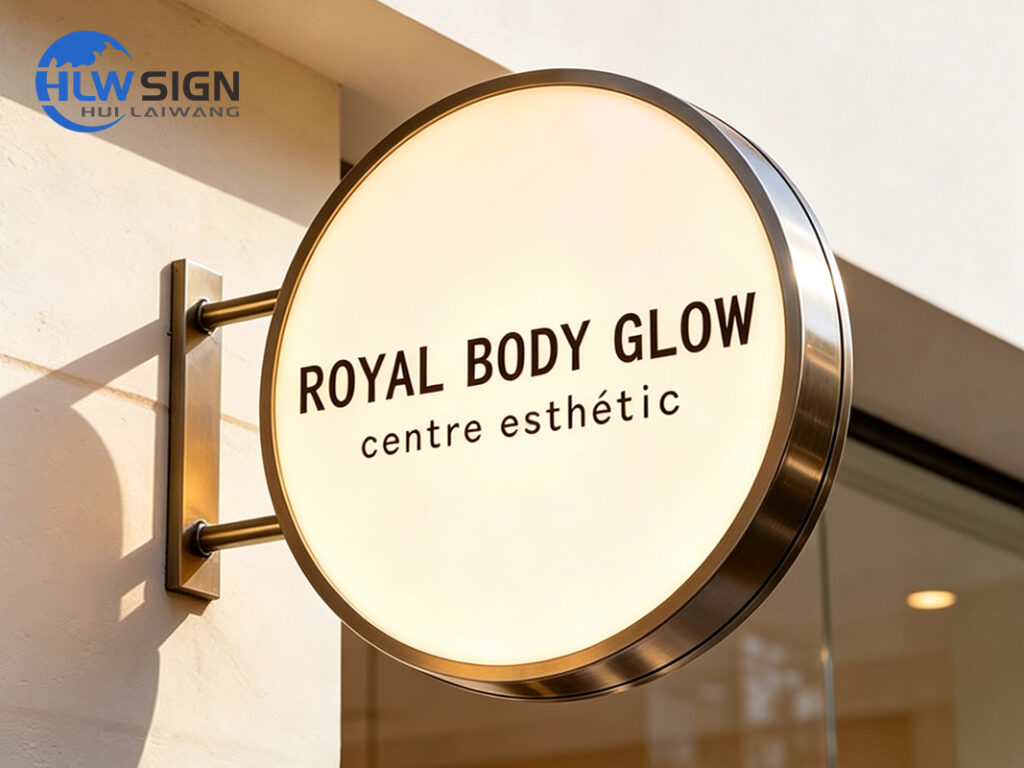
A side-mounted box projects from the facade on a bracket or arm. It is usually double-sided because pedestrians approach from both directions, and it often becomes the most visible sign on a narrow street. The face can be a metal cutout or a printed acrylic panel.
For a double-sided outdoor light box, the bracket is part of the sign. It has to carry the box weight, resist wind and keep the face perpendicular to the street. A weak bracket or a shallow fixing can cause vibration, water ingress or a tilted face. Ask for a fixing drawing that matches the wall substrate and the local wind load.
A led light box sign for exterior use also needs a sealed enclosure, drainage and stainless fixings. The face, frame and power supply should be rated for the actual exposure. The IEC 60529 standard explains the IP code; do not accept “waterproof” as a specification without the rating and the test detail.
Sun and rain also age the materials. Printed acrylic can fade, and powder-coated metal can chalk or corrode at cut edges. ASTM G154 is a common UV exposure test method to discuss with the material supplier when the sign faces direct sun.
Indoor Wall-Mounted Light Boxes
A wall-mounted box sits close to the wall and is viewed from one side. It is the quietest format: no bracket in the walkway, no ceiling rigging, and a thin profile that can blend into the interior. The light should be even and soft rather than a bright panel with visible LED points.
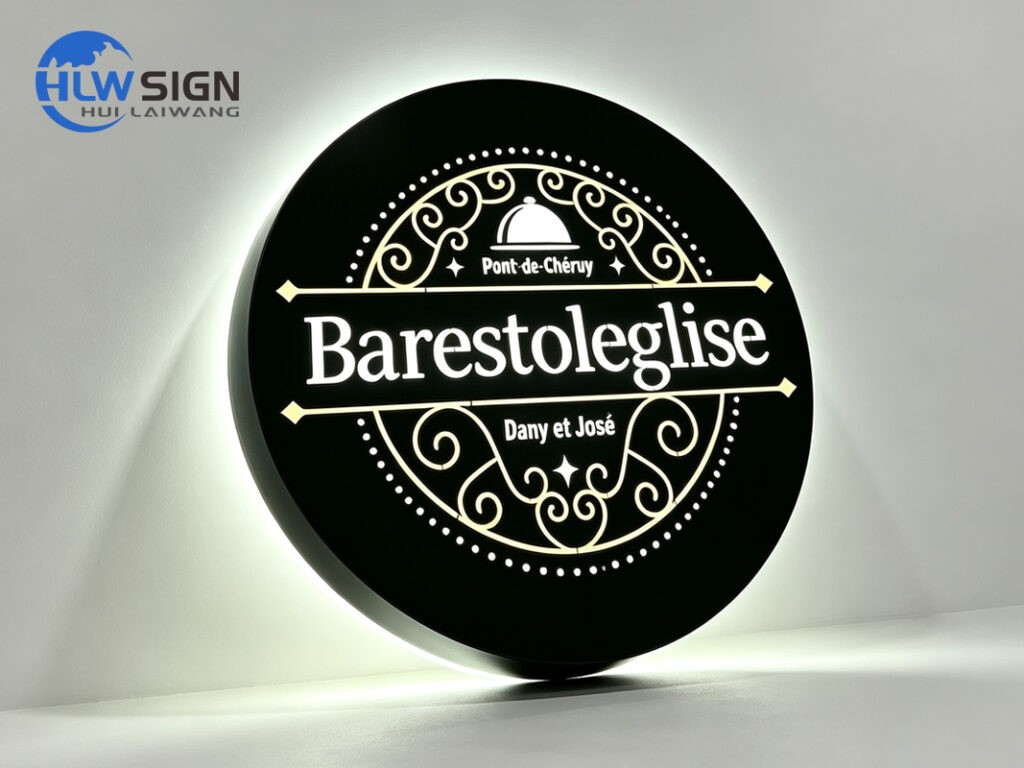
Metal cutout light boxes are a strong fit for indoor wall-mounted signs. The metal face carries the logo or lettering as a precise cut-out, with a diffuser behind it. The result is a soft, refined glow with crisp edges. It suits reception walls, hotel lobbies, premium retail and restaurant interiors where the sign should feel like part of the architecture.
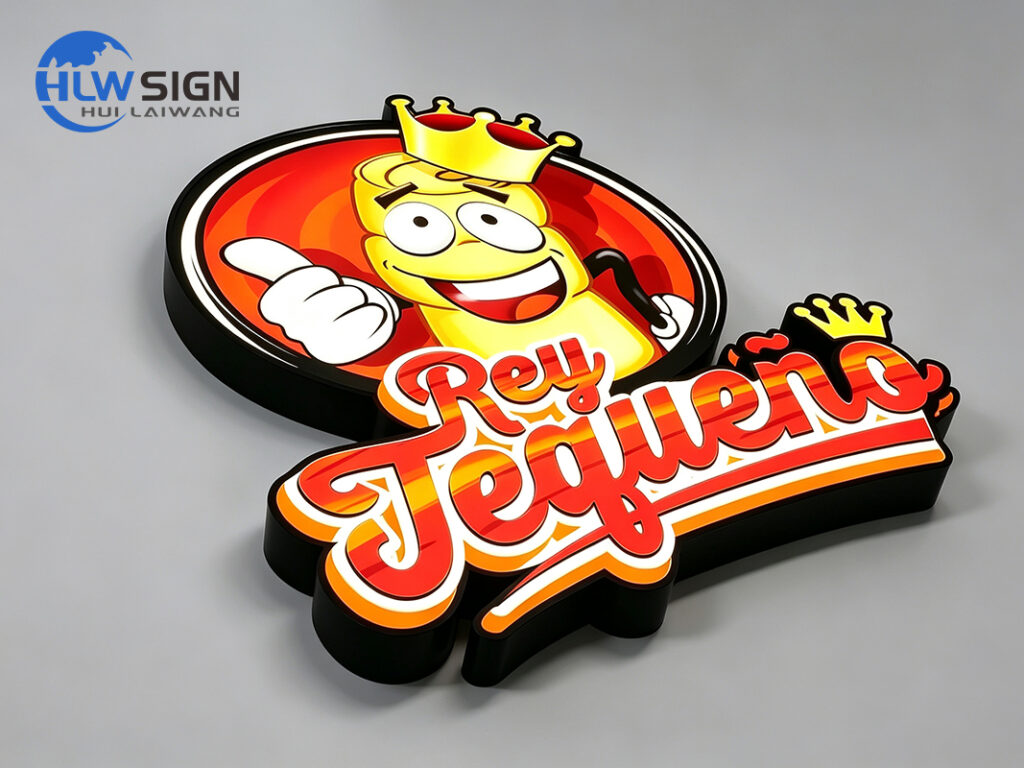
Acrylic print boxes are better when the design needs full-colour graphics, photography or gradients. The printed face can carry a campaign image or a detailed menu, but the print has to be diffuse and the LEDs spaced for even light. A light box signs range should offer both face options rather than forcing one process onto every design.
Indoor boxes also need a service plan. A slim wall box may hide the driver behind the face or in a nearby cupboard; either way, it should be reachable. The light box color temperature should match the interior lighting: warm white for hospitality, neutral white for retail and offices.
Hanging Light Boxes
A hanging box is suspended from the ceiling, usually with cables or rods. It is common in malls, retail aisles, exhibitions and showrooms because it can be seen from both sides and sits at eye level. Acrylic is the usual face material: it is light, easy to print and can be formed into a clean panel.
The ceiling is the critical detail. The rigging has to be fixed to a structural element, not just a ceiling tile, and the cable length has to keep the box at the intended height. Airflow from HVAC vents can make a light hanging box sway; the suspension should be designed for it. Cleaning is easier than a high wall sign, but the top surface still collects dust.
Hanging boxes work well with printed acrylic because the graphic can be changed without replacing the whole fixture. For a custom light box program, ask for a removable face or a serviceable frame so campaign artwork can be updated.
Metal Cutout vs Acrylic Print
Metal cutout and acrylic print are not interchangeable. Metal cutout gives a precise, premium edge and a soft glow through the cut shapes. It is durable and suits logos, lettering and simple marks, but it is less suitable for photographs or complex gradients. Acrylic print gives full colour and design freedom, but the print can scratch and may fade under UV unless the ink and face are specified for outdoor use.
For a backlit light box with a metal face, the cut edges, diffuser distance and LED spacing decide whether the light looks even. For a printed acrylic face, the ink density and diffusion grade decide whether the graphic looks bright or washed out. Sheet material for acrylic faces is commonly specified against ASTM D4802.
Cost follows the process. Metal cutout needs fabrication, welding, finishing and a diffuser; acrylic print needs printing, lamination or coating and careful colour control. Compare the light box cost as a complete installed sign, including the bracket, driver, face and service access, not as a price per square metre.
How to Choose by Location and Goal
Street-facing storefront: start with a double-sided side-mounted box. It is visible from both directions and projects above the pedestrian flow. Use metal cutout for a premium brand mark or acrylic print for a campaign image.
Mall or retail aisle: a hanging box puts the message at eye level and can be seen from both sides. Acrylic print is the usual choice; confirm the ceiling rigging and the cable length.
Reception, salon or restaurant interior: a wall-mounted metal cutout box gives a soft, refined light without dominating the room. Use warm white for hospitality and neutral white for retail.
Seasonal promotion: a christmas light box can use a printed acrylic face with a removable graphic, so the fixture stays and the artwork changes.
Exhibition or showroom: a hanging double-sided box is easy to see from the aisle. Keep the weight low, the rigging certified and the face easy to clean.
Installation and Safety Checklist
- Wall or ceiling substrate. Confirm the fixing points before drilling. A bracket or ceiling anchor must reach a structural element.
- Wind and weight. A side-mounted box is a sail; the bracket and fixings need a wind-load check. A hanging box needs a rigging check.
- Sealing and drainage. Outdoor boxes need gaskets, sealed cable entries and a drainage path. Confirm the IP rating for the complete assembly.
- Electrical. Keep the driver accessible and follow the local electrical code; NFPA 70 (NEC) is a useful reference for wiring and disconnects.
- LED system. Specify the LED pitch, output and diffuser together. The U.S. Department of Energy’s LED Basics explains why the LED, driver and thermal design must be treated as one system.
- Service access. A face, driver or LED module should be replaceable without removing the whole box.
Common Mistakes
The most common mistake is choosing the face material before choosing the mounting. A metal cutout design that works on a wall may be wrong for a double-sided hanging box; a printed graphic that looks vivid indoors may fade quickly outside. The second mistake is underestimating the bracket or ceiling anchor. A light box is light, but it still has to resist wind, vibration and accidental impact.
Other issues include hiding the driver where it cannot be serviced, sealing a box without drainage, using a face that is too thin for the size, and mixing colour temperatures between the box and the interior lighting. A light box should be specified as a system: face, frame, LED, driver, bracket and installation.
Frequently Asked Questions
Which light box is best for a shopfront?
A double-sided side-mounted box is usually best for a street-facing shopfront because it is visible from both directions. A wall-mounted box suits a recessed entrance or an interior reception.
Should I choose metal cutout or acrylic print?
Choose metal cutout for a precise logo, a premium edge and a soft glow. Choose acrylic print for full-colour graphics, photographs or campaigns. The mounting and viewing distance should be decided first.
Are hanging light boxes suitable for retail?
Yes. They put the message at eye level and can be viewed from both sides. Confirm the ceiling structure, cable length and weight before installation.
Can a light box be used outdoors?
Yes, if the face, frame, LEDs, driver and connectors are rated for the exposure. Check the IP rating, sealing, drainage and UV stability of the printed face.
What colour temperature should an indoor light box use?
Warm white (about 2700–3000K) suits hospitality and premium retail; neutral white (3500–4000K) suits general retail and offices. Match the box to the interior lighting rather than choosing in isolation.
How much does a shop light box cost?
It depends on size, face process, LED layout, bracket or rigging, sealing and installation. Compare the complete installed cost, not just the box price. A light box manufacturer should provide a drawing and a bill of materials.
Conclusion
Shop light boxes are not one product with different graphics. The mounting format decides how the sign is seen, how the light spreads and how it is maintained. Use a double-sided side-mounted box for street visibility, a wall-mounted metal cutout for a refined interior, and a hanging acrylic box for eye-level retail and exhibition displays.
If you are planning a shop sign, send the location, viewing direction, wall or ceiling structure, artwork and desired light colour; HLW Sign can review the format and prepare a custom light box proposal with a fixing drawing and sample plan.