
For sign makers, distributors, and advertising agencies, choosing between channel letters and a light box sign is not simply a question of which product looks better.
The more important question is: Which sign construction gives you the right balance of material cost, fabrication time, installation effort, selling price, and after-sales risk?
Both products are widely used in commercial signage, but their cost structures are very different. A channel letter project may generate a higher selling price and stronger perceived value, while a light box can be faster to manufacture and easier to scale across multiple locations.
For a sign shop, understanding this difference can help prevent underquoting, protect your margin, and make it easier to recommend the right solution to your customer.
In this guide, we compare channel letters vs light boxes from a sign-maker’s perspective and explain how to evaluate each project before you quote it.
Channel Letters vs Light Boxes: What Is the Difference?
Before discussing costs, it is useful to understand the basic construction.
Channel letters are individually fabricated three-dimensional letters. Each letter normally has a metal return, an acrylic or metal face, internal LED modules, wiring, and mounting hardware. Depending on the design, the letters can be front-lit, backlit, halo-lit, or dual-lit.
A typical channel letter sign therefore consists of multiple individually manufactured components rather than one large illuminated box. This gives the finished sign a premium dimensional appearance, but it also increases fabrication time.
A light box sign, by comparison, uses a larger cabinet or frame with a translucent face and an internal lighting system. The illumination comes from the entire panel rather than from individually constructed letters.
This fundamental difference affects almost everything that follows: material utilization, labor, packaging, installation, maintenance, and pricing.
For manufacturers working on customized commercial projects, HLW Sign’s custom signage solutions include both channel letters and LED light box signs, allowing the construction to be selected according to the project rather than forcing every application into one sign type. HLW Sign
1. Material Cost: Channel Letters Usually Have More Individual Components
Material cost is the first place where the two products begin to separate.
Channel Letters
A typical channel letter sign may require:
- Aluminum or stainless-steel returns
- Acrylic faces
- LED modules
- Back panels
- Wiring and connectors
- Mounting studs or brackets
- Waterproof sealant
- Optional raceway or mounting backboard
- Paint, powder coating, or specialty finishes
The important point is that every letter is fabricated individually.
A simple word with six large letters may require six separate housings, six face pieces, multiple wiring connections, and numerous small components.
The cost can increase further when the artwork contains:
- Curved letters
- Narrow strokes
- Custom logos
- Complex fonts
- Small details
- Stainless-steel finishes
- RGB lighting
- Front-and-back illumination
This is why two projects with the same overall width can have very different production costs.
Current channel-letter pricing guides also emphasize letter height, lighting configuration, mounting method, materials, and project complexity as major cost drivers.
Light Boxes
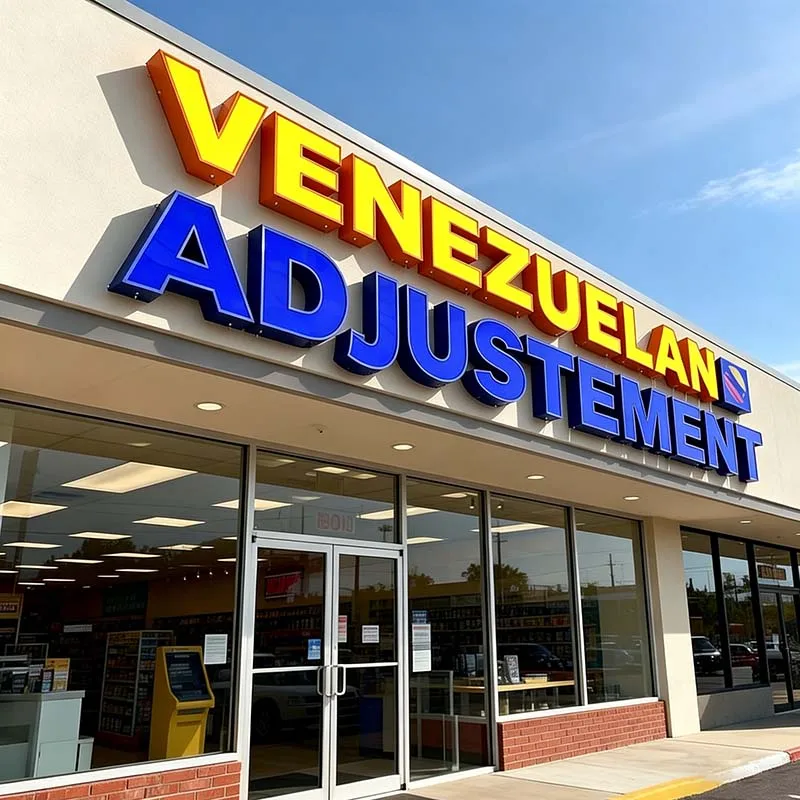
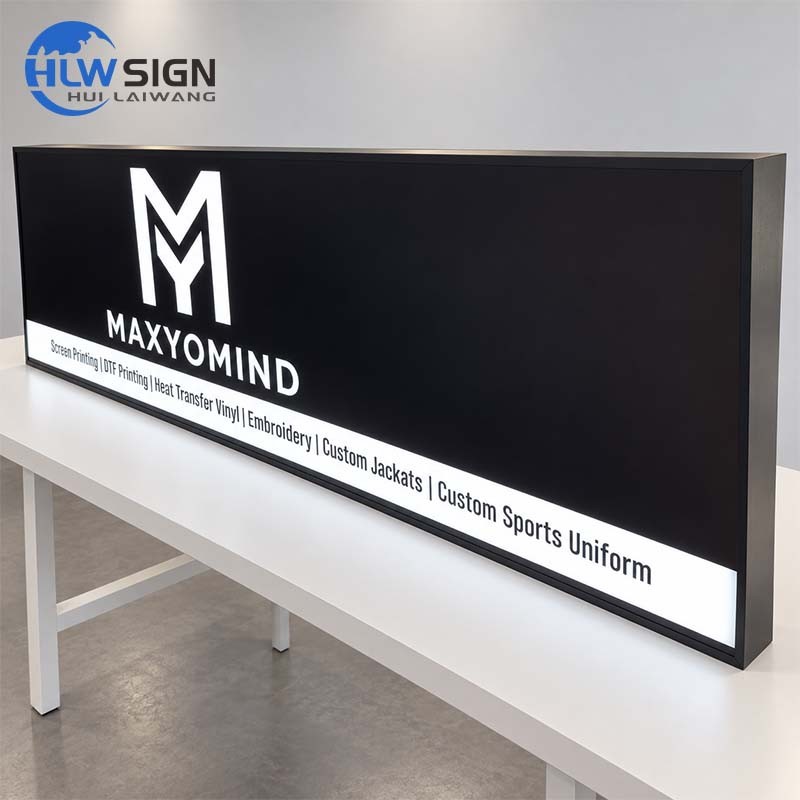
A light box generally uses:
- Aluminum profiles or aluminum sheet
- Acrylic, polycarbonate, or other translucent face material
- Internal LED modules or LED strips
- Back panel
- Wiring
- Connectors
- Frame or cabinet hardware
The major advantage is that much of the material can be cut from larger sheets or standardized profiles.
For a large rectangular sign, material utilization can therefore be relatively efficient.
What This Means for a Sign Maker
For small and medium-sized custom signs, channel letters can have a higher material cost because every character requires individual fabrication.
For large-area rectangular signage, a light box can become more economical because the structure is consolidated into one cabinet.
Don’t compare only the price per square meter. Compare the complete fabrication structure.
2. Labor Cost: This Is Often the Biggest Difference
Material prices are easy to calculate.
Labor hours are much harder to control.
This is where channel letters can either create excellent profit or unexpectedly reduce your margin.
Channel Letters Require More Fabrication Steps
A custom channel letter project may involve:
- Artwork preparation
- CNC or laser cutting
- Aluminum return bending
- Welding or joining
- Grinding and finishing
- Painting or coating
- Acrylic face cutting
- LED installation
- Internal wiring
- Letter assembly
- Waterproofing
- Electrical testing
- Individual inspection
Every letter repeats many of these processes.
If the customer orders a simple five-letter name, the labor may be manageable.
If the customer orders a 15-letter brand name with a complicated logo, the number of fabrication hours increases rapidly.
Complex channel letters can therefore have a much higher labor-to-material ratio than a standard cabinet.
Light Boxes Are More Standardized
A light box normally follows a simpler production sequence:
- Cut the frame
- Assemble the cabinet
- Prepare the face
- Install LED modules
- Complete wiring
- Test illumination
- Finish the enclosure
The process can be standardized much more easily.
This makes light boxes attractive for:
- Franchise programs
- Multi-location orders
- Retail chains
- Large-format signs
- Repeated corporate branding
- High-volume production
When dozens or hundreds of signs use essentially the same construction, production efficiency can improve significantly.
The Practical Profit Lesson
If your shop is struggling with labor capacity, don’t automatically assume that a higher-priced product is more profitable.
A $4,000 channel letter project that consumes excessive fabrication and installation hours may generate less actual profit than a standardized light box produced efficiently.
Revenue is not profit. Labor efficiency matters.
3. Pricing Strategy: Channel Letters Can Support Higher Margins
This is where channel letters become particularly interesting for sign makers.
Channel Letters Are Usually Sold as a Custom Product
Channel letter pricing is commonly influenced by:
- Letter height
- Number of letters
- Letter depth
- Lighting type
- Material
- Finish
- Logo complexity
- Raceway or mounting method
- Installation requirements
- Electrical requirements
Many suppliers therefore calculate pricing based on the individual letters or a complete custom set rather than simply charging by square footage.
For example, a 24-inch-high stainless-steel halo-lit logo should not be priced in the same way as a simple 12-inch acrylic-faced letter.
That customization gives sign makers more room to build value into the quotation.
Current U.S. pricing references show substantial differences between front-lit, halo-lit, and dual-lit channel letters, reinforcing the fact that construction and lighting configuration have a major effect on selling price.
Why Channel Letters Can Have Higher Gross Margins
Customers are not buying only raw materials.
They are buying:
- Custom design
- Dimensional appearance
- Brand presentation
- Lighting effect
- Fabrication expertise
- Installation solution
Because each project is different, customers may find it difficult to make a direct price comparison between suppliers.
That can create room for a healthier markup.
However, there is an important warning:
High selling price does not automatically mean high net profit.
If fabrication takes twice as long as expected, your labor cost can quickly consume the additional margin.
4. Light Boxes: Lower Unit Margin, Better Scalability
Light box signs operate under a different business model.
Customers often compare them by:
- Overall dimensions
- Materials
- Lighting
- Face material
- Frame construction
- Quantity
- Installation
Because the product is easier to standardize, competitors can often provide relatively comparable quotations.
That creates more price transparency.
The Disadvantage
Price competition can be intense.
A customer may send the same 3 × 1 meter light box specification to five or ten suppliers and compare the numbers directly.
This can push gross margins down.
The Advantage
The production process can be much easier to scale.
Suppose a franchise customer needs:
50 identical illuminated signs.
A standardized light box design can potentially be manufactured much more efficiently than 50 completely customized sets of channel letters.
This is where light boxes can produce attractive overall project profits despite a lower margin percentage.
5. Installation, Transportation and After-Sales Costs
This is the part many sign makers underestimate when preparing a quotation.
The factory price is not the real project cost.
You need to consider the entire project.
Channel Letters
Transportation
Each letter is a separate component.
That means:
- More protective packaging
- More individual pieces
- More opportunities for scratches or damage
- More time for unpacking
Irregular logos can also require specially designed protective packaging.
Installation
Installation normally requires accurate positioning of individual letters.
Depending on the mounting method, the installer may need to:
- Position a template
- Drill multiple mounting holes
- Fix individual letters
- Connect wiring
- Test each section
For larger installations, this additional labor can become significant.
After-Sales Service
The advantage is that individual components can often be serviced separately.
If one letter has an LED problem, the entire sign does not necessarily need to be replaced.
However, reaching a single letter on a high building may still require:
- A lift
- A crane
- Additional labor
- Electrical troubleshooting
Therefore, installation access should be considered when quoting the sign, not after the order is placed.
Light Boxes
Transportation is different.
A light box is normally one large structure, so:
- Packaging is simpler in terms of component count
- Installation can be faster
- Electrical connections can be more centralized
But large light boxes create another problem:
volume.
A large cabinet can be expensive to transport because of its dimensional weight and packaging volume.
The face is also vulnerable to:
- Scratches
- Cracks
- Bending
- Transportation damage
For very large signs, sectional construction may therefore be necessary.
6. Outdoor Electrical and Compliance Costs Matter
For illuminated commercial signage, electrical planning should never be treated as an afterthought.
For projects in North America, UL Solutions identifies UL 48 as the Standard for Electric Signs, while related standards cover electric sign components and LED sign retrofit kits. UL also notes that UL 48 certification can cover custom-made signs including channel letters and box signs, with different considerations for dry, damp, and wet locations.
That means a professional quotation should consider more than the visible sign body.
Your cost calculation may need to include:
- LED modules
- Power supplies
- Wiring
- Connectors
- Controllers
- Dimmers
- Waterproofing
- Grounding
- Mounting hardware
- Required certifications
- Installation requirements
This is particularly important when exporting signs.
For international projects, the electrical system should be specified according to the destination market instead of simply using the manufacturer’s standard configuration.
HLW Sign’s guide to channel letter power supplies explains why voltage, power calculation, wiring layout, and access to the electrical components should be considered during sign design rather than after fabrication.
Channel Letters vs Light Boxes: Which One Is More Profitable?
There is no universal answer.
Instead, look at profit per production hour.
| Factor | Channel Letters | Light Boxes |
|---|---|---|
| Material complexity | Higher | Lower |
| Fabrication labor | High | Moderate |
| Customization | Excellent | Moderate |
| Perceived value | High | Moderate–High |
| Pricing transparency | Lower | Higher |
| Potential markup | Higher | Lower |
| Production speed | Slower | Faster |
| Large-volume production | Moderate | Excellent |
| Installation complexity | Higher | Lower |
| Individual component service | Easier | More centralized |
| Best business model | High-value custom work | Volume production |
The key lesson is simple:
Channel letters can deliver higher revenue per project, while light boxes can deliver better production efficiency.
Your ideal product mix depends on your shop’s labor capacity, equipment, customer base, and order volume.
When Should You Recommend Channel Letters?
Channel letters are usually the stronger option when the customer wants a premium dimensional appearance.
Consider recommending them when the customer:
Wants a premium brand image
Suitable for:
- Beauty salons
- Medical clinics
- Law firms
- Hotels
- Restaurants
- Premium retail
- Corporate offices
- Luxury brands
Wants a three-dimensional logo
If the logo itself is an important part of the brand identity, individually fabricated letters and logos provide much more design freedom.
Has a relatively small sign area
For a compact wall with a short business name, channel letters can provide strong visual impact without covering the entire wall with a cabinet.
Wants halo illumination
Backlit or halo-lit channel letters create a softer architectural effect and can be particularly attractive for premium commercial environments.
HLW Sign’s guide to backlit channel letters also highlights the importance of letter depth, LED placement, wall color, mounting distance, and material selection when specifying halo-lit signage.
When Should You Recommend a Light Box?
A light box can be the better commercial solution when the customer prioritizes coverage, consistency, and cost.
Consider it for:
- Franchise signage
- Convenience stores
- Pharmacies
- Fast-food locations
- Large retail chains
- Indoor mall signage
- Large wall areas
- Repeated multi-location projects
- Budget-sensitive customers
If the customer wants a large illuminated graphic or logo across a wide area, a light box can sometimes achieve the visual result with fewer fabrication steps.
It can also be easier to standardize when the same design needs to be reproduced across many locations.
Three Common Mistakes That Reduce Sign-Maker Profit
Mistake 1: Assuming Channel Letters Always Make More Money
They don’t.
A complicated channel letter project can require significant labor.
If you underestimate bending, welding, finishing, wiring, waterproofing, and installation time, your gross margin can look excellent on paper while your actual profit is disappointing.
Calculate labor hours before calculating markup.
Mistake 2: Treating Light Boxes as a Low-End Product
A light box does not automatically mean “cheap.”
Premium aluminum frames, slim-depth construction, high-quality acrylic or polycarbonate faces, carefully designed LED layouts, and refined finishing can create a very professional commercial sign.
The product should be priced according to its construction and performance—not simply because it is a box.
Mistake 3: Quoting Only the Sign Body
A professional quote should consider the entire delivery chain.
Ask:
Design → Fabrication → LED → Power Supply → Wiring → Mounting → Packaging → Shipping → Installation → Certification → After-Sales
If you only calculate material + factory labor, you may miss the costs that actually determine project profitability.
A Better Way to Quote Your Next Sign Project
Before choosing between channel letters and a light box, ask five questions:
1. How large is the sign?
Small and medium projects may favor individually fabricated letters.
Large rectangular areas may favor a light box.
2. How complex is the artwork?
Simple text is relatively easy.
Complex logos, thin strokes, curves, and custom shapes increase channel-letter labor.
3. How many locations are involved?
One premium custom sign can favor channel letters.
Twenty, fifty, or one hundred identical signs may favor a standardized light box.
4. How much installation time is available?
Individual letters generally require more positioning and electrical connections.
A cabinet can often be installed as a more consolidated unit.
5. What does the customer value most?
If the answer is premium appearance and dimensional branding, consider channel letters.
If the answer is large illuminated coverage, consistency, and budget control, consider a light box.
The Best Sign Makers Don’t Sell One Product to Every Customer
The goal isn’t to prove that channel letters are better than light boxes.
The goal is to understand which product produces the best commercial outcome for a particular project.
A profitable sign shop should think in terms of:
Customer requirement + fabrication hours + material cost + installation + risk + selling price = real project profit
Channel letters are powerful when you can charge for customization, dimensional design, premium materials, and specialized fabrication.
Light boxes are powerful when you can standardize production, reduce labor hours, and win larger or repeat orders.
The best strategy may actually be to offer both.
For example, a premium corporate client could use dimensional channel letters for its main brand name and a light box for a large secondary graphic. A franchise customer could use standardized light boxes across multiple locations while reserving channel letters for flagship stores.
That kind of product matching is often more profitable than simply selling whichever sign your factory produces most easily.
Final Takeaway: Price the Project, Not Just the Product
Channel letters = higher customization and higher potential selling value, but more labor and production risk.
Light boxes = simpler production and stronger scalability, but usually more price competition.
For sign makers, the most important number isn’t the markup percentage.
It’s profit after labor, installation, logistics, and after-sales costs.
If you manufacture or source both types of illuminated signage, comparing the complete project economics before quoting can help you choose the right construction, protect your margin, and offer your customer a more professional recommendation.
If you are looking for a factory partner for custom channel letters, LED light box signs, or other illuminated business signage, HLW Sign provides factory-direct custom manufacturing, design support, production drawings, lighting solutions, and worldwide shipping. You can contact the team for a project-specific quotation.
Frequently Asked Questions
Are channel letters more expensive than light boxes?
Not necessarily for every project. Channel letters usually require more individual fabrication and labor, while light boxes can be more economical for large, standardized areas. The final cost depends on size, materials, lighting, artwork complexity, quantity, mounting, and installation.
Are channel letters more profitable for sign shops?
They can provide higher gross margins because they are highly customized and have strong perceived value. However, excessive labor, complicated artwork, installation difficulty, and rework can reduce the actual net profit.
When are light boxes more profitable?
Light boxes can be particularly attractive for large signs, standardized designs, and multi-location orders because their manufacturing process can be easier to repeat and scale.
Which is better for outdoor commercial signage?
Both can be suitable for outdoor use when properly engineered. The choice should consider weather exposure, materials, drainage, sealing, LED protection, power supplies, mounting, and local electrical requirements.
Can a manufacturer combine channel letters and a light box?
Yes. Combining different sign constructions can be an effective way to balance branding, visibility, budget, and production efficiency. A custom signage manufacturer can recommend the construction based on the artwork and installation environment.