


Quick answer: Wood-grain heat transfer printing bonds a wood pattern into a cured powder coat, so the grain sits inside the coating instead of on top of it. It gives metal custom channel letters and panels a timber look without the warping, cracking or fire risk of real wood.
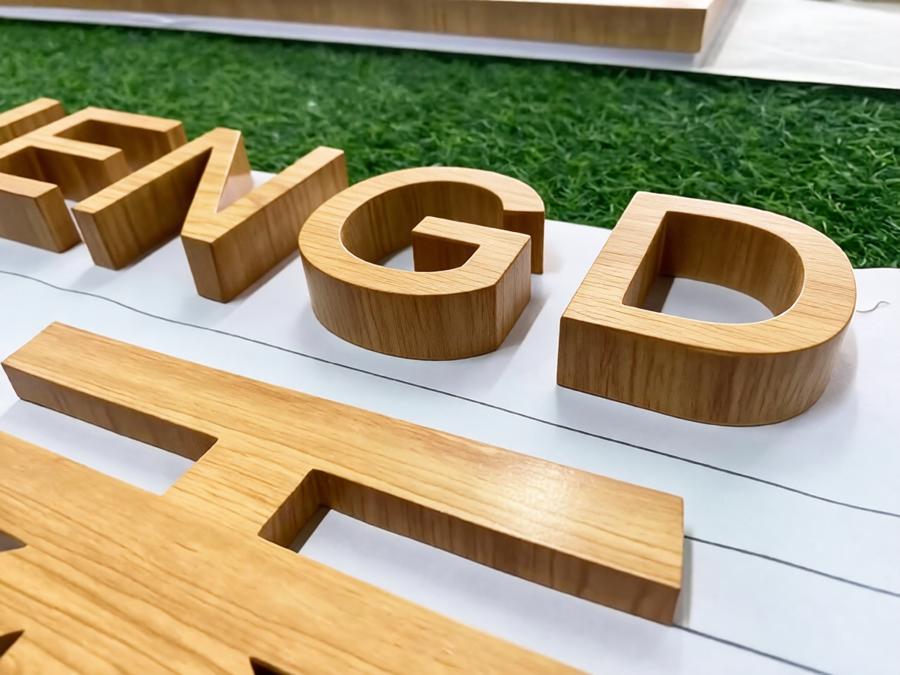
Metal signs, illuminated letters and wayfinding panels have long been finished in solid paint or brushed metal. As high-end retail, hospitality and new-Chinese interiors ask for warmer, natural surfaces, wood-grain heat transfer has become one of the fastest-growing finishes in the signage industry: a metal core with a timber skin, keeping the strength and weather resistance of metal while adding the warmth of grain.
How the process works
Wood-grain heat transfer, also called thermal transfer or sublimation transfer, relies on high-temperature penetration. A transfer paper printed with the wood pattern is wrapped tightly around a metal part that has already been powder coated. In the oven, the inks vaporise at 180–220°C, diffuse into the powder layer and cure there. The pattern becomes part of the coating rather than a film on the surface, which is why it resists abrasion, sunlight and peeling far better than applied vinyl.
The eight-step process
| Stage | Step | What happens |
|---|---|---|
| Preparation | 1. Cut and pre-treat | Aluminium, galvanised steel or stainless cut to drawing, degreased, derusted and passivated |
| 2. Powder coat and cure | Light base powder close to the wood tone, cured at high temperature | |
| Transfer | 3. Wrap the paper | Wood-grain transfer paper applied flat, edges aligned |
| 4. Vacuum | Air removed so the paper follows every curve without bubbles | |
| 5. Oven cure | 180–220°C hold; inks vaporise and penetrate the coating | |
| 6. Cool and peel | Natural cooling, then paper removed and the grain revealed | |
| Finishing | 7. Clear coat | Transparent powder or lacquer for extra weather and wear resistance |
| 8. Inspect and pack | Colour, adhesion and weathering samples checked before crating |
Where it is used
- Storefront and illuminated letters — timber-look faces with lit edges for premium shopfronts; see storefront signs.
- Roofline and outdoor signage — weather-resistant grain for roofs and fascias.
- Wayfinding and plaques — reception, floor directories and park signage that need to sit inside a natural interior.
- Metal relief and decorative panels — grain transferred over embossed surfaces keeps the depth of the relief.
- Interior trim and equipment panels — furniture, cabinetry and control panels that must match a wood scheme.
Which metals work best
| Substrate | Character | Typical use |
|---|---|---|
| Aluminium sheet and profile | Light, weather-resistant, easy to form | Most common: fascia letters, wayfinding, trim |
| Galvanised steel | Economical, high strength | Large letters, billboards, structural signs |
| 201 / 304 stainless | Premium, corrosion-resistant | High-end letters, relief panels, exterior trim |
| Cold-rolled steel | Flat, low cost | Interior panels and batch plaques |
Grade selection follows the same logic as any metal sign: 304 inland, 316 on the coast. The comparison is set out in our stainless steel and aluminium guide.
Advantages over real wood, vinyl film and painted grain
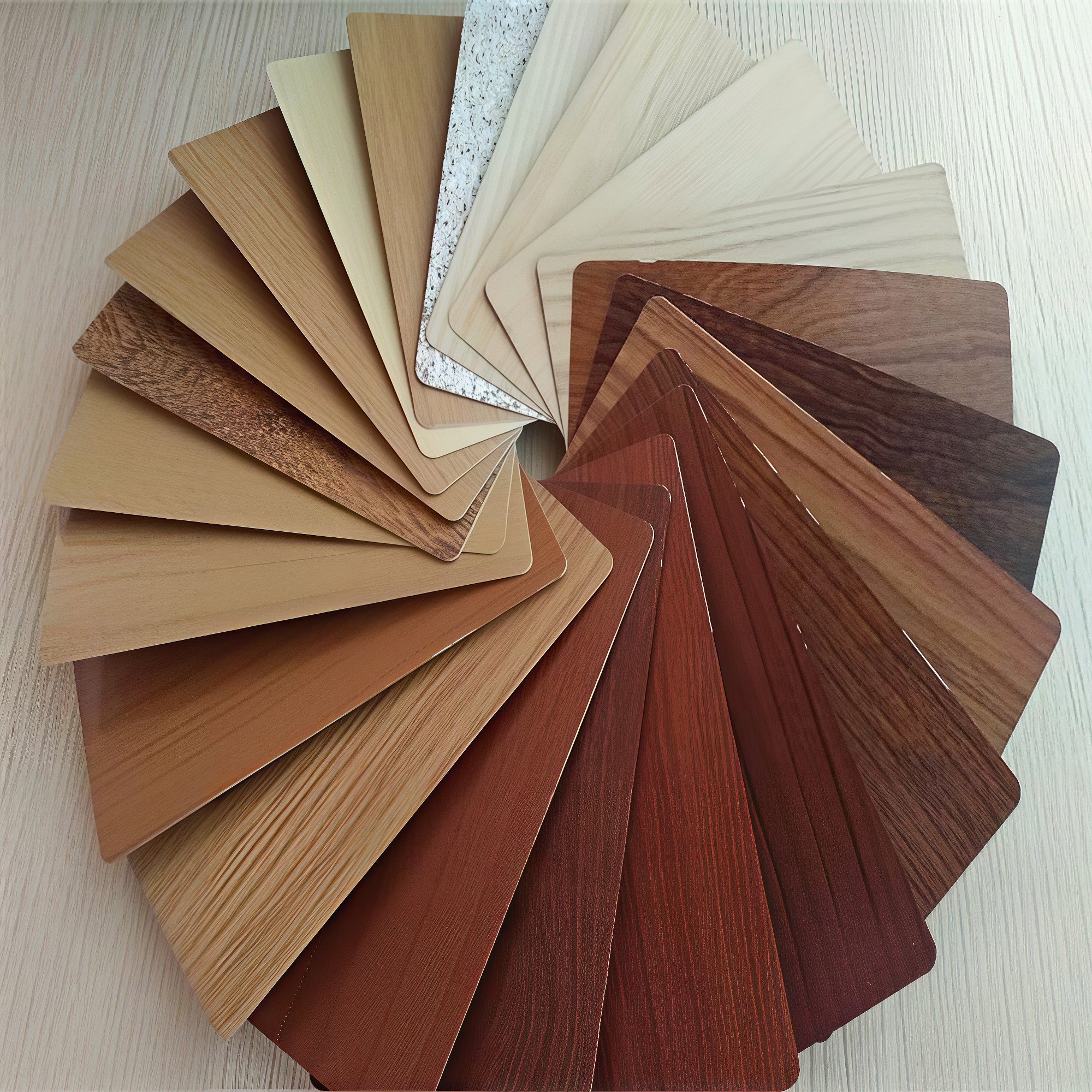
- Realistic texture — walnut, oak, teak and ebony with visible depth.
- Weather resistance — the pattern is inside the coating, so it does not fade or peel like vinyl film.
- Low VOC — powder coating is solvent-free and meets export compliance requirements.
- Durable — scratch- and chip-resistant compared with film or painted grain.
- Batch-friendly — consistent colour across repeat orders at a lower cost than solid timber.
For the coating base itself, read electrostatic powder coating vs fluorocarbon paint.
Quality points that decide the result
- Base powder colour — a light base gives the highest fidelity; the base decides the final tone.
- Vacuum and wrap — creases or bubbles become white spots and blotches.
- Temperature and time — each coating has its own curve; too hot shifts colour, too cool gives weak transfer.
- Edges and deep recesses — corners and channels need secondary pressure or dedicated jigs.
- Weather testing — salt spray, UV ageing and adhesion tests before a batch is released.
Maintenance and limits
Clean with a pH-neutral detergent and a soft cloth; avoid abrasive pads that polish the grain. The finish is suitable for exterior use, but coastal projects should still follow the 316 stainless maintenance routine. Very deep recesses remain the hardest area to transfer consistently, so keep the design within the process limits.
Conclusion
Wood-grain heat transfer lets a metal sign carry a natural surface without giving up strength or service life. From timber-look 3D metal letters to wayfinding and relief panels, it is now one of the most effective ways to differentiate a premium signage project.
Reference: dye-sublimation printing, powder coating, aluminium, stainless steel, VOC.