


RGB, RGBW and RGBWW are often sold as three levels of the same LED strip. The more useful way to compare them is by asking a different question: how clean and controllable does the white light need to be? RGB mixes white from three colours, RGBW adds one dedicated white channel, and RGBWW adds warm and cool white channels so the sign can tune its white temperature.
Quick answer: RGB vs RGBW vs RGBWW
RGB mixes white from red, green and blue; RGBW adds a dedicated white channel; RGBWW adds separately controlled warm and cool white channels for tunable white. Use RGB for colour effects, RGBW for simpler colour plus white, and RGBWW when clean white quality and adjustable colour temperature matter.
For illuminated letters, that difference matters more than the number of colours on a remote. This guide explains the channel structure, white quality, color temperature, controllers, cost and the applications where each system makes sense.
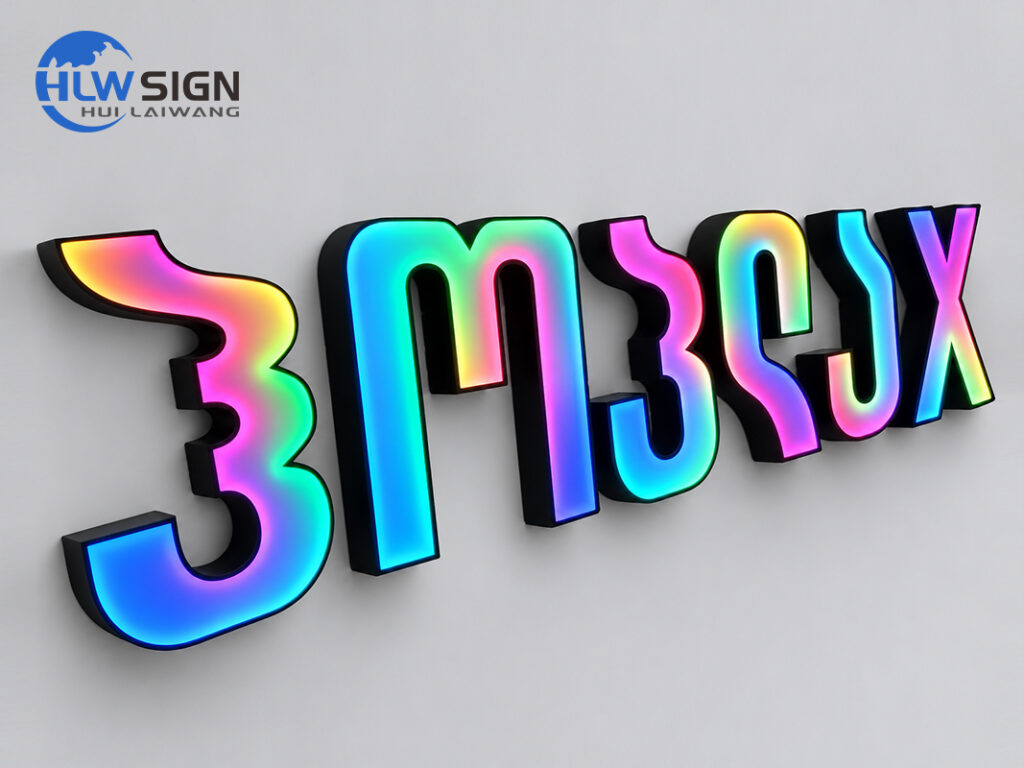
What RGB, RGBW and RGBWW Mean
RGB uses three LED channels: red, green and blue. The controller dims each channel to mix millions of colours; the RGB colour model explains the additive principle. White is produced by combining all three channels, so it can look slightly cool, pink or green depending on the LEDs and diffuser.
RGBW adds a fourth channel: one dedicated white LED. That white may be warm, neutral or cool depending on the product. The controller can use the white channel for clean white light or mix it with RGB for pastels. It is still a single-zone system unless separate controllers are used.
RGBWW usually means five channels: red, green, blue, warm white and cool white. The two white channels allow tunable white, so the sign can move from about 2700K to 6500K while still offering colour. Some suppliers use “RGBWW” loosely for RGB plus one warm white channel, so confirm the channel count and the white color temperatures before ordering.
RGB vs RGBW vs RGBWW: Quick Comparison
| Consideration | RGB | RGBW | RGBWW |
|---|---|---|---|
| Channels | Red, green, blue | Red, green, blue + one white | Red, green, blue + warm white + cool white |
| White quality | Mixed white; can show a tint | Dedicated white; cleaner | Two dedicated whites; tunable white |
| Color temperature | No true white tuning | One white CCT | Adjustable CCT, commonly 2700–6500K |
| Color effects | Good for basic color change | Color plus clean white | Color plus tunable white |
| Controller | 3-channel | 4-channel | 5-channel |
| Wiring and power | Simplest | Moderate | More channels and a larger controller |
| Relative cost | Lowest | Moderate | Highest |
| Best fit | Budget color-changing signs | Brand signs needing clean white + color | Premium spaces needing tunable white + color |
How the Channels Work
All three systems dim LEDs with pulse-width modulation (PWM). The controller switches each channel on and off rapidly; the ratio of on-time to off-time sets brightness. RGB has three dimming channels, RGBW has four, and RGBWW has five. The controller, power supply and wiring must support the strip you choose.
For a colorful rgb led letters project, a three-channel controller is enough when the goal is colour change or a fixed brand colour. An RGBW or RGBWW sign needs a compatible four- or five-channel controller; using the wrong controller can leave a channel unused or prevent white tuning.
Commercial installations may use DMX512 for scene control. The DMX512 standard is a common reference for lighting control networks. Addressable systems add a separate control axis; if you need gradients or chasing effects, compare RGB vs RGBW vs RGBIC before choosing a white channel.
Power planning matters as much as channel count. A five-channel strip can draw more current than a three-channel strip, and long runs suffer voltage drop. Confirm the power supply capacity, cable gauge and injection points for the actual letter size.
White Quality and CRI
RGB white is a mix, so it can drift between batches and look different beside printed graphics or warm interior lighting. A dedicated white channel gives a more consistent white; two dedicated whites give the sign a tunable white range. The colour rendering index (CRI) measures how naturally the light shows colours, so specify CRI together with colour temperature.
Two “4000K” LEDs from different bins can still look different. Ask for the LED bin, CRI and a physical mockup when the brand has a strict white. For a premium rgb channel letters project, the face material and diffuser also affect the final white; the LED alone is not the whole result.
Tunable White in Practice
RGBWW is useful when the sign has to change from warm evening light to neutral daytime white. A hotel lobby may use 2700–3000K at night and 4000K for daytime cleaning or presentations. A retail store may use neutral white for product displays and warmer white for a seasonal campaign.
The white range should be specified in kelvin, not just “warm” and “cool”. Ask how the controller transitions between the two whites and whether the white channels can be used without the RGB channels. The color temperature scale runs from warm amber to cool daylight; the backlit letter color temperature guide explains how wall colour and distance change the perceived result.
Where Each System Fits
RGB: budget storefronts, event signs and decorative letters where colour change matters more than a precise white. It is the simplest and lowest-cost option.
RGBW: retail and hospitality signs that need a clean white most of the time and colour for campaigns. It is a practical middle ground for a rgb sign board where white quality is visible beside printed materials.
RGBWW: premium hotels, restaurants, showrooms and architectural interiors where the white temperature has to change with the time of day or the scene. It also suits a high-end rgb diamond letters feature where both white and colour are part of the design.
For events, a rgb marquee letters set may only need RGB; the effect is more important than white fidelity. For a neon-style sign, rgb neon letters use a different light source and diffusion method, so compare the look rather than the channel count alone.
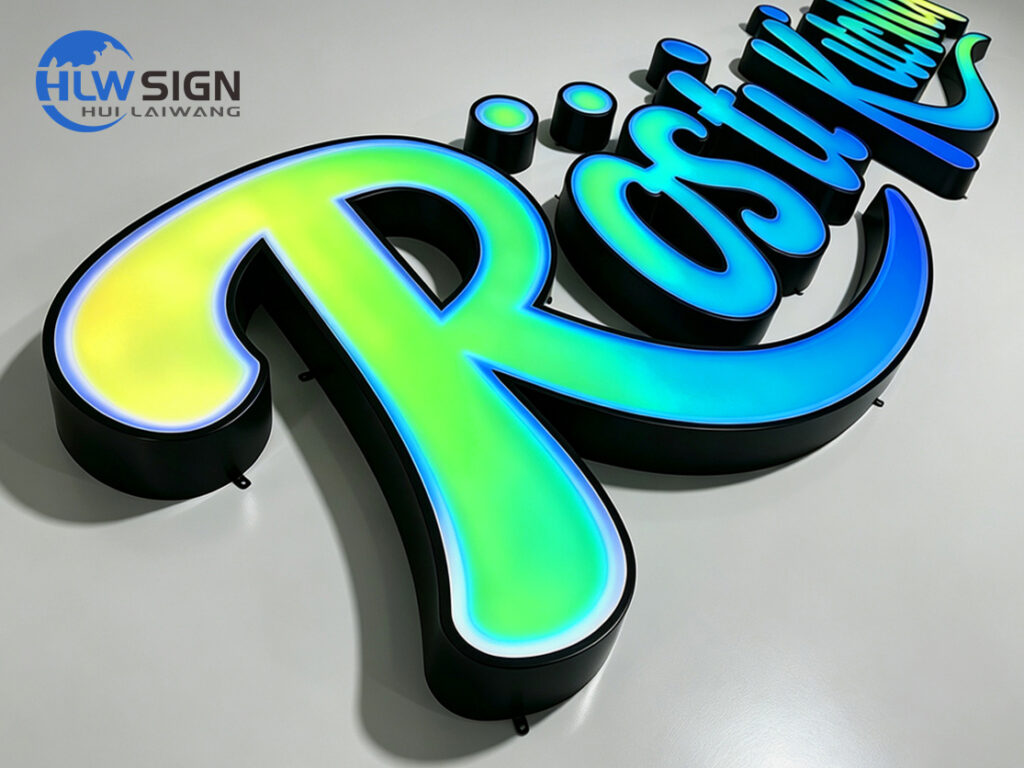
Cost and Installation
RGB is usually the lowest-cost system. RGBW adds a white channel, a four-channel controller and a slightly larger power supply. RGBWW adds a second white channel, a five-channel controller and more wiring, so it is usually the most expensive of the three.
The strip price is only one line item. Controllers, power supplies, cable, connectors, programming and service access can change the total. A five-channel system also needs a controller that is easy to replace and a wiring diagram that labels every channel.
For exterior signs, the LED strip, connectors, power supply and enclosure need an ingress protection rating that matches the site; the IEC 60529 standard defines the IP code. LED efficiency and life also depend on the driver current and thermal design; the U.S. Department of Energy’s LED Basics explains why the system, not just the chip, determines performance.
Specification Checklist
- Channel count: state RGB, RGBW or RGBWW and the exact channels. Do not accept the label alone.
- White CCT: for RGBW, state the single white temperature; for RGBWW, state the warm and cool endpoints and the tunable range.
- CRI and bin: specify the CRI target and LED bin, especially for retail and hospitality.
- Controller: confirm the controller supports all channels and the desired scenes; label the wiring.
- Power and voltage drop: size the power supply for the full load and plan injection points for long runs.
- Diffusion: match the face thickness and diffuser to the LED pitch so the white looks even.
- IP rating and thermal design: confirm the rating for the complete outdoor assembly and provide a heat path.
- Mockup and spare parts: approve the white and colour on a sample; keep spare controllers and LED segments.
Common Mistakes
The most common mistake is using RGB white for a brand that needs a clean white. The second is ordering an RGBWW strip but a controller that only supports four channels. The third is judging the white from a bare LED sample instead of the finished face and diffuser.
Other issues include undersizing the power supply, ignoring voltage drop on long runs, mixing LED bins and leaving no access to the controller. A sign that looks correct on the bench can look uneven on a wall if the installation and diffusion are not designed together.
Frequently Asked Questions
Is RGBWW the same as RGBCW?
They are often used interchangeably for RGB plus warm white and cool white. Some suppliers use RGBWW for RGB plus one warm white, so confirm the number of white channels and the CCT range.
Is RGBW better than RGB?
RGBW is better when the sign needs a cleaner white or soft pastels. RGB is enough for decorative colour change and is less expensive.
Do I need RGBWW for an outdoor sign?
Only if tunable white is part of the design. Many outdoor signs work well with RGBW or a fixed white. For any outdoor system, the IP rating, sealing and thermal design matter more than the channel count.
Can RGBWW create dynamic effects?
RGBWW controls colour and white temperature, but it does not automatically provide addressable gradients or chasing. For pixel effects, compare RGBIC as a separate control type.
Which system has the best white?
RGBWW gives the most control because it has warm and cool white channels. RGBW gives a clean fixed white. RGB white is mixed and can show a tint.
How much more does RGBWW cost?
It is usually the highest of the three because of the extra white channel, five-channel controller and wiring. Compare the complete installed cost, including power, programming and spares.
Conclusion
RGB, RGBW and RGBWW are not a simple quality ladder. RGB is the economical colour-changing option; RGBW adds a dedicated white for cleaner branding; RGBWW adds tunable white for premium interiors that need warm and cool scenes. Choose the system after deciding how important white quality and white temperature are, then specify the controller, power and diffusion as one system.
See the lighting and channel letter specification reference before finalising the controller, driver and sign construction.
If you are planning a project, send the letter sizes, white temperature range, colour scenes and installation environment; HLW Sign can review the channels and prepare a custom signage proposal with a wiring diagram and sample plan.