
Quick answer: For outdoor acrylic letters, first consider a neutral-cure, weather-resistant silicone adhesive/sealant or a structural adhesive confirmed by its manufacturer for PMMA and the mounting surface. Structural silicone can belong to both categories. Match the product to the actual letter, substrate and exposure. Large, elevated or wind-exposed letters need a fixing design that may include studs, a backboard or other mechanical retention.
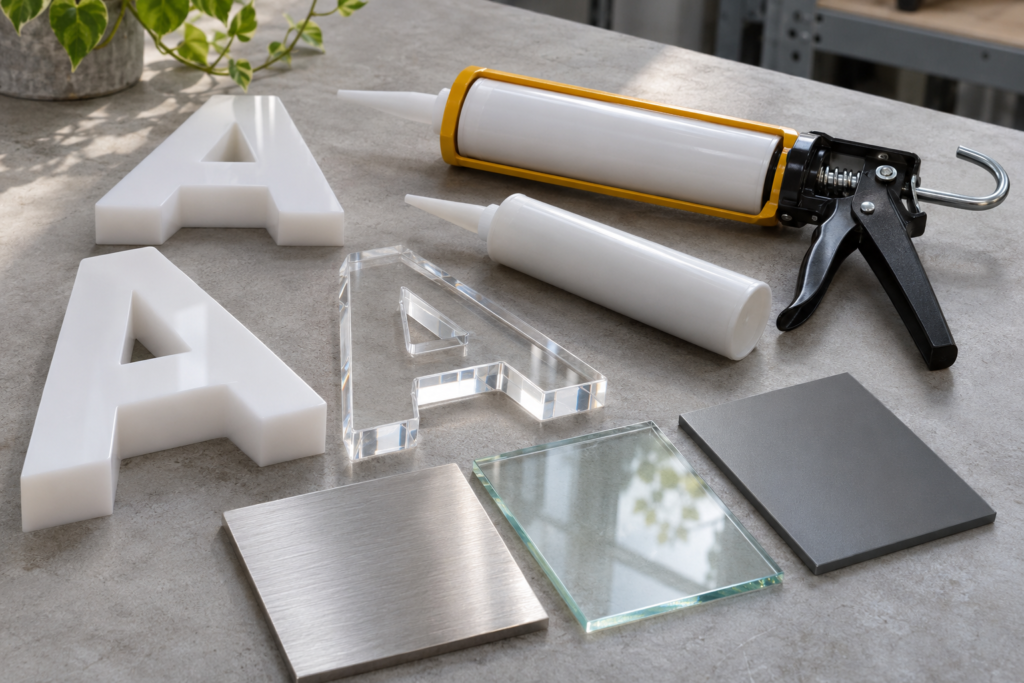
The best outdoor acrylic letter adhesive must bond two surfaces: the back of the letter and the wall, panel or glass behind it. A strong bond to acrylic is only half the job. If the wall paint peels away, the complete letter can come away with it. Start with the construction of your custom acrylic signs and letters, then choose the adhesive and fixing method together.
Silicone sealant or structural adhesive: which should you choose?
| Option | When to evaluate it | What to confirm |
|---|---|---|
| Neutral-cure exterior silicone adhesive/sealant | Bonding acrylic to a compatible, sound substrate where a permanently elastic joint is appropriate | PMMA compatibility, adhesion to the actual surface, exterior exposure and the permitted load |
| PMMA-compatible structural adhesive, including suitable structural silicone | An assembly that needs a specified load-bearing bond | The exact product, joint dimensions, preparation, movement, curing and fixing design |
| Dedicated acrylic-to-acrylic bonding system | Fabricating acrylic components in the workshop | Sheet grade, colour, joint type and processing conditions; do not assume it is a wall-mounting adhesive |
These are not three interchangeable tubes. “Silicone” describes a material family; “structural” describes an intended bonding function. Ordinary glazing or bathroom silicone does not automatically qualify as a structural mounting adhesive.
Why neutral-cure silicone is a useful starting point
Acrylic and the surface behind it can move differently as outdoor temperatures change. An appropriately designed elastic joint can accommodate movement rather than forcing the acrylic to follow a rigid bond. PLEXIGLAS bonding guidance recommends permanently elastic silicone-based adhesives when joining acrylic to other materials such as metal, stone and glass.
Its official fabrication tips identify neutral-curing grades as the preferred choice and discuss adhesion promoters and stress cracking. This is a reason to check the precise formulation, not to buy a cartridge solely because it says “neutral” or “waterproof”. Do not assume a general-purpose acid-cure glass sealant is compatible with your acrylic.
What “structural adhesive” must mean for acrylic letters
Ask the supplier to confirm PMMA compatibility in writing, including any paint, print, film or coating on the bonding surface. A product suitable for glass-to-metal construction is not automatically suitable for acrylic-to-painted masonry.
For example, the Sikasil SG-20 technical data sheet describes a neutral-curing, weather-resistant structural silicone and includes a specific PC/PMMA bonding application. It also requires testing on actual substrates and conditions. That is an example of the level of product information to request, rather than approval for every outdoor sign.
A tensile-strength number from a data sheet is not a ready-made weight allowance for a letter. Bonded area, joint geometry, movement, wind and the condition of the substrate all affect the fixing design.
Check the mounting surface before choosing the glue
- Glass, smooth metal or suitable solid panels: confirm the finish and any coatings, then test the complete acrylic–adhesive–substrate combination.
- Painted walls or powder-coated metal: the coating must be firmly attached. Adhesive performance cannot compensate for a coating that separates from its base.
- Rough, dusty or porous masonry: do not treat it like clean glass. Review surface preparation, an approved primer and mechanical fixings or a backboard.
- Curved, tightly fitted or stressed acrylic: review the design before bonding. Do not force the letter flat and expect glue to remove the stress.
Material identification matters too. Acrylic is PMMA; polycarbonate is PC. They should not be treated as the same plastic when selecting a cleaner, primer or adhesive. Our PMMA versus PC guide for signage explains the material differences.
A practical preparation and sample-testing sequence
- Record the assembly. Note letter dimensions, thickness, weight, back finish, wall material and installation height.
- Read the current technical instructions. Check the approved substrates, cleaner, primer, application conditions and curing requirements.
- Prepare sound, clean and dry surfaces. Use a cleaner approved for both the acrylic and the adhesive system. Do not default to acetone or other aggressive solvents.
- Make a representative sample. Use the actual acrylic grade and surface finish, the proposed substrate and the complete preparation system.
- Check the result after the specified cure. Look for cracking, whitening, staining, coating separation and poor adhesion. Agree an appropriate test method and acceptance criteria with the supplier or installer.
- Install to the agreed fixing detail. Use the template and the specified temporary supports; protect the assembly from movement during curing.
Curing time and mechanical support
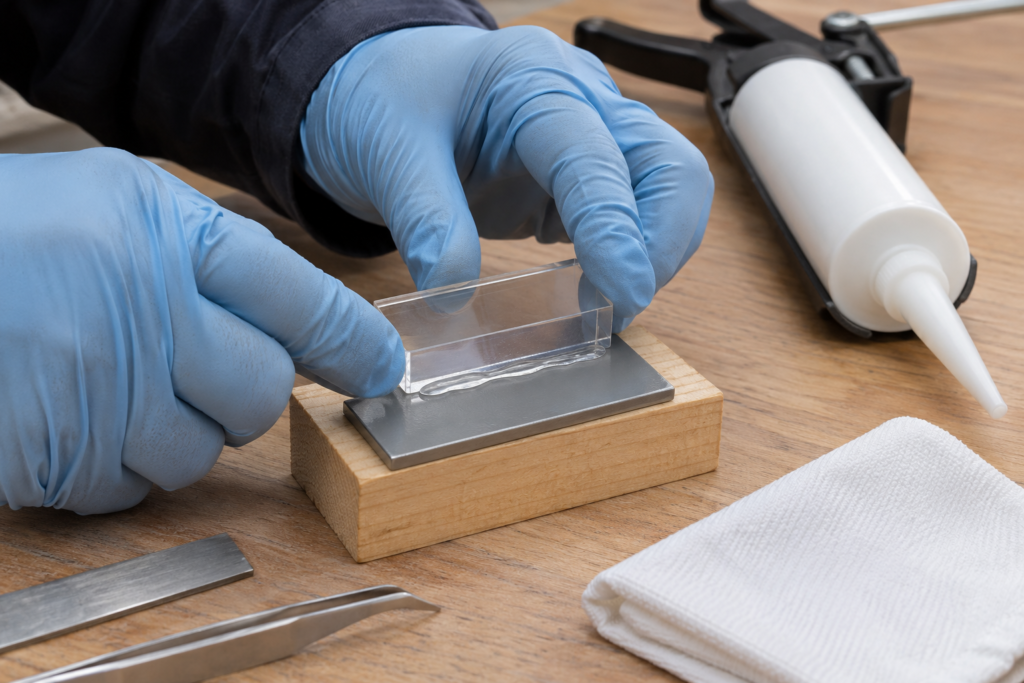
A bead that has formed a skin may still be uncured inside. There is no universal “24 hours and ready to carry the sign” rule. Follow the chosen product’s instructions for the actual joint and conditions, and keep temporary support in place for the required period.
Large letters, elevated positions and wind-exposed façades require a reviewed fixing arrangement. Mechanical retention may be needed even when adhesive is included. ACRYLITE sign-fabrication guidance discusses thermal movement, material compatibility and supporting exterior signs. For the wider assembly, see our letter mounting and installation guide and mounting templates, studs and installation accessories checklist.
Frequently asked questions
Can I use ordinary glass glue for outdoor acrylic letters?
Only if the manufacturer confirms that the exact product is suitable for PMMA, the mounting surface, outdoor exposure and the intended bond. A neutral-cure exterior silicone is a sensible starting point for evaluation; a generic “glass glue” label is insufficient.
Is structural adhesive always better than silicone?
No. Structural silicone is itself a silicone adhesive. Choose a tested system for the assembly rather than assuming every product sold as structural glue will bond acrylic reliably.
Can double-sided tape hold the letters while the adhesive cures?
Use tape or temporary supports only when the adhesive supplier and installation detail permit them. Check compatibility and make sure the temporary fixing does not prevent the specified joint geometry or curing.
Does waterproof mean suitable for outdoor letter mounting?
No. Also confirm UV and weather exposure, adhesion to both surfaces, movement, load and curing. A sealant designed to keep water out of a joint is not automatically designed to hold a letter in place.
What information should I send before ordering?
Send artwork, letter dimensions and thickness, the proposed mounting surface, a clear wall photo, installation height, exposure and destination. Include the adhesive data sheet if a local installer has already selected a product.
Plan the acrylic letters and mounting method together
For your next outdoor acrylic sign, send HLW SIGN the logo, dimensions, wall photo and installation location. We can review the letter construction and mounting information with your project team. Request a quotation for acrylic letters and mounting details before choosing adhesive solely on price or the cartridge label.