
Two illuminated letters can look identical in a rendering and behave very differently after two years outdoors. The difference is often the face sheet: PMMA acrylic or polycarbonate (PC). Both are thermoplastics, both can be cut and thermoformed, and both can be lit from behind. But they trade clarity, impact strength, UV stability, stiffness and cost in different ways.
For a buyer sourcing from China, the decision is also a shipping decision. Large letters travel by air and sea, are handled several times, and can sit in containers through temperature swings. This guide compares PMMA and PC for illuminated letters, explains why PC is often the better choice for large letters, and shows where acrylic still wins.
PMMA vs PC: What Are They?
PMMA stands for polymethyl methacrylate. It is the clear thermoplastic most people call acrylic. It is rigid, optically clear, naturally UV resistant and easy to polish. Sheet material for signage is commonly specified against standards such as ASTM D4802, which covers PMMA acrylic plastic sheet.
PC stands for polycarbonate. It is also a clear thermoplastic, but its defining property is toughness: PC resists impact far better than acrylic. It also handles higher temperatures. The trade-offs are lower stiffness, a greater tendency to scratch, and a need for UV stabilization or a UV-resistant coating when used outdoors.
PMMA vs PC: Quick Comparison for Illuminated Letters
| Property | PMMA (acrylic) | PC (polycarbonate) | What it means for letters |
|---|---|---|---|
| Optical clarity | Excellent | Good, usually slightly lower than PMMA | PMMA gives a cleaner, more color-accurate face |
| Impact strength | Lower; can crack under a hard hit | Very high; resists impact and flexing | PC is safer for large, exposed or shipping-heavy signs |
| Stiffness | Higher | Lower | PMMA holds a flat face more easily; PC needs a frame or backer |
| UV and color stability | Naturally UV resistant | Needs UV-stabilized grade or coating | PMMA is usually better for long-term color-critical faces |
| Heat resistance | Lower | Higher | PC suits hotter locations and high-output LED layouts |
| Scratch and repair | Can be polished and restored | Scratches more easily; repair is harder | PMMA is easier to refinish on a premium face |
| Thermoforming | Good | Good, but sheet must be dried correctly | Both can be formed; PC needs tighter process control |
| Flammability | Check test data | Check test data | Specify test evidence and local code compliance for either material |
| Relative cost | Usually lower | Usually higher | Compare total installed cost, not sheet price alone |
| Best fit | Premium faces, color-critical work, small to medium letters | Large letters, high-impact sites, export crating and handling | Match the material to size, exposure and shipping route |
Where PMMA (Acrylic) Wins
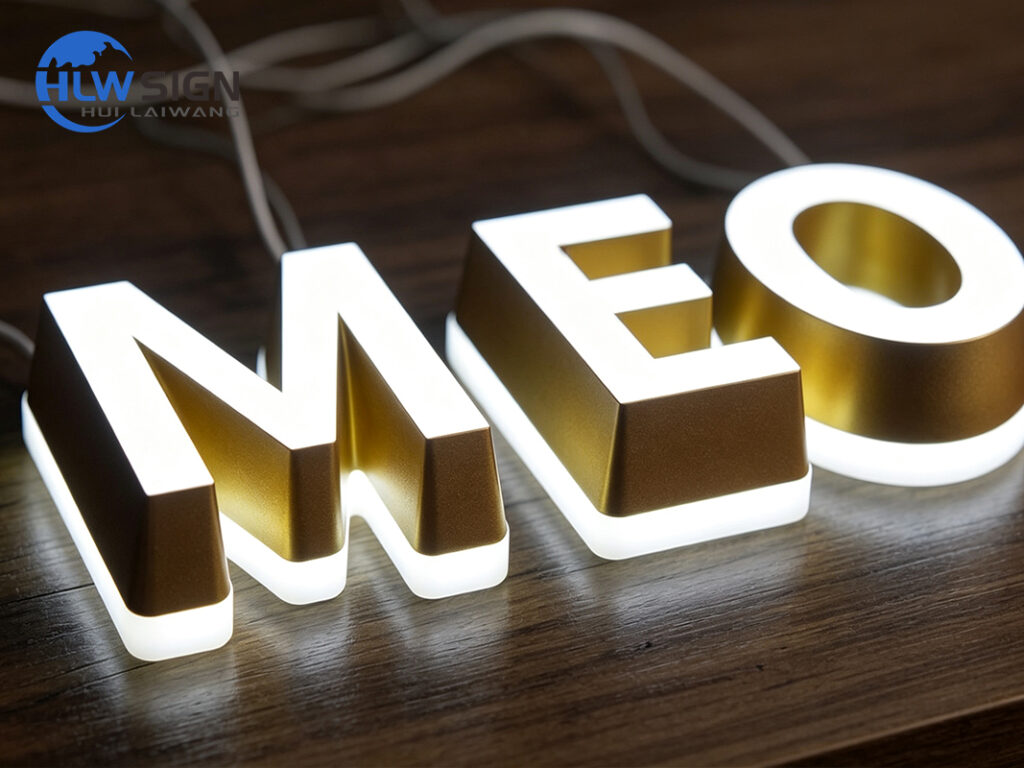
PMMA is usually the first choice when the face has to look clean and consistent. It has excellent clarity, takes color well, and resists UV exposure without relying on a coating. For a premium illuminated acrylic sign, that combination produces bright, even illumination and a sharp brand color.
Acrylic is also easier to polish. If a face is scratched during installation, a fabricator can often restore it. That matters on high-end retail and reception signs where the face is viewed up close. PMMA is rigid, so it holds a flat plane well in small and medium letters, and it does not need the same UV protection as PC.
The limitation is impact. A large acrylic face can crack if it is hit, flexed or dropped. For a custom acrylic letters project, PMMA is a strong choice when the letters are protected, viewed at close range and specified with adequate thickness and support.
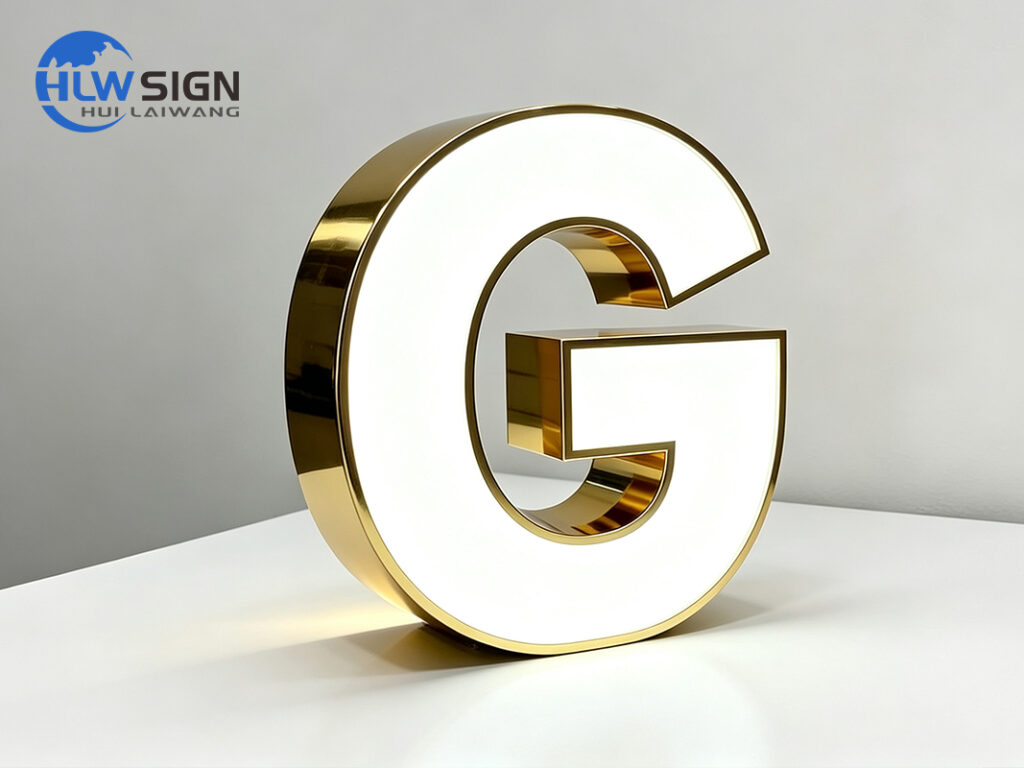
The same face material can be used in a standard front-lit led letters assembly, but the face thickness, return depth and LED spacing should be specified as one system.
Where PC (Polycarbonate) Wins
Polycarbonate wins on toughness. It resists impact that would crack acrylic, which makes it attractive for large letters, high-traffic locations, vandal-prone sites and signs that will be shipped and handled repeatedly. That toughness is the main reason PC is often recommended for large letters exported from China.
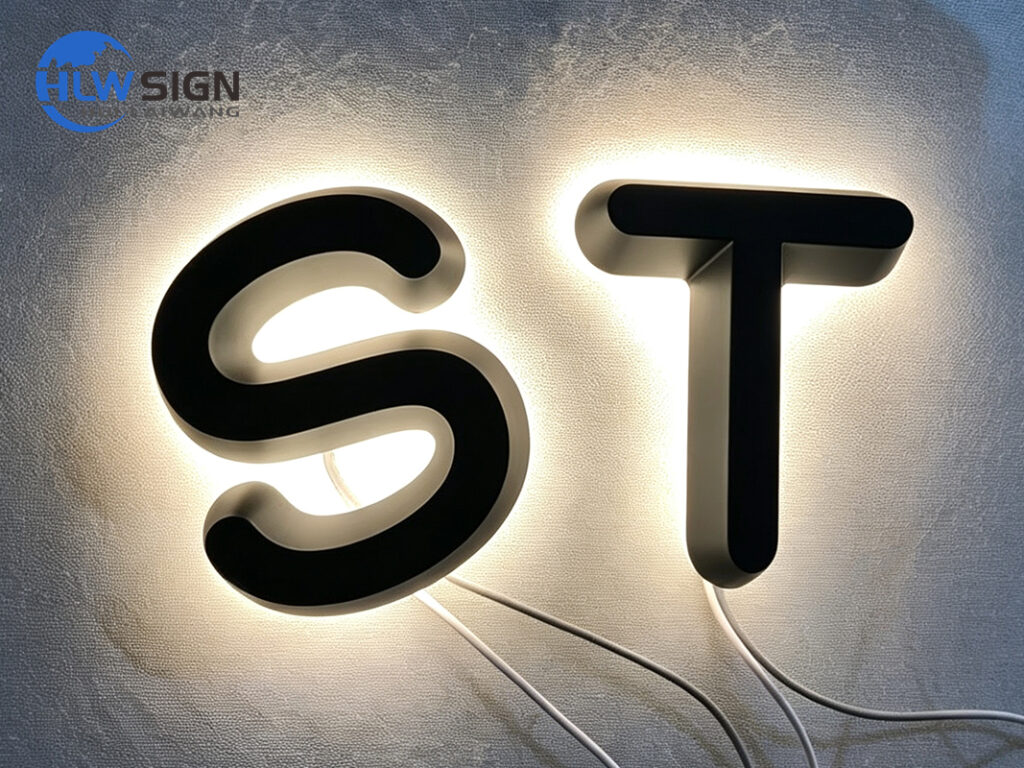
PC also handles higher temperatures, which can matter in hot climates or when high-output LEDs are placed close to the face. It is a good fit for a large channel letters project where the face spans a wide area and may be exposed to wind-borne debris.
But PC is less stiff than PMMA. A large PC face can deflect more, so it still needs a frame, return or backer to keep the surface flat. PC also scratches more easily, and some cleaning chemicals can cause stress cracking. Those trade-offs have to be designed around, not ignored.
Why PC Is Often Better for Large Letters Shipped From China
Large illuminated letters are vulnerable before they are installed. They are packed into crates, lifted, transferred between vehicles, loaded into containers and unpacked on site. A face that survives a showroom can still crack during a poorly controlled transit. PC’s impact resistance reduces that risk, especially on letters with large unsupported faces.
For export projects, the material choice should be paired with a packaging plan. Ask for edge protection, a protective film, foam separation, a reinforced crate and a loading plan that matches the letter size. Transit testing against a recognized protocol such as ISTA is a useful way to verify that the packing system, not just the sheet, can survive the route.
Commercial terms matter too. Clear delivery and risk transfer terms under Incoterms 2020 help both sides know who arranges freight, insurance and unloading. PC lowers the impact risk, but it does not replace proper crating, insurance or a clear shipping agreement.
The Trade-offs of Polycarbonate
PC is not a universal upgrade. It needs UV stabilization or a UV-resistant coating for outdoor use; otherwise the sheet can yellow and lose light transmission over time. It scratches more easily than acrylic, and repairs are harder. Some solvents and incompatible cleaners can cause crazing or stress cracking, so the maintenance team needs a compatible cleaning procedure.
PC also costs more than PMMA in many sheet grades, and its lower stiffness means large faces need more framing. Thermoforming PC requires proper drying and temperature control; trapped moisture can cause bubbles or surface defects. For a color-critical premium face that will be viewed close up, PMMA may still produce the better finish.
Choosing by Application
Premium retail and hotel interiors: PMMA is usually the better face material for clarity, color and polishability. It suits smaller and medium letters where impact risk is low.
Large exterior letters and rooftops: PC is often the safer choice because of its impact strength. The face still needs a frame and a UV-stable grade. For a store front sign with a wide span, ask for a deflection and fixing review.
Coastal and high-exposure sites: PC can handle impact and temperature, but UV protection and compatible hardware are essential. PMMA has excellent UV stability, but large faces still need impact protection. The right answer depends on the size and the risk of damage, not the material name alone.
Backlit and halo-lit designs: The face material interacts with the lighting layout. A backlit sign needs even diffusion; a hot spot or a thin face can look uneven. Specify the LED spacing, face thickness and diffusion grade together.
Dimensional branding: If the design needs depth without a lit face, 3D embossed metal letters are a different construction. Mixing metal returns with an acrylic or PC face is common; the face and return should be detailed as one assembly.
Specification Checklist
- Sheet type and grade. State PMMA or PC, the manufacturer/grade, thickness and color. For PMMA sheet, ASTM D4802 is a useful reference; for PC, request the supplier’s technical data sheet and UV stabilization details.
- UV protection. For outdoor PC, confirm whether UV stabilization is in the sheet or applied as a coating. UV exposure can be tested with methods such as ASTM G154.
- Impact and stiffness. Match thickness to letter size and support. PC is tougher but less stiff; a large face still needs a frame or backer.
- Flammability. Ask for test data relevant to the project. ASTM D635 is one method used to evaluate burning rate and extent for plastics; local codes may require additional evidence.
- Light transmission and diffusion. For illuminated faces, specify the diffusion grade and LED spacing, not just the sheet color. A face that looks right in daylight can still show hot spots at night.
- Cleaning compatibility. Confirm which cleaners are safe for PMMA or PC. Solvent-based cleaners can damage PC; abrasive pads can scratch both materials.
- Packaging and transit. For export, specify protective film, edge protection, foam, crate design and a transit test such as ISTA. Confirm who arranges insurance and unloading under the chosen Incoterm.
- Total cost. Compare the installed cost, including framing, packing, freight, insurance and replacement risk. A lower sheet price can disappear if a large face cracks in transit.
Common Mistakes
The most common mistake is assuming that all polycarbonate is UV-stable. Standard PC can yellow outdoors; an outdoor sign needs a UV-stabilized grade or a protective coating. Another mistake is using PMMA for a large, unsupported face without checking impact and deflection. The third is treating the sheet choice as a substitute for packaging engineering: even PC can be damaged by poor crating.
Buyers also forget that PC is less stiff. A large PC face may need a thicker frame or more fixing points than the same size in PMMA. Finally, cleaning instructions are often left out of the specification. A cleaner that is safe for one plastic can craze the other, so the maintenance procedure should be part of the handover.
Frequently Asked Questions
Is PC better than acrylic for large illuminated letters?
Often, yes, because PC resists impact and handling damage better. But PC still needs a frame, UV protection and correct packaging. For a large face, the assembly design matters as much as the sheet material.
Does polycarbonate yellow outdoors?
Standard PC can yellow when exposed to UV. Specify a UV-stabilized grade or a UV-resistant coating, and confirm the warranty and test data for the specific sheet.
Can PMMA acrylic be used outdoors?
Yes. PMMA has good UV and color stability and is widely used for outdoor illuminated faces. Its main limitation is impact; large or exposed faces need adequate thickness, support and protection.
Which material is clearer, PMMA or PC?
PMMA generally has higher optical clarity and a cleaner color appearance. PC is close, but its clarity can be slightly lower and its surface is more prone to scratching.
Which material is more expensive?
PC usually costs more than PMMA in comparable sheet grades, and large PC faces may need more framing. Compare the total installed and shipped cost rather than the sheet price per kilogram.
How should large letters be shipped from China?
Use a reinforced crate, protective film, edge protection and foam separation, and consider a transit test such as ISTA. Agree the Incoterm, insurance and unloading responsibilities before production. PC reduces impact risk but does not replace good packaging.
Conclusion
PMMA and PC are both credible face materials for illuminated letters, but they solve different problems. PMMA gives the best clarity, color and polishability, and it is naturally UV stable. PC gives far better impact resistance and heat performance, which makes it a strong choice for large letters and export shipments, provided the face is framed and UV-protected.
For a project that combines large letters, international shipping and outdoor exposure, start with a UV-stable PC face and a proper crating plan. For a premium, color-critical face viewed up close, start with PMMA. If you are planning a mixed program, send the letter sizes, lighting layout, installation environment and shipping route; HLW Sign can review the face material and prepare a custom signage proposal with a shop drawing and packing plan.