
Material choice is the decision that decides whether a sign still looks right in year five. Every week we quote the same project twice: once in aluminium and once in stainless steel, because the answer depends on where the sign is going, how big it is and how long the client needs it to last. This guide compares the materials we use most — mild steel, aluminium and 201, 304 and 316 stainless steel — and gives a straight recommendation for the custom signage applications we are asked about most often.
If you have a project in front of you, jump to the application table below or the sizing table further down. If you are still choosing, read the sections in order: corrosion first, then weight, then size, then cost.
The short answer
| Application | Recommended | Avoid |
|---|---|---|
| Interior reception and office logos | 201 or 304 stainless, acrylic | Mild steel in humid rooms |
| Interior retail and mall signage | 201 stainless, acrylic, painted aluminium | Bare steel |
| Inland shopfront, more than 5 km from the sea | 304 stainless or powder coated aluminium | Mild steel outdoors unless galvanised and coated |
| Coastal shopfront, beachfront hotel, marina | 316 stainless, 316 fixings | 201 and 304, especially indoors-facing pool areas |
| Roof letters and high facade signs | Aluminium faces with an internal frame | Heavy stainless sets without a structural frame |
| Pylon and monument structures | Galvanised steel frame with aluminium or stainless cladding | Thin sheet without internal framing |
| Cold, snowy climate | Aluminium or stainless, sealed wiring | Materials that become brittle in the cold |
| Hot, high UV desert climate | Powder coated aluminium with UV stable coating | Unstabilised plastics and low grade coatings |
| Poolside, industrial and chemical exposure | 316 stainless | 201, 304, painted steel |
| Event and party letters | Aluminium body with acrylic face | Heavy steel sets that are hard to move |
The four material families at a glance
| Material | Density | Corrosion resistance | Common sheet thickness | Relative material cost | Where it belongs |
|---|---|---|---|---|---|
| Mild steel, galvanised and powder coated | 7.85 g/cm³ | Poor if bare, good while the coating is intact | 1.5 to 3 mm | 1.0 (baseline) | Frames, structures, painted indoor letters |
| Aluminium | 2.70 g/cm³ | Good, forms its own oxide layer | 1 to 3 mm | 1.2 to 1.6 | Large faces, roof signs, inland outdoor work |
| Stainless steel 201 | 7.9 g/cm³ | Fair, indoor and dry conditions only | 0.8 to 1.2 mm | 1.1 to 1.4 | Indoor logos, dry interiors |
| Stainless steel 304 | 7.9 g/cm³ | Good in normal urban and inland conditions | 0.8 to 1.5 mm | 1.6 to 2.2 | General outdoor signage |
| Stainless steel 316 | 8.0 g/cm³ | Excellent, resistant to chloride and salt | 0.8 to 2.0 mm | 2.2 to 3.2 | Coastal, marine, humid tropical, poolside |
The cost column compares material price only. Fabrication time is broadly similar across these materials, so the material itself is what moves the quotation.
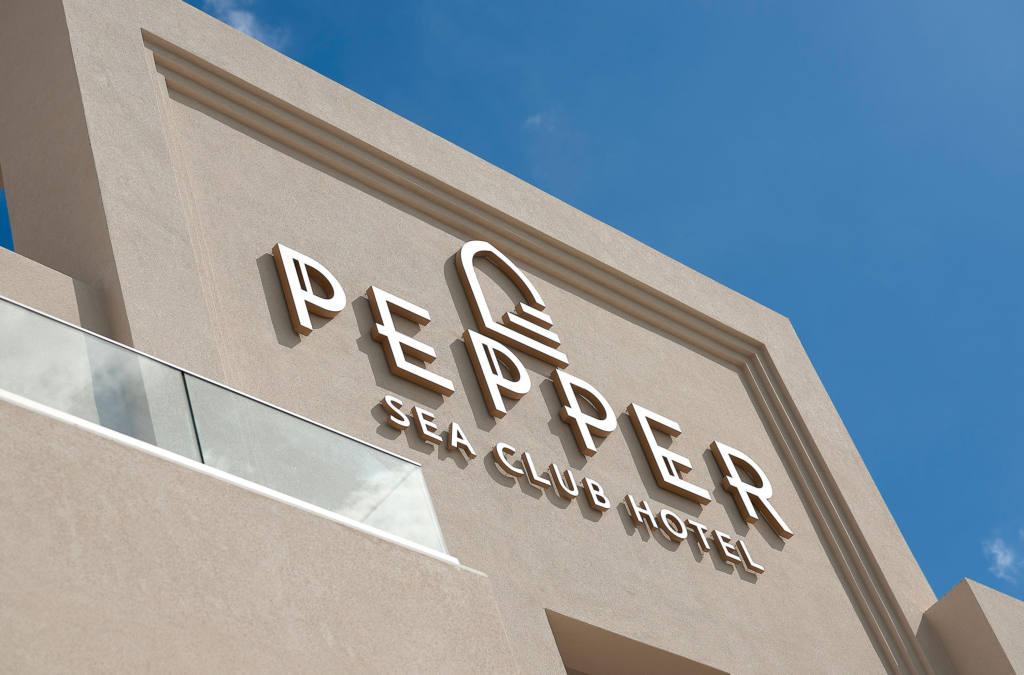
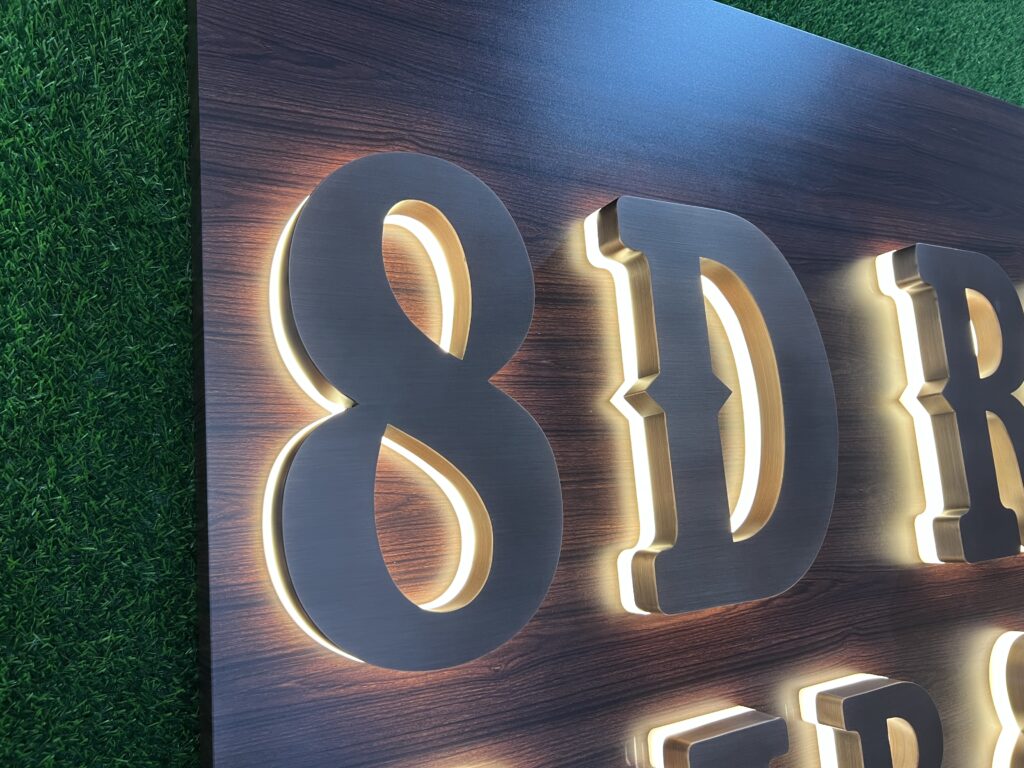
In practice most quotations come down to two shapes: a custom metal sign with a painted or metallic finish, or a set of 3D letters with an aluminium or stainless body and an acrylic face. The material discussion below is what decides which of the two, and in which grade.
1. Mild steel: the cheapest way to get a painted finish
Mild steel is what most people mean when they say iron letters. It is the cheapest structural material, the stiffest, and the easiest to weld, which is why it still runs through our frames, monument signs and pylon sign structures.
Advantages
- Lowest material cost of the group, by a wide margin.
- Strong and stiff, so it needs less internal bracing for the same span.
- Welds easily, which makes custom shapes and large frames practical.
- Takes powder coat in any RAL or Pantone colour, so the finish is whatever the brand needs.
- Magnetic, which can matter when the sign has to attach to existing steelwork.
Limitations
- Rusts quickly once bare, and coating damage is where it starts. A chipped edge in a wet climate is a rust line within weeks.
- For outdoor use it must be hot dip galvanised first, then powder coated. Powder coat directly over untreated steel traps moisture and fails from the inside.
- Heavy. At 7.85 g/cm³ it is nearly three times the weight of aluminium, which affects brackets, wall loading and freight.
- Not a coastal material even when coated, because salt finds every coating defect.
What to specify: hot dip galvanised then powder coated, 2 mm minimum sheet for outdoor letters, edges sealed after cutting, and a touch up pen supplied with the order.
2. Aluminium: light, and it never turns orange
Aluminium is the material we recommend most often for large led channel letters and for any outdoor signage where weight decides the installation cost. It is about a third of the weight of steel, so brackets get smaller, installation gets easier and freight gets cheaper.
Advantages
- Density of 2.70 g/cm³, roughly one third of steel. A large letter set that would need a crane in stainless can often be handled by two people in aluminium.
- Forms a natural oxide layer that protects it, so it does not produce the red rust that steel does.
- Excellent for large faces and long returns, where weight is the limiting factor.
- Can be anodised for a metallic finish or powder coated in any colour.
- Conducts heat well, which is useful behind LED modules.
- Does not spark, and is easier to cut and shape into complex logos.
Limitations
- Soft. Thin aluminium dents and bends, so faces need more thickness or a backing frame than stainless of the same size.
- Welding requires skill and the right process, which affects repair work in the field.
- Galvanic corrosion if it touches steel or stainless steel while wet. Use isolating washers or tape at every fixing point.
- Bare aluminium can look dull or water stained, so a finish is usually worth specifying.
- Not the right choice for strongly acidic or alkaline environments.
What to specify: 2 to 3 mm sheet for faces, reinforcement ribs behind anything wider than about 600 mm, powder coat at 60 to 80 microns or anodising, and isolation between aluminium and any steel fixing.
3. Stainless steel 201: value for indoor work
201 is a lower cost stainless steel that uses manganese in place of some of the nickel. It looks like the more expensive grades in a showroom and behaves very differently outdoors.
Advantages
- Gives the stainless look at a lower material cost.
- Takes brushed, satin and mirror finishes well.
- More than adequate indoors, in air conditioned offices, shops and malls.
- Harder wearing than painted finishes against everyday knocks and cleaning.
Limitations
- Lower corrosion resistance than 304 or 316. In humid or chloride conditions it can develop surface rust spots.
- Can pick up slight magnetism after forming, which some clients notice.
- In polluted inland cities, rain alone can leave tea staining over time.
- The saving is not worth the risk outdoors: replacing a 201 sign at year three costs more than buying 304 at year one.
What to specify: 0.8 to 1.2 mm for indoor faces, brushed finish for reception logos, and keep it away from steam, kitchens, bathrooms and anywhere salt is present. In dry interiors we pair it with custom acrylic letters as often as with stainless, because acrylic gives the same clean edge at a lower weight.
4. Stainless steel 304: the standard outdoor choice
304 is the workhorse, and the grade most buyers mean when they ask for a stainless steel sign. Approximately 18 percent chromium and 8 percent nickel — the specification standardised as SAE 304 — give it good resistance in normal urban and inland atmospheres.
Advantages
- Good durability in rain, humidity and urban pollution.
- Available in the finishes clients ask for: brushed, satin, mirror and coloured PVD.
- Strong and hard, so it tolerates cleaning and accidental contact better than aluminium.
- Welds well and holds fine details on complex logos.
- Long service life when it is cleaned occasionally.
Limitations
- Chlorides attack it. Within a few kilometres of the sea, salt fog and salt spray cause pitting and tea staining.
- Also at risk near salt treated winter roads, swimming pools and in some industrial atmospheres.
- Heavier than aluminium, which affects large roof signs.
- Welds must be cleaned and passivated, or they rust first.
- Material cost rises quickly as sheet thickness and size increase.
What to specify: 0.8 to 1.2 mm faces for small and medium letters, 1.5 mm and up with an internal frame for large ones, 304 fixings rather than plated steel bolts, and welded joints passivated before finishing. Most backlit sign faces on inland shopfronts are 304 with an acrylic diffuser for exactly these reasons.
5. Stainless steel 316: for salt, and for peace of mind
316 adds molybdenum, which is what makes it resist chlorides — the grade standardised as SAE 316L when the low carbon version is used for heavy welding. If a sign will see salt — sea air, salt spray, salt on roads, or salt in the air at a pool — this is the material.
Advantages
- Strongly resistant to chloride pitting and crevice corrosion, which is what kills 304 near the coast.
- The correct choice for beachfront hotels, marinas, coastal retail and humid tropical climates.
- Handles occasional cleaning with chlorinated or salt laden water without the surface degrading.
- Holds its appearance for many years, so maintenance budgets stay low.
Limitations
- Material cost is typically 20 to 40 percent higher than 304, and the gap widens at larger sizes.
- Only as good as its fixings. A 316 sign on 304 bolts or galvanised brackets will still rust at the fixings, which is where corrosion is first noticed.
- Still benefits from an occasional fresh water rinse to remove salt build up.
- Availability can add a few days to production if the sheet thickness is unusual.
What to specify: 316 sheet, 316 bolts, 316 brackets, and 316L where welding is heavy. Treat the whole fixing chain as part of the material decision, not as an accessory. If you want to read further on grade selection and surface condition, the British Stainless Steel Association publishes free technical guidance that we use ourselves.
Which material for which sign type
The table below is how we answer the question in practice. It assumes a normal inland climate; for coastal sites, move everything one grade up, as described below.
| Sign type | Material we specify | Why |
|---|---|---|
| Channel letters, front lit | 304 stainless or powder coated aluminium | The standard outdoor illuminated letter, available in either weight |
| Backlit sign and halo lit letters | 304 stainless or aluminium with an acrylic diffuser | The wall behind does the lighting work, so the body carries the finish |
| Acrylic channel letters | 201 indoors, 304 outdoors, aluminium returns | Cheaper body indoors, full grade outdoors |
| 3D letters and 3D logos | 304 stainless, aluminium, or 201 for interiors | Depth and finish matter more than the grade inland |
| Light box sign | Aluminium cabinet with an acrylic face | Light cabinet, even illumination, no rust risk at the joints |
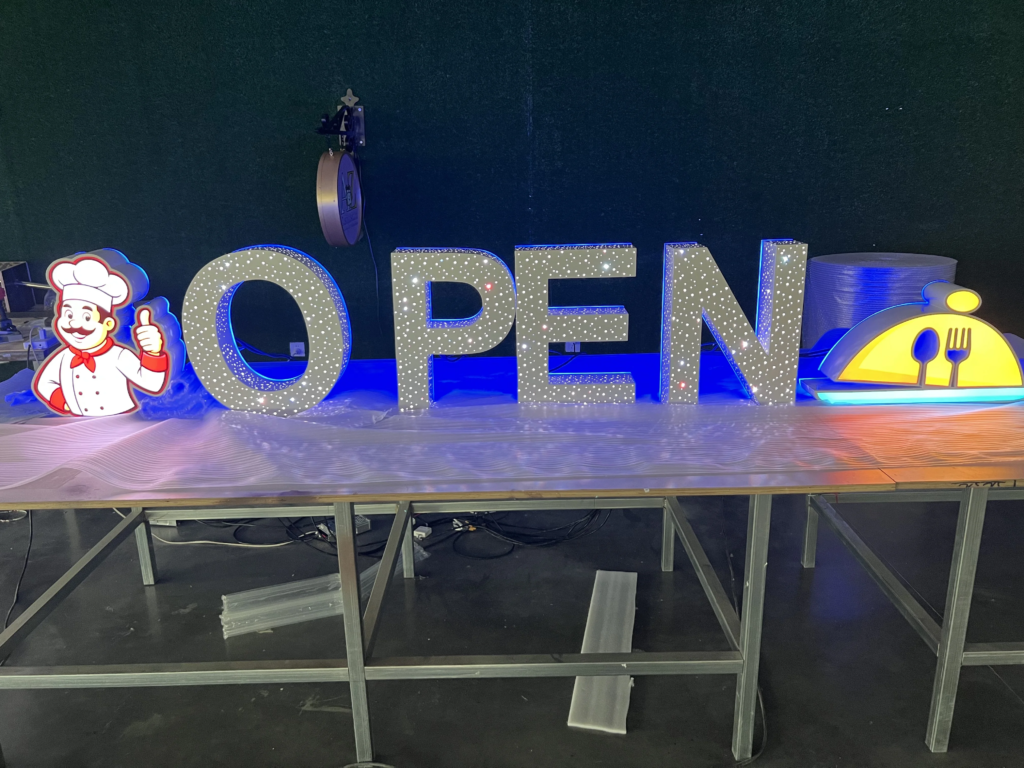
| Perforated sign and starry sky letters | 304 or aluminium face, laser cut | The pattern is cut into the face, so the material must hold a clean edge |
| Infinity mirror sign | Aluminium frame, glass or acrylic face | Weight and rigidity matter because the mirror panel is heavy |
| Marquee letters | Aluminium body, acrylic face | Party letters travel, so weight and handling decide the material |
| Pylon sign and gas station signs | Galvanised steel frame with aluminium or stainless cladding | The loads are structural, so the frame is steel and only the visible skin is stainless |
| Monument signs | Galvanised steel structure, aluminium or stainless cladding | Same reasoning as pylons, at pedestrian scale |
| Gold letters and coloured metal letters | 304 or 201 with a PVD coating | The colour comes from the coating, so the base grade can follow the exposure |
| Illuminated signs indoors (reception, retail) | 201 stainless, acrylic, or brushed aluminium | No salt, no standing water, so the extra cost of 304 is not needed |
The fixings decide the result as much as the letters do
Most corrosion complaints we see are not about the letter face. They are about the point where the sign meets the wall. Two rules cover almost every case:
- Match the fixings to the material. A 316 sign needs 316 fixings; stainless fixings in aluminium or steel structures need isolating washers.
- Never let aluminium sit directly against steel or stainless steel in a wet location. Water between two dissimilar metals turns into a small battery, and the aluminium is what gets eaten.
We supply the fixing hardware with the sign, labelled by letter, so the installer is not left guessing on site.
How to choose by size
Size changes the material decision twice: once because weight grows with area and thickness, and once because wind load grows with the square of the height. A 300 mm store front sign and a 1,500 mm roof letter of the same design are different engineering problems.
| Cap height | Recommended sheet | Return depth | Internal frame | Notes |
|---|---|---|---|---|
| Up to 150 mm | 0.6 to 0.8 mm stainless, or 1 mm aluminium | 30 to 60 mm | None | Interior work and small outdoor logos |
| 150 to 400 mm | 0.8 to 1.2 mm | 60 to 80 mm | None, or light ribs | The most common outdoor letter size |
| 400 to 800 mm | 1.2 to 1.5 mm | 80 to 120 mm | Ribs or a perimeter frame | Wind load starts to matter |
| 800 to 1,500 mm | 1.5 to 2.0 mm stainless, or 2 to 3 mm aluminium | 120 to 150 mm | Full internal frame | Lifting points needed during installation |
| Above 1,500 mm | Aluminium faces with a steel frame is usually the practical answer | 150 to 200 mm | Engineered frame | Quote only with the wall and wind data |
A useful rule of thumb for depth: the return should be roughly one fifth of the cap height, and never less than 60 mm on an illuminated letter, because the LED module and its cable need room inside the letter.
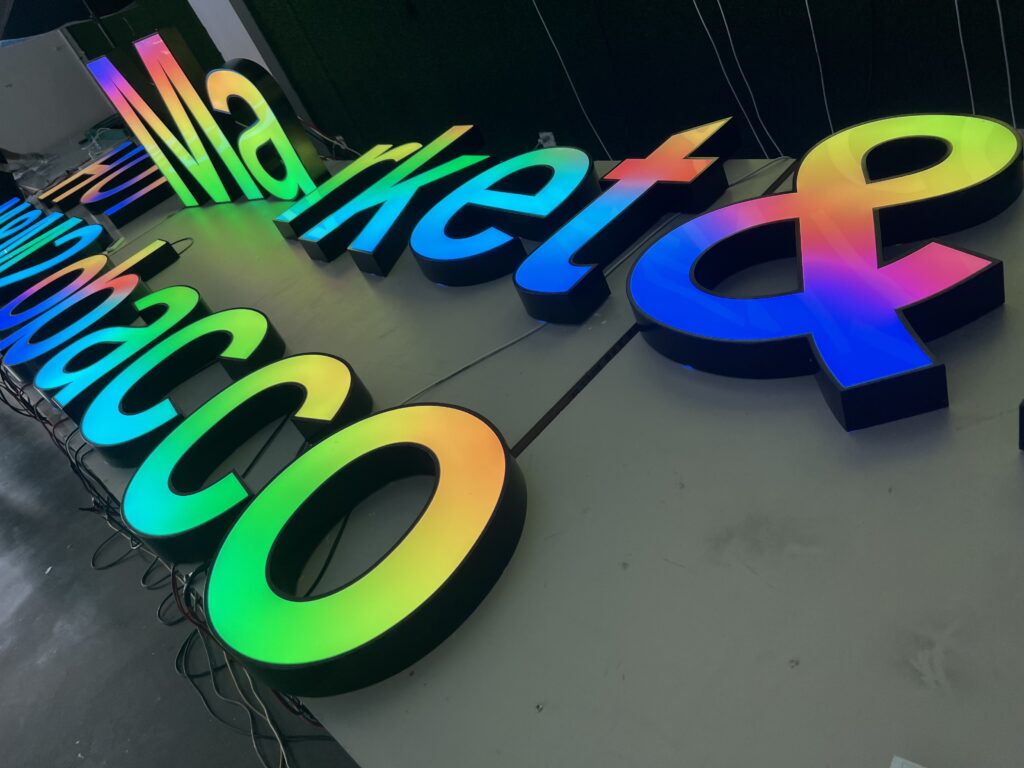
Weight then decides the rest. Aluminium is about one third the weight of stainless steel for the same thickness, which is why large roof signs and long facade letter sets are usually aluminium, even when the client originally asked for stainless. If the sign has to be lifted by crane, that difference shows up in the installation quotation. When the design is a light box sign rather than cut letters, the cabinet depth matters more than the sheet thickness, because the diffuser needs space behind the face.
What the material costs over ten years
The lowest quotation is rarely the lowest cost of ownership:
- A painted steel sign in a humid climate usually needs repainting or repair somewhere between year three and year five.
- A 201 stainless sign outdoors may need replacing entirely rather than repairing.
- 304 inland gives ten years and more with only occasional cleaning.
- 316 near the coast is the only grade we would guarantee in that environment.
When you compare quotes, put the two questions side by side: what does the sign cost now, and what will it cost to keep looking new for the next ten years. For coastal projects the answer is almost always 316, because the alternative is replacing the sign inside the project warranty period.
Care and maintenance
- Rinse the sign with fresh water monthly in coastal locations, and two or three times a year inland, to remove salt and road dust.
- Wash with a pH neutral soap and a soft cloth. Do not use bleach, chlorinated cleaners or abrasive pads: scratches destroy the passive layer that protects stainless steel.
- Never use carbon steel tools or steel wool on stainless steel. Trapped steel particles become rust spots that look like a material failure.
- Repair coating damage on steel promptly. Small touch ups are cheap; a rusted edge is not.
- Check fixings, gaskets and cable entries once a year, especially after a storm season.
The five mistakes we see most often
- Specifying 201 for outdoor work to save a few percent of the material cost.
- Pairing a 316 sign with 304 or plated steel fixings.
- Assuming stainless steel never rusts. It stains less, it is not stain free.
- Using thin sheet for large letters with no internal frame, then blaming the material for distortion.
- Powder coating directly over untreated steel in a wet climate.
Frequently asked questions
What material is best for outdoor signs?
For inland sites, 304 stainless steel or powder coated aluminium: both last ten years or more with almost no maintenance. Within about 5 to 10 km of the coast, in the humid tropics, or anywhere with salt spray, pool water or salt treated roads, 316 stainless steel is the grade we would specify. Away from salt, the choice between 304 and aluminium is usually decided by weight and finish rather than corrosion.
304 or 316 stainless steel: which one for signs?
It depends on chloride exposure, not on budget. For inland projects 304 is the right grade and the sensible use of money. Within roughly 5 to 10 kilometres of the coast, or anywhere with salt spray, pool water or salt treated roads, specify 316. The further inland the project, the less the extra cost of 316 buys you.
Is 201 stainless steel good for outdoor signs?
No, we do not recommend it outdoors. 201 has less nickel and chromium than 304, so it is noticeably less resistant to humidity and chlorides. It can develop surface rust spots outdoors, and in polluted cities rain alone can leave tea staining. Indoors, in dry conditions, 201 is a perfectly good way to get a stainless finish at a lower cost.
Will stainless steel letters rust?
Yes. Stainless steel stains less than other steels, which is where the name comes from, but it is not stain free. Chlorides are the main enemy: in coastal air, or where road salt and pool chemicals are present, even 304 can pit and tea stain. Keeping the surface clean and free of salt build up is what keeps it looking new.
Are iron letters going to rust?
Most letters sold as iron are mild steel. Bare, they rust quickly outdoors. Galvanised and then powder coated, they can serve for years inland, and they remain the cheapest way to get a specific painted colour. Near the sea we would steer the project to aluminium or stainless steel instead.
Which is lighter, aluminium or stainless steel?
Aluminium, by a factor of about three. That is the main reason large illuminated letters and roof signs are usually made from aluminium: lighter brackets, easier installation, lower freight and less load on the building.
What thickness should stainless steel letters be?
For small and medium letters, 0.8 to 1.2 mm is normal. Above roughly 800 mm cap height we move to 1.5 mm and up, with an internal frame to stop the face distorting. Thickness alone does not make a large letter rigid; the frame does.
Does the material change the lead time?
Mostly through availability. 304 and 316 are standard stock in the thicknesses we use, while unusual thicknesses or 316L can add a few days. Material weight also changes freight cost and the shipping method, which is the bigger effect on a large project.
Which material is best for a coastal hotel or beachfront retail?
316 stainless steel with 316 fixings, or powder coated aluminium with 316 fixings where weight matters more than the metallic finish. Either way we specify the fixing chain as part of the quotation, because that is where salt exposure shows up first.
Related reading: stainless steel vs aluminium channel letters · coastal signage specification.
Sources and further reading
- Stainless steel — grades, families and where each one is used.
- SAE 304 stainless steel — the composition of the standard outdoor grade.
- SAE 316L stainless steel — what molybdenum adds and when the low carbon version matters.
- Hot-dip galvanization — the coating that makes mild steel viable outdoors.
- Powder coating — how the painted finish on letter bodies is applied.
- Anodizing — the alternative aluminium finish.
- Galvanic corrosion — why aluminium and steel must be isolated from each other.
- Pitting corrosion — the failure mode that makes 316 necessary near salt water.
- Passivation — the last step after welding stainless steel.
- British Stainless Steel Association technical help — free guidance on grade selection and surface condition.
Not sure which material your project needs?
Send us four things — the location, the size you have in mind, whether the sign is illuminated, and the finish you want. We will recommend the material, explain the alternative, and quote it with the fixing details included. You can see the range on our custom metal signs page, we supply custom signs wholesale quantities to sign companies, and our shipping page explains how the material weight affects freight and delivery.