When buyers search for channel letter cost, they often expect a simple price per letter or per set.
In reality, Channel Letters are custom-fabricated signs, so pricing depends on much more than the number of letters. Size, material, lighting type, finish, LED system, installation method, waterproofing, packaging, and shipping can all significantly affect the final cost.
A small indoor set of custom channel letters may have a relatively simple structure, while a large outdoor façade sign may require thicker metal, waterproof LEDs, reinforced mounting, multiple power supplies, and oversized wooden crate packaging.
This guide explains the main factors that affect the cost of Channel Letters and helps commercial buyers understand what information is needed for an accurate quotation.
How Much Do Channel Letters Cost?
There is no universal price for Channel Letters.
The final cost depends on the complete specification of the sign.
For example, two signs with the same wording can have very different prices if one uses:
- painted aluminum
- front illumination
- standard white LEDs
while the other uses:
- brushed stainless steel
- halo illumination
- premium branded LEDs
- waterproof electrical components
- custom mounting hardware
For this reason, professional manufacturers usually quote custom channel letters based on approved dimensions and artwork rather than using a fixed price per letter.
1. Channel Letter Size Has a Major Effect on Cost
Letter size is one of the biggest pricing factors.
Larger Channel Letters require more:
- Acrylic
- Stainless steel or aluminum
- LED modules
- Wiring
- Labor
- Structural support
- Packaging space
A 300 mm-high letter and a 1,200 mm-high letter may use the same font, but their material consumption and production requirements are completely different.
As letter size increases, the sign may also require:
- thicker metal
- reinforced backs
- more fixing points
- additional power supplies
- segmented construction
This is especially important for exterior commercial signs mounted high on buildings.
For buyers comparing different sizes, our separate guide on Channel Letter Sizes can help determine practical dimensions before requesting a final quotation.
2. Overall Sign Width Also Matters
Letter height is not the only size factor.
A company name containing twelve letters naturally requires more material and labor than a four-letter logo.
For example:
CAFE
and
INTERNATIONAL BUSINESS CENTER
may use the same letter height, but the second sign requires far more fabrication, LED modules, wiring, and packaging.
That is why manufacturers normally need the full artwork rather than only the proposed letter height.
3. Material Choice Changes Channel Letter Cost
The metal and acrylic selected for the sign can significantly affect the price.
Aluminum Channel Letters
Aluminum is commonly used for commercial LED channel letters because it is lightweight, durable, and relatively economical.
It is frequently used for:
- letter returns
- back panels
- raceways
- large exterior signage
For large storefront signs, aluminum can also help reduce total shipping weight.
Stainless Steel Channel Letters
Stainless steel is usually selected when buyers want a more premium appearance or stronger corrosion resistance.
Common options include:
- 201 stainless steel
- 304 stainless steel
- 316 stainless steel
304 stainless steel is commonly used for commercial signage.
316 stainless steel generally costs more but is better suited to demanding coastal or high-salt environments.
Acrylic
Front-lit Channel Letters normally use translucent acrylic faces.
Pricing depends on:
- thickness
- color
- acrylic quality
- size
- whether the shape requires complex CNC or laser cutting
High-quality acrylic may cost more initially but usually provides better light diffusion and long-term appearance.
4. Front-Lit vs Backlit Channel Letter Cost
The lighting structure has a major impact on production cost.
Front-Lit Channel Letters
Front-lit Channel Letters usually consist of:
- acrylic face
- metal returns
- internal LEDs
- rear panel
This is one of the most widely used constructions for retail and commercial storefronts.
Because the structure is relatively straightforward, it is often one of the more cost-efficient illuminated letter options.
Backlit Channel Letters
Backlit or halo-lit letters normally use a metal face and return with LEDs directed toward the installation wall.
They may require:
- fabricated stainless steel
- clear acrylic rear panel
- wall spacers
- additional mounting hardware
- carefully positioned LEDs
Backlit letters often involve more detailed metal fabrication and finishing.
You can read more about the structure and installation considerations in our guide to backlit channel letters.
Front and Back Lit Channel Letters
Dual-lit Channel Letters provide both an illuminated front face and rear halo lighting.
Because two lighting systems may be involved, this construction normally requires more components and additional fabrication work.
It can be useful for businesses that want both strong visibility and a premium architectural appearance.
5. LED Quality Affects Price and Long-Term Cost
Not all LEDs are the same.
Low-cost LED modules may reduce the initial quotation, but they can also create problems such as:
- uneven brightness
- early LED failure
- color inconsistency
- poor waterproofing
- higher maintenance costs
Professional LED channel letters should use components appropriate for the sign depth, operating environment, and required brightness.
Factors that influence LED cost include:
- LED brand
- module density
- color temperature
- waterproof rating
- RGB or RGBW capability
- controller requirements
- dimming system
At HLW Sign, branded LEDs and reliable electrical accessories can be selected according to project requirements.
6. White LEDs vs RGB Channel Letters
Standard white illumination is generally simpler and more economical.
RGB or RGBW systems cost more because they may require:
- multi-color LED modules
- controllers
- additional wiring
- remote control systems
- app control
- more complex testing
RGB lighting is particularly popular for:
- bars
- entertainment venues
- nightclubs
- gaming locations
- restaurants
- branded retail environments
If dynamic color effects are not necessary, a fixed white LED system is usually more cost-effective.
7. Surface Finish Changes the Cost
Surface treatment can significantly change the appearance and price of custom channel letters.
Common finishes include:
- painted
- powder-coated
- brushed stainless steel
- mirror stainless steel
- brushed gold
- mirror gold
- rose gold
- black titanium
- electroplated finishes
Painted aluminum is typically easier to manufacture.
Premium brushed or mirror stainless-steel finishes require additional material preparation, polishing, protection, and careful handling.
Mirror finishes are especially sensitive to scratches during production and shipping.
8. Font Complexity Affects Fabrication Cost
A simple bold sans-serif font is normally easier to manufacture than an intricate script logo.
Complex designs may contain:
- narrow strokes
- sharp corners
- curved returns
- small internal spaces
- connected characters
These features can increase bending, welding, polishing, and LED installation time.
Very thin lettering may also require a different construction method because standard LED modules may not fit inside the stroke.
For this reason, artwork should be reviewed before final pricing.
9. Logo Shapes Can Cost More Than Standard Letters
Logos are often more difficult to fabricate than normal alphabet characters.
A custom logo may require:
- multiple colors
- several separate components
- complex curves
- special acrylic
- multiple illumination zones
A simple rectangular logo may be inexpensive, while an intricate crest or illustration may require substantially more fabrication time.
This is why sending vector files such as AI, EPS, PDF, or SVG helps manufacturers prepare a more accurate quotation.
10. Indoor vs Outdoor Channel Letters
Outdoor Channel Letters generally cost more than equivalent indoor signs because they may require stronger protection.
Outdoor construction can involve:
- waterproof LEDs
- sealed cable entries
- drainage holes
- corrosion-resistant metal
- outdoor power supplies
- stronger mounting systems
For outdoor installations, the sign should be designed for the actual environment rather than simply using waterproof LEDs.
UL Solutions notes that electric sign safety requirements can involve standards such as UL 48, with considerations including electric sign construction and components.
UL Solutions – Electric Sign Certification and Sign Component Solutions
11. Waterproof Rating Can Influence Price
For exterior LED channel letters, buyers often request IP65 or higher components.
Higher-protection components can increase material cost, but the complete waterproof structure matters more than the label on one LED module.
A reliable outdoor sign may also need:
- waterproof connectors
- protected power supplies
- sealed wiring
- suitable drainage
- corrosion-resistant screws
- weather-resistant finishes
Projects in coastal areas can require additional protection because salt exposure increases corrosion risk.
12. Installation Method Affects Channel Letter Cost
Different installation methods require different hardware and fabrication.
Individual Letter Installation
Each letter is mounted directly onto the wall.
This provides a clean appearance but may require more drilling and wiring on site.
Raceway Mounting
Letters are pre-mounted onto a metal raceway.
The raceway can contain:
- wiring
- power supplies
- connection points
This can make installation easier, but the raceway itself adds material and labor cost.
Backing Panel Installation
Channel Letters may also be installed onto:
- aluminum panels
- ACP panels
- acrylic panels
- metal frames
This solution can simplify installation on difficult walls but increases overall material volume.
13. Power Supplies and Electrical Accessories
The electrical system is another part of the total channel letter cost.
Larger signs may require multiple power supplies.
Pricing can vary depending on:
- output wattage
- brand
- waterproof rating
- local voltage
- certification requirements
UL Solutions identifies UL 48 as a standard covering electric signs and also lists related requirements for sign components and LED sign systems.
For North American projects, buyers should confirm local electrical and installation requirements before production.
14. Quantity Can Change the Unit Cost
Ordering several identical signs can reduce the average manufacturing cost.
For example, a chain store requiring 20 identical sets may benefit from:
- shared design preparation
- batch material purchasing
- repeated production processes
- standardized packaging
However, custom signs with different dimensions or logos are still treated as separate fabrication projects.
For multi-location rollouts, it is helpful to provide a full sign schedule at the quotation stage.
15. Packaging Is Part of the Real Cost
Large Channel Letters can be damaged during international shipping if packaging is inadequate.
Packaging may include:
- protective film
- EPE foam
- corner protection
- internal separation
- reinforced wooden crates
Large letters may also require specially designed wooden crates to prevent movement during transportation.
Although protective packing adds some cost, it can prevent far more expensive damage after shipment.
16. Shipping Can Sometimes Cost More Than Expected
International freight depends heavily on packaging volume rather than only product weight.
Large Channel Letters are often lightweight relative to their physical size.
This means transportation can be calculated by volumetric weight or cubic volume.
Factors affecting freight include:
- crate dimensions
- total CBM
- gross weight
- air or sea freight
- destination country
- DDP, DAP, FOB, or EXW terms
A lower product price does not always mean a lower total landed cost.
For overseas buyers, product structure should sometimes be optimized to reduce packaging volume.
17. Large Channel Letters May Need Split Construction
Very large letters can create shipping and installation problems.
For example, a 2-meter-high or 3-meter-high logo may not fit efficiently into standard packaging.
In these situations, manufacturers may recommend:
- split construction
- detachable sections
- modular frames
- on-site assembly
This can reduce freight volume but may require additional engineering and installation work.
18. Custom Channel Letters vs Cheap Standard Signs
When comparing quotations, buyers should confirm whether each supplier is quoting the same specification.
A lower quotation may use:
- thinner metal
- lower-grade acrylic
- cheaper LEDs
- fewer LED modules
- basic power supplies
- lighter packaging
The products may look similar in a drawing but perform very differently after installation.
This is why B2B buyers should compare the complete specification rather than only the final price.
What Information Is Needed for an Accurate Channel Letter Quote?
For accurate pricing, provide:
- Logo or artwork
- Overall width
- Letter height
- Installation location
- Indoor or outdoor use
- Front-lit or backlit requirement
- Preferred material
- Color or finish
- Installation wall photos
- Destination address or postal code
If exact dimensions have not yet been confirmed, the manufacturer can often recommend suitable dimensions based on the installation area.
How HLW Sign Calculates Channel Letter Cost
HLW Sign manufactures custom illuminated and non-illuminated signage for international commercial projects.
For each Channel Letters quotation, we evaluate factors such as:
- dimensions
- material
- LED configuration
- surface finish
- mounting method
- destination market
- packaging requirements
With factory-direct production, the goal is not simply to offer the cheapest construction but to recommend a structure appropriate for the actual installation environment.
You can explore our custom Channel Letters products here:
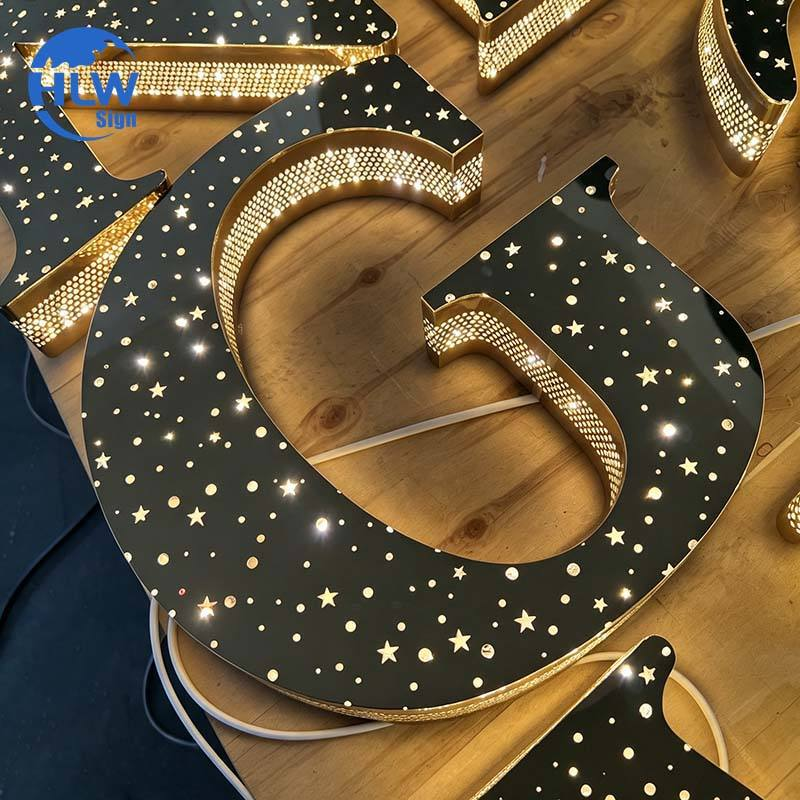
HLW Sign also manufactures specialized products including perforated LED channel letters, using customizable metal structures, acrylic faces, lighting colors, and waterproof LED systems.
Factory-Direct Production Can Reduce Unnecessary Cost
Working directly with a signage factory can simplify communication between:
design → engineering → production → inspection → packing → delivery
HLW Sign has been manufacturing customized signage since 2010 and currently operates an in-house production facility producing illuminated letters, metal letters, logos, light boxes, and other commercial signage.
Before production, our team can review:
- artwork
- installation dimensions
- wall conditions
- desired lighting
- letter depth
- material selection
This helps avoid unnecessary upgrades while ensuring the sign remains practical to manufacture and install.
Is the Cheapest Channel Letter Quote the Best Choice?
Not necessarily.
For B2B buyers, a better question is:
What specification am I receiving for the quoted price?
A reliable quotation should clearly state:
- materials
- letter depth
- illumination method
- LED type
- power supply
- waterproof rating
- mounting method
- accessories
- production lead time
- packaging
- warranty
- shipping terms
Without these details, it is difficult to compare two quotes fairly.
How to Reduce Channel Letter Cost Without Sacrificing Quality
There are several practical ways to control cost.
Choose the Right Size
Do not oversize the letters unnecessarily.
Correct proportion can reduce material, LED, packing, and shipping costs.
Use Aluminum Where Appropriate
For many large exterior signs, aluminum can provide a durable but lightweight alternative to stainless steel.
Avoid Unnecessary RGB Systems
If the brand only requires white illumination, fixed-color LEDs can reduce component and controller costs.
Simplify Installation
A raceway or backing panel may sometimes reduce local installation labor even if the factory cost is slightly higher.
Optimize Packaging
For large projects, modular or detachable structures can reduce international freight volume.
Frequently Asked Questions About Channel Letter Cost
Are Channel Letters priced per letter?
Sometimes, but this is not the most accurate method.
Most custom projects are quoted as a complete set because different letters have different widths, structures, and LED requirements.
Are illuminated Channel Letters more expensive?
Generally, yes.
Illuminated letters require LEDs, wiring, power supplies, and electrical testing.
Are backlit letters more expensive than front-lit letters?
They can be, particularly when premium stainless-steel finishes and more complex mounting structures are used.
However, the final price depends on size and specification.
Does RGB lighting increase the cost?
Yes.
RGB and RGBW systems normally require more expensive LEDs, controllers, wiring, and testing.
Does stainless steel cost more than aluminum?
In many cases, yes.
Stainless steel is heavier and can require more welding and finishing work.
Can large orders get better pricing?
Batch production can often reduce average manufacturing cost, especially when multiple signs use the same design and specifications.
Conclusion: What Really Determines Channel Letter Cost?
The cost of Channel Letters depends on far more than letter count.
The main pricing factors include:
size, material, illumination type, LED quality, finish, logo complexity, waterproofing, installation method, electrical configuration, quantity, packaging, and shipping.
For commercial buyers, the best approach is to request a detailed quotation based on the actual project rather than comparing generic prices.
A professional manufacturer should help you balance appearance, durability, manufacturing cost, installation complexity, and shipping cost before production begins.
If you are planning a new storefront, hotel, restaurant, office, retail, or architectural signage project, HLW Sign can review your artwork, dimensions, installation environment, and delivery location before recommending a suitable structure and quotation.