
Choose a sign power supply for the place where the power supply itself will be installed, then match its electrical output to the sign. A dry indoor cabinet, a sheltered exterior location and an area exposed to water require different protection. The highest IP number is not automatically the best choice.
For LED channel letters, the part often called a “transformer” is usually an AC/DC switching power supply feeding low-voltage LED modules. Confirm whether the modules require constant voltage or constant current before selecting the unit.
Start with the power supply location
An exterior sign does not necessarily require the power supply to sit outside. A suitable indoor unit may be installed in a protected, ventilated indoor location if the complete installation permits it. Conversely, a sign inside a shop may need a more protected supply if the proposed mounting area is damp or exposed to cleaning water.
Record the actual location: behind a reception wall, above a ceiling, in a service cabinet, under a canopy or inside a sign enclosure. Check access for replacement and whether heat or moisture can accumulate. “Inside the sign” does not guarantee a dry or cool environment.
Compare the four choices
| Choice | When to consider it | What must be confirmed |
|---|---|---|
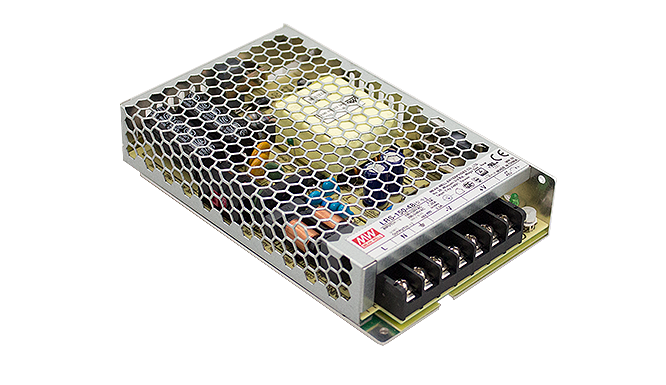
| Indoor ventilated power supply | A dry, protected and accessible equipment location. | Protection from contact with live terminals, ventilation, mounting instructions and the actual environmental rating. Ventilation holes are not rain protection. |
| Rainproof outdoor power supply | A sheltered exterior position when the exact product is approved for that exposure. | “Rainproof” is a trade description, not a complete IP specification. Confirm the documented rating, mounting direction, shelter and cable-entry requirements. |
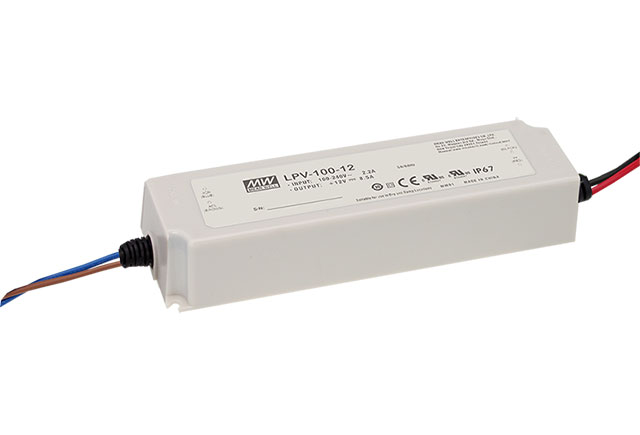
| IP67 power supply | A protected design needing the specified dust and temporary-immersion resistance. | The complete model code, installation restrictions, cable joints and permitted exposure. A tested housing does not waterproof separate connectors. |
| IP68 power supply | A project whose exposure requires a specifically documented IP68 product or option. | The manufacturer’s test conditions and actual operating permission. Do not assume indefinite underwater operation or pressure-wash resistance. |
Indoor units: ventilation is part of the design
A ventilated metal enclosure can be practical in a suitable indoor equipment space. Keep it accessible and protect the terminals. Do not place it where condensation, cleaning spray or leaks can reach it. Avoid covering ventilation openings or enclosing the supply in a small sealed box without checking the resulting temperature.
Rainproof does not mean unrestricted outdoor use
Before buying a unit described as outdoor or rainproof, ask for its actual environmental specification. A hooded enclosure, a potted case and a unit intended for sheltered use are different constructions. Also check whether adjustments, terminals or cable outlets need additional protection.
For backlit signs, decide where the power supply and connections will sit while planning the wall gap and maintenance access. A good lighting effect cannot compensate for a supply trapped in an inaccessible wet cavity.
IP67 and IP68: read the model documentation
IP ratings describe specified ingress tests, not every outdoor condition. Check the exact variant rather than a family name or a photograph. Adjustment openings and construction options can change the rating or the permitted exposure. The manufacturer’s IP guidance and exposure restrictions illustrate why these details matter.
IP68 conditions must be checked for the particular product. If a location may flood, the first design question should be whether the supply can be relocated above the exposure. A higher rating alone does not resolve heat, corrosion, cable joints or access for servicing.
Match voltage, load and control before ordering
- Confirm the LED requirement. Match the specified DC voltage and driving method. A 24 V supply is not a substitute for a 12 V supply.
- Add the connected load. Use the actual module quantities and rated consumption. As an arithmetic example, a 60 W load at 12 V draws 5 A; at 24 V it draws 2.5 A. This is not a recommended sign configuration.
- Allow for real operating conditions. Check the model’s derating information, enclosure temperature and startup behaviour. There is no single loading percentage that replaces the manufacturer’s instructions.
- Check controls and cables. RGB controllers, dimmers, branch connections and cable length must suit the electrical design. Do not raise output voltage to compensate for a poorly planned cable run.
When discussing custom illuminated signs, send the LED module specification and intended power supply location together. That makes it easier to coordinate the supply, wiring and mounting space before fabrication.
Protect the complete installation
Plan the mains side, low-voltage side, enclosures and cable entries as one system. Use suitable connections and maintain the grounding or insulation arrangements required by the selected equipment. Preserve cooling and access for inspection. The manufacturer’s LED power supply installation manual explains why mounting conditions and connection protection must be considered together.
Mains installation and electrical testing should be carried out by a qualified professional under the rules applicable to the project location. This article supports product selection; it is not a mains-wiring instruction.
Questions to settle before fabrication
- Where will the supply be installed, and can it be reached for replacement?
- Is the location dry, sheltered, directly exposed or at risk of temporary flooding?
- What voltage, load and control method do the LEDs require?
- What does the exact model permit for temperature, mounting and moisture?
- Who supplies the power unit, enclosure, connectors and installation work?
For a quotation, provide your artwork, sign dimensions, delivery country, installation photographs and the proposed power supply position. Confirm the selected components and supply scope on the approved project documents.