
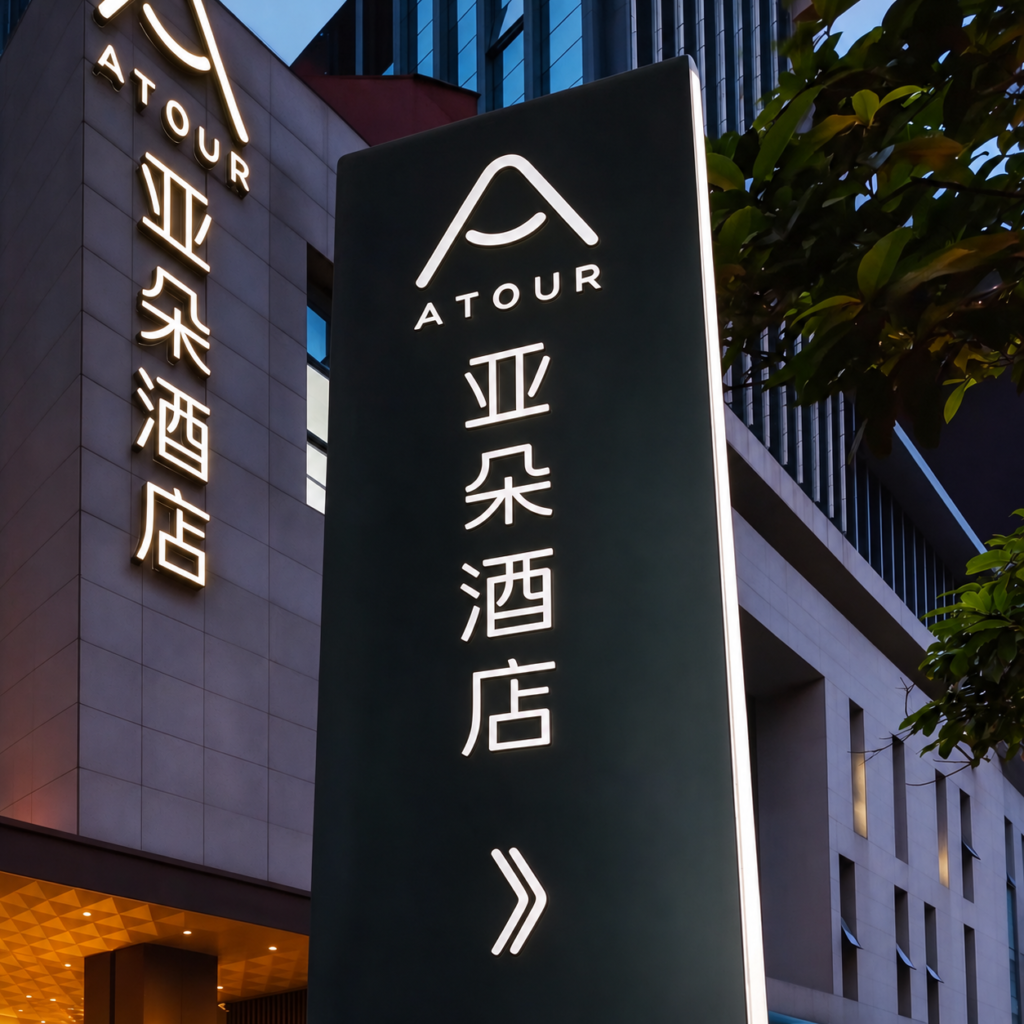
Hotel wayfinding signage helps guests move confidently from the street or car park to reception, lifts, rooms, restaurants, meeting spaces, and amenities. It is not simply a collection of arrows. It is part of the hotel experience.
A guest who arrives after a long flight should immediately understand where to park, which entrance to use, where to check in, and how to reach their room. Clear signage reduces unnecessary questions at reception while making the property feel organised, welcoming, and professionally managed.
For boutique hotels, resorts, business hotels, and large hospitality complexes, the best hotel wayfinding signage supports practical navigation while matching the property’s architecture and brand personality. At HLW Sign, we manufacture custom illuminated letters, reception logos, directional signs, room numbers, light boxes, and architectural sign systems with more than 15 years of production experience. We have supported hotel-signage projects and exported custom signs to more than 40 countries.
Why Hotel Wayfinding Signage Matters to Guest Experience
Guests begin evaluating a hotel before they reach the reception desk. The exterior building sign, car-park markers, entrance logo, and first directional sign all affect the arrival experience.
Poor hotel wayfinding signage creates friction. Guests may enter through the wrong door, struggle to locate lifts, miss the breakfast area, or call reception for simple directions. These small problems can make a premium property feel less polished.
A well-planned system improves the guest journey by:
- Creating a clear arrival route from street or car park to reception
- Reducing confusion at corridors, lifts, and floor changes
- Helping guests find rooms, restaurants, pools, spas, meeting rooms, and exits
- Supporting accessible navigation for different guest needs
- Reinforcing the hotel’s brand style at every touchpoint
- Reducing repetitive location questions for front-desk staff
- Creating a more consistent experience across large or multi-building properties
The Society for Experiential Graphic Design showcases how environmental graphics and wayfinding connect people to place. For hotel projects, that means signs should be planned as part of the whole guest environment—not added after interior finishes are complete.
Map the Hotel Guest Journey Before Designing Signs
The strongest hotel wayfinding signage begins with a route map, not a material sample.
Start by following the property as a first-time guest would. Identify every point where someone needs to make a decision. At each point, the sign should answer one clear question: “Where do I go next?”
| Guest Journey Stage | Signage Needed | Main Goal |
|---|---|---|
| Street arrival | Pylon sign, monument sign, building letters | Help drivers identify the hotel |
| Car park or drop-off | Entry, reception, parking, luggage signs | Direct arrivals to the correct entrance |
| Lobby | Reception logo, directory, lift and facility signs | Orient guests immediately |
| Lift lobby | Floor directory, room-range signs, amenity directions | Confirm the correct route |
| Guest corridor | Room numbers, directional arrows, exit signs | Make room finding simple |
| Facilities | Restaurant, bar, spa, gym, pool, meeting-room signs | Support hotel services and revenue areas |
| Outdoor areas | Garden, villa, beach, parking, event directions | Guide guests through larger sites |
A simple principle works well: place a sign before the guest needs to decide, not after they have already taken the wrong direction.
Select the Right Types of Hotel Wayfinding Signs
A hotel needs several sign types, but every one should use a consistent hierarchy of colour, typeface, icons, materials, and mounting details.
Exterior identification signs
Exterior signs create the first impression. These may include illuminated building letters, a hotel logo, monument signs, pylon signs, entrance panels, and parking-direction signs.
For roadside or façade visibility, front-lit channel letters provide a bright, direct night-time effect. For more refined entrances, backlit signs create a soft halo glow around metal letters or logos.
Reception and lobby signs
A reception sign should work as a visual anchor. Brushed stainless steel, mirror stainless steel, painted aluminium, acrylic, or illuminated logo letters can all suit a hotel lobby depending on the interior design.
Warm-white halo lighting is often suitable for premium interiors because it adds depth without creating harsh glare. For detailed logos, maps, or changing guest information, a custom LED light box sign may be more practical.
Directional and directory signs
Directional signs lead guests to lifts, rooms, restaurants, meeting rooms, toilets, and amenities. Directory signs provide a larger overview at reception, lift lobbies, or key junctions.
The information must be brief. Use clear destination names, consistent arrows, and uncomplicated icons. A directional sign should communicate in seconds, especially when a guest is carrying luggage or travelling with children.
Room numbers and identification signs
Room numbers, suite signs, toilet signs, floor numbers, stairwell markers, and meeting-room plaques are small but essential elements of hotel wayfinding signage.
For boutique or luxury hotels, room signs can use brushed metal, brass-look finishes, engraved acrylic, wood-effect panels, or halo-lit details. For larger properties, modular panels may be better because they simplify updates and replacement.
Hotel Signage Design Should Match the Property Brand
Hotel signage design is where function meets atmosphere. A luxury resort, business hotel, airport hotel, and boutique property should not use the same visual language.
| Hotel Style | Suitable Signage Direction |
|---|---|
| Luxury hotel | Brushed stainless steel, brass-look metal, warm-white halo lighting |
| Boutique hotel | Custom typography, textured materials, decorative icons, subtle illumination |
| Business hotel | Clean neutral colours, high contrast, clear directories, efficient layout |
| Resort or villa property | Weather-resistant signs, landscape integration, larger directional markers |
| Family hotel | Straightforward icons, strong colour coding, easy-to-read room zones |
| Urban lifestyle hotel | Bold graphics, illuminated logos, contemporary acrylic or painted-metal panels |
The right hotel signage design uses the property’s finishes as a guide. Stone, timber, marble, deep paint colours, fabric wall panels, and metal details can all inform the sign material and finish.
However, brand styling should never reduce legibility. Decorative fonts, low-contrast text, and reflective surfaces may look attractive in a design presentation but become difficult to read in real guest conditions.
Choose Materials That Balance Style and Maintenance
Hotels operate every day, often with high guest traffic and regular cleaning. Materials should look premium while remaining practical to maintain.
| Material | Best Use | Main Benefit |
|---|---|---|
| Brushed stainless steel | Reception logos, room signs, premium directional panels | Durable and refined |
| Painted aluminium | Exterior signs, directories, larger panels | Lightweight and flexible |
| Acrylic | Room plaques, illuminated faces, colour-coded signs | Clean finish and custom colour options |
| ACP | Wall panels, directories, sign backboards | Stable structure and concealed fixing |
| Brass-look stainless steel | Boutique and luxury interiors | Warm, upscale appearance |
| Printed translucent acrylic | Light boxes, maps, promotional graphics | Even illumination and detailed visuals |
| Silicone neon flex | Bars, lounges, photo zones | Decorative line-light effect |
For outdoor hotel wayfinding signs, material selection is only part of the specification. LED modules, power supplies, cable exits, drainage, wall fixings, and service access must match the actual weather exposure.
The IEC guide to IP ratings explains how dust and water protection is classified. Good drainage and sealed cable entries remain important even when the LEDs and power supply have an appropriate IP rating.
Use Lighting to Improve Visibility, Not Create Distraction
Lighting can make hotel wayfinding signage more effective in dark arrival zones, covered entrances, corridors, and evening hospitality areas.
Consider these options:
- Warm white, around 2700K–3200K, for luxury lobbies and restaurants
- Neutral white for clearer room numbers, directories, and detailed graphics
- Front-lit letters for exterior brand visibility
- Backlit letters for reception logos and architectural feature walls
- Edge-lit acrylic panels for slim indoor directional signs
- RGBW lighting for bars, events, or changing seasonal displays
For hotels, restrained lighting usually looks more premium than rapid flashing or saturated colour effects. If a project needs dynamic scenes for an event area, restaurant, or celebration display, learn more in our guide to RGB lighting.
Include Accessibility From the Start
Accessible signage should be planned during the initial sign schedule, not added at the end of a project.
For U.S. properties, the U.S. Access Board’s guidance on ADA signs explains requirements for tactile characters, Braille, non-glare finishes, and visual contrast. Final requirements should always be confirmed with the local authority and project professional.
For hotel applications, accessible signs may include:
- Permanent guest-room number signs
- Toilet and accessible-facility identification
- Lift floor designations
- Stair and exit identification
- Conference-room and permanent amenity signs
Not every directional sign needs tactile lettering or Braille, but permanent room and space identification can have specific requirements. Build these details into the sign schedule before production.
Plan Mounting, Wiring, and Updates Before Fabrication
A hotel-sign package may include hundreds of individual items. Production and installation work more smoothly when every sign has a clear location, material, fixing method, and electrical plan.
Before ordering, provide:
- Sign schedule and location plan
- Artwork, logo files, typography, and brand guidelines
- Dimensions, quantities, and installation photos
- Wall materials and fixing restrictions
- Indoor, covered outdoor, or full outdoor use
- Lighting colour, voltage, and power-supply location
- Required accessibility or local-code information
- Target opening date and delivery deadline
For illuminated signs, confirm whether cables can be hidden behind the wall or whether a rear panel, raceway, or decorative backing board is needed. Our guide to outdoor sign power supplies explains the electrical details that should be resolved before manufacturing.
For U.S. electric sign projects, UL Solutions’ electric-sign guidance explains evaluation services for electric signs and sign components. Listed components do not automatically certify the completed sign or final site installation.
Work With a Hotel Signage Source Factory
A premium hotel project needs signs that are consistent across the full property—not only a good-looking reception logo.
HLW Sign is a source manufacturer with more than 15 years of custom-sign production experience. We support hotel and hospitality projects with illuminated letters, backlit logos, directories, room-number signs, directional panels, light boxes, acrylic signs, and custom outdoor identification signs. Our experience exporting to more than 40 countries helps us prepare production drawings, suitable voltage configurations, numbered parts, installation guidance, pre-shipment photos or videos, and export-safe wooden-crate packing for larger signs.
For applicable illuminated projects, we complete 24-hour lighting tests before shipment. Our LED products include a two-year warranty, while power supplies include a one-year warranty.
Explore HLW Sign’s custom signage solutions or contact our team with your hotel floor plans, sign schedule, logo artwork, quantities, installation photos, destination country, voltage, and target opening date.
FAQs
What is hotel wayfinding signage?
Hotel wayfinding signage is a coordinated system of exterior, lobby, directional, room, facility, and accessibility signs that helps guests navigate a hotel property easily.
What hotel wayfinding signs are most important?
The essential signs are exterior identification, parking and entrance signs, reception and lift directions, floor directories, room numbers, exit signs, and directions to key facilities such as restaurants, pools, spas, and meeting rooms.
How does hotel signage design affect guest experience?
Hotel signage design affects how easily guests understand the property, find key facilities, and recognise the hotel brand. Clear, attractive, and consistently placed signs create a more relaxed and premium guest experience.
Which materials are best for hotel signage?
Brushed stainless steel, aluminium, acrylic, ACP, and brass-look metal are common options. The best material depends on the hotel style, location, maintenance needs, and whether the sign is illuminated.
What is needed for a hotel signage quotation?
Please send your sign schedule, drawings, artwork, quantities, dimensions, site photos, destination country, voltage, installation requirements, and target delivery date.