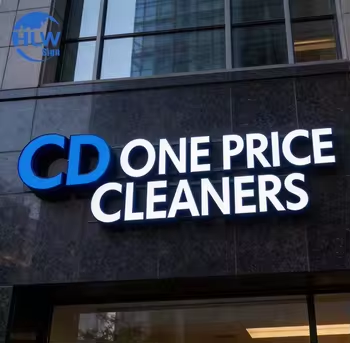
Choosing a custom channel letters manufacturer is not simply about finding a factory that can bend metal, cut acrylic and install LED modules. The real challenge is turning a flat logo into an illuminated sign that remains recognizable, evenly lit, weather-resistant and practical to install.
A logo on a computer screen has no physical depth, wiring, mounting points or exposure to wind and rain. Once that logo becomes architectural signage, every line, curve and letter spacing must work in the real world.
At HLW Sign, we approach each project as a small engineering system. Before production begins, our team reviews the artwork, installation environment, viewing distance, lighting method, materials, power requirements and shipping conditions. This process helps us identify potential problems before they become expensive production or installation mistakes.
A professional custom channel letters manufacturer should not only reproduce your design. It should protect the design throughout manufacturing, transportation, installation and long-term use.
Why a Custom Channel Letters Manufacturer Should Review Your Design First
Many sign quotations begin with only three pieces of information: the logo, total size and quantity. These details are important, but they are not enough to define a reliable illuminated sign.
Before providing a final production solution, the manufacturer should also ask:
- Where will the sign be installed?
- Is it intended for indoor or outdoor use?
- What is the wall material and color?
- From what distance will people view the sign?
- Is the location exposed to rain, snow, strong wind or coastal salt air?
- Will the letters be mounted individually or on a raceway?
- Where can the power supplies and controllers be installed?
- Which voltage, plug and electrical standards apply locally?
- Will maintenance access be available after installation?
This preliminary review can be described as a specification audit.
A specification audit does not mean changing the customer’s logo. Its purpose is to identify which parts of the design may become difficult to illuminate, fabricate, mount or maintain.
For example, a logo may have a large overall size but still contain extremely narrow strokes. Small enclosed spaces inside letters such as A, B, D, O, P and R may also limit LED placement. If these details are overlooked, the finished sign may contain visible dark areas, crowded wiring or weak structural sections.
An experienced custom channel letters manufacturer evaluates these risks before production and recommends practical adjustments where necessary.
The Smallest Detail Can Control the Entire Sign Structure
Customers naturally focus on the overall width or letter height. Inside the factory, however, the narrowest stroke may determine how the complete sign must be manufactured.
A narrow letter section affects:
- The size of the LED modules
- The available wiring space
- The minimum return depth
- Acrylic strength
- Welding and assembly access
- Mounting-point placement
- Light uniformity
Simply increasing the total letter size does not always solve these problems. A narrow stroke may require smaller LED modules, a fabricated acrylic body, a different illumination method or a small adjustment to the original artwork.
This is one reason why quotations from different factories may vary even when they appear to describe the same sign. One supplier may quote only according to the total dimensions, while another has already considered the internal structure, lighting and installation requirements.
A reliable custom channel letters manufacturer should explain any necessary design adjustment before requesting production approval.
Light Should Be Designed as Part of the Structure
LED modules should not be treated as components added after the metal letters have been completed. Light, acrylic, internal depth and letter geometry must be planned together.
The distance between the LED modules and the illuminated acrylic surface affects how well individual light points blend. If the letters are too shallow, bright LED spots may be visible through the face. If the returns are unnecessarily deep, the letters become heavier and international shipping costs may increase.
The factory must consider:
- LED beam angle
- Module spacing
- Acrylic light transmission
- Letter depth
- Interior reflection
- Face color
- Required brightness
- Ambient light at the installation site
A capable custom channel letters manufacturer uses these factors to create uniform illumination instead of relying only on higher LED power.
This is particularly important for halo-lit signage. With backlit channel letters, the wall becomes part of the lighting system. Smooth, light-colored walls usually create clearer halos, while brick, stone or dark surfaces absorb and scatter more light.
The letter-to-wall distance must also be controlled. If the distance is too small, the halo may appear narrow and uneven. If it is too large, the light may lose definition.
Which Channel-Letter Lighting Method Should You Choose?
The correct lighting method depends on the brand style, viewing distance, wall surface and required nighttime appearance.
Front-Lit Channel Letters
Front-lit channel letters emit light directly through an acrylic face. They provide strong visibility and are widely used for storefronts, shopping centers, restaurants, medical facilities and commercial buildings.
Their main advantages include:
- Clear nighttime readability
- Strong brand-color presentation
- Good visibility from a distance
- Efficient LED arrangement
- Suitability for large letters and logos
The manufacturer must correctly coordinate the acrylic thickness, trim structure, return depth and LED spacing to avoid shadows and visible light points.
Backlit or Halo-Lit Channel Letters
Backlit letters direct light toward the installation wall, creating a softer halo around each element. They are often selected for hotels, offices, beauty brands, luxury stores and reception areas.
The result is elegant, but it depends heavily on the installation surface. Customers should send photographs of the actual wall before production so the factory can recommend an appropriate lighting distance and brightness.
Dual-Lit Channel Letters
Dual-lit channel letters combine direct face illumination with a rear halo. This construction creates greater visual depth and improves both long-distance visibility and architectural appearance.
Because two lighting effects must work independently without unwanted light leakage, dual-lit letters require more careful internal separation and wiring.
RGB and RGBW Channel Letters
RGB channel letters allow users to select colors, brightness levels and dynamic effects. RGBW systems add a dedicated white channel, which can produce a cleaner white light than mixing red, green and blue.
For these projects, the custom channel letters manufacturer must calculate controller capacity, total electrical load, amplifier requirements and wiring groups. The factory should also confirm whether the customer wants remote control, mobile-app control, synchronized effects or individually programmed letter groups.
Material Selection Should Follow the Installation Environment
There is no single material that is best for every channel-letter project.
Aluminum is lightweight and corrosion-resistant, making it suitable for many large outdoor letters. Stainless steel offers a premium appearance and is frequently used for architectural halo-lit letters. Acrylic is commonly used for illuminated faces and can also be fabricated into detailed small letters.
The environment should guide material selection:
| Installation condition | Manufacturing consideration |
|---|---|
| Large elevated storefront | Lightweight aluminum construction |
| Premium indoor reception | Brushed, mirror or plated stainless steel |
| Coastal location | Corrosion-resistant metal, suitable fasteners and protected electrical parts |
| Small detailed logo | Acrylic or compact fabricated construction |
| Strong daytime brand colors | Painted returns with matched acrylic or vinyl |
| Luxury halo-lit branding | Stainless steel with controlled wall spacing |
| Temporary or movable installation | Lightweight structure or removable backing panel |
Outdoor signs also require appropriate protection against dust and water. The International Electrotechnical Commission’s explanation of IP ratings notes that IEC 60529 classifies the protection provided by electrical enclosures against solids and liquids.
An IP rating should apply to the relevant component or enclosure. It should not be used as a general advertising phrase without explaining which part of the sign has been evaluated.
Your custom channel letters manufacturer should select the material, surface finish and electrical protection according to the actual climate—not simply offer the same structure for every project.
Installation Must Be Considered Before Production
A beautifully manufactured sign can still create serious problems if the mounting method is considered only after delivery.
The factory should confirm the following information before finalizing the structure:
- Wall material
- Wall thickness
- Space available behind the wall
- Location of the power connection
- Indoor or outdoor installation
- Maximum number of permitted wall penetrations
- Access for future maintenance
- Local installer requirements
- Individual or raceway mounting preference
Individual Letter Mounting
Individually mounted letters create a clean appearance without a visible background panel. This method is ideal when wiring can pass through the wall and the installer has suitable access behind the installation surface.
A full-size paper template helps the installer position the holes, cables and mounting studs accurately.
Raceway Mounting
A raceway holds the wiring and power supplies in a shared metal enclosure. It can reduce the number of wall penetrations and simplify installation when rear-wall access is limited.
The raceway can be painted to match the building surface so that it remains visually unobtrusive.
Backing-Panel Mounting
A backing panel can organize multiple letters, logos, controllers and cables into one assembly. It is useful for complex designs, removable installations and projects requiring only one main power connection.
A practical custom channel letters manufacturer should recommend the mounting system according to the building—not according to which option is easiest for the factory to produce.
Ask for a Production Plan, Not Only a Price
Two quotations may show the same sign size while representing completely different structures and quality levels.
Before selecting a supplier, ask for the following details:
- Metal type and thickness
- Acrylic type and thickness
- Letter depth
- Lighting direction
- LED voltage and color temperature
- LED and power-supply specifications
- Mounting method
- Wiring arrangement
- Waterproofing and drainage design
- Required certification
- Lighting-test procedure
- Packaging method
- Production lead time
- Warranty and replacement-parts policy
These details make supplier comparisons more accurate and reduce the risk of additional costs after the order has started.
For signs installed in the United States, buyers should confirm project-specific listing and inspection requirements with their local installer or authority having jurisdiction. UL Solutions provides certification programs for custom electric signs, including channel-letter applications.
For European projects, CE marking should not be treated as a decorative label. The European Union’s CE-marking guidance explains that manufacturers use the marking to declare conformity with applicable EU requirements.
A trustworthy custom channel letters manufacturer will ask about the destination market and will not claim that one certificate automatically satisfies every country, city or building.
How HLW Manufactures Custom LED Channel Letters
HLW Sign has specialized in custom signage manufacturing since 2010. Our production process begins after the artwork, construction, color, lighting and installation details have been confirmed.
1. Artwork and Production Drawing
AI, EPS, SVG or editable PDF files are preferred. If the customer only has a JPG or PNG image, our design team can help recreate it as production-ready artwork.
The production drawing normally confirms:
- Overall dimensions
- Individual letter sizes
- Material and finish
- Letter depth
- Lighting direction
- Color temperature
- Cable positions
- Mounting points
- Accessories
Production begins only after these essential details have been reviewed.
2. Material Cutting and Forming
Metal backs, returns and acrylic faces are cut according to the approved files. Returns are formed to match each contour, while internal structures are added where additional strength is required.
3. Welding and Surface Finishing
Metal sections are welded, polished and prepared for painting, brushing, mirror polishing or plating. RAL or Pantone references can be used when customers require specific brand colors.
4. LED Layout and Wiring
The LEDs are arranged according to the letter depth, face material and required brightness. Cables are routed to remain organized and serviceable.
For RGB projects, controllers and amplifiers are selected according to the electrical load and programmed lighting functions.
5. Lighting and Quality Inspection
The completed custom LED channel letters are illuminated to check:
- Brightness consistency
- LED color uniformity
- Dark areas
- Visible light points
- Power stability
- Controller operation
- Cable connections
- Surface condition
HLW Sign conducts continuous lighting tests before shipment. Finished-product photographs or videos are provided for customer confirmation.
6. Export Packaging
Acrylic faces, painted surfaces and metal finishes are protected separately. Installation templates, power supplies, controllers and accessories are labeled for easier identification.
For international transportation, the finished signs can be packed in reinforced export wooden crates to reduce movement, compression and impact during handling.
How to Compare Different Manufacturers
Do not evaluate a factory only through its best nighttime photographs. Attractive lighting photographs cannot show metal thickness, wiring quality, drainage, mounting strength or packaging.
Ask potential suppliers to provide:
- Production drawings
- Material specifications
- Daytime product photographs
- Illuminated test videos
- Internal LED-layout photographs
- Wiring information
- Mounting instructions
- Packaging photographs
- Production schedules
- Warranty terms
Also pay attention to the questions the supplier asks you.
If a factory provides a final quotation without confirming the wall condition, voltage, installation location, lighting method and delivery address, the quotation may be based on incomplete assumptions.
The right custom channel letters manufacturer should help the customer discover missing information rather than simply wait for instructions.
Why an Experienced Factory Sometimes Says No
One sign of professional manufacturing is the willingness to question an unreliable specification.
A factory may need to reject or modify a detail when:
- A stroke is too narrow for uniform lighting
- The proposed depth is insufficient for light diffusion
- A finish is unsuitable for the local climate
- The mounting system cannot safely support the sign
- One RGB controller cannot handle the total load
- A shipping division creates a visible joint in a critical area
- A transformer location cannot be accessed for maintenance
- Local electrical requirements have not been confirmed
This does not mean the project must be cancelled. A qualified custom channel letters manufacturer should explain the technical risk and offer a practical alternative.
An adjustment made before manufacturing is usually faster and less expensive than repairing the sign after installation.
Why Choose HLW Sign?
HLW Sign is a source factory specializing in illuminated letters, custom logos and commercial signage. Our approximately 3,250-square-meter production facility supports metal fabrication, acrylic processing, surface finishing, LED assembly, testing and export packaging.
Customers can customize:
- Letter size and depth
- Stainless steel, aluminum and acrylic materials
- Painted, brushed, mirror and plated finishes
- Front-lit, backlit, side-lit and dual-lit structures
- Single-color, RGB and RGBW lighting
- Color temperature and brightness
- Individual, raceway and backing-panel installation
- Local voltage, plug and controller configuration
- Export packaging and shipping method
We support an MOQ of one piece, free design assistance and pre-shipment photo or video confirmation. You can learn more about our manufacturing background on the HLW Sign About Us page.
For customers looking for custom LED channel letters, our goal is not only to manufacture the visible letters. We also consider the wiring, mounting, maintenance and transportation conditions that determine whether the complete project succeeds.
Frequently Asked Questions
What files should I send to a custom channel letters manufacturer?
Vector files such as AI, EPS, SVG or editable PDF are preferred. You should also provide the required size, installation photographs, wall material, brand colors, lighting preference, voltage and delivery address.
Can channel letters reproduce a thin or complicated logo?
In many cases, yes. However, the factory must review the narrowest strokes and smallest internal spaces. Some details may require smaller LEDs, fabricated acrylic, a different lighting method or a slight structural adjustment.
Are custom LED channel letters suitable for outdoor use?
Yes, provided that the metal, surface finish, LED modules, power supplies, drainage and mounting hardware are selected for the environment. Coastal, freezing, desert and high-wind locations should be discussed before production.
Can all the letters use one power connection?
Often they can, but this depends on the total electrical load, controller system and mounting arrangement. The manufacturer should calculate the load and provide a wiring plan.
How long does production take?
Many HLW Sign projects require approximately 7–15 working days after the production drawing is approved. Large quantities, complex finishes or technically demanding structures may require additional production time.
Final Thoughts
A custom sign is not simply metal, acrylic and LEDs assembled into the shape of a logo. It is the result of many connected decisions about scale, illumination, structure, weather resistance, installation, maintenance and transportation.
When comparing suppliers, look beyond the lowest quotation and the most attractive rendering. Ask how the sign will be engineered, tested, installed and serviced.
Choose a custom channel letters manufacturer that understands what happens before production and after delivery. That is how a two-dimensional logo becomes a reliable architectural sign and a lasting expression of your brand.
Contact HLW Sign to request a free design review, production recommendation and quotation for your next channel-letter project.