I have seen this go wrong more times than I can count.
A buyer orders low-cost front-lit letters. Six months later, the acrylic face has yellowed, the LEDs are flickering, and the installer is back on a lift trying to diagnose a sign that should never have left the factory that way.
After 15+ years making signs in Lu’an, China—with more than 3,000 square metres of production space and a team of experienced fabricators—I still see buyers make the same three mistakes: they choose materials that fight the local climate, they compare only the product price, and they assume a certificate solves every local approval issue.
That is why this guide exists. Exterior signs are not just letters with LEDs inside. They are material, wiring, structure, installation, weather exposure, and honest cost calculations.
Exterior Sign Types and Applications for Commercial Buildings
Look, most commercial buyers do not need an oversized decorative sign just because it looks impressive in a rendering. They need exterior signs that stay readable, survive the environment, and fit the actual building.
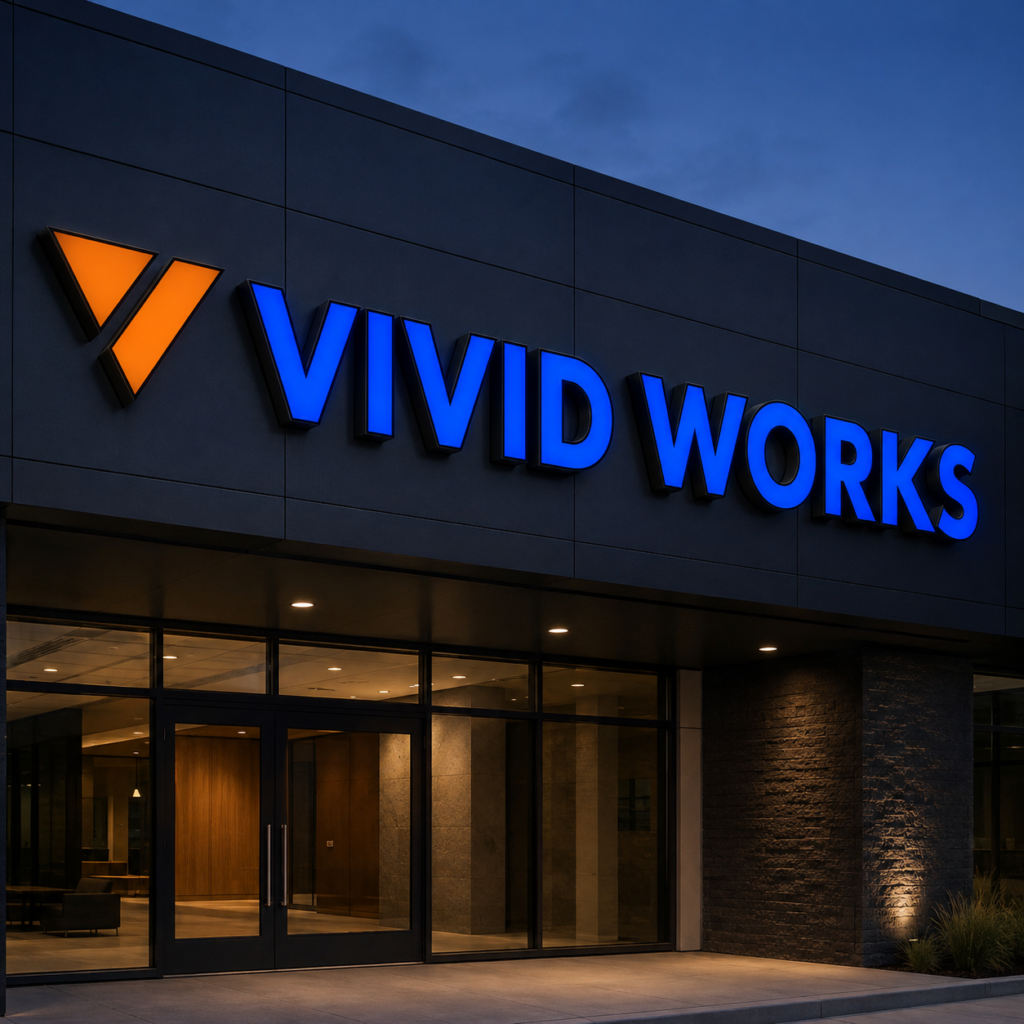
Front-lit channel letters are usually the workhorse. They suit storefronts, warehouse entrances, retail façades, restaurants, and industrial buildings. We fabricate them with metal returns, acrylic faces, internal LED modules, and sealed wiring. The face lighting provides direct visibility from the front, which is what most roadside and retail projects really need.
Backlit letters are a different product. They create a halo on the wall behind the letter, so they look more architectural and premium—but they also need suitable wall texture, stand-off distance, wiring routes, and installation care. If your project needs that effect, see HLW Sign’s backlit letter options.
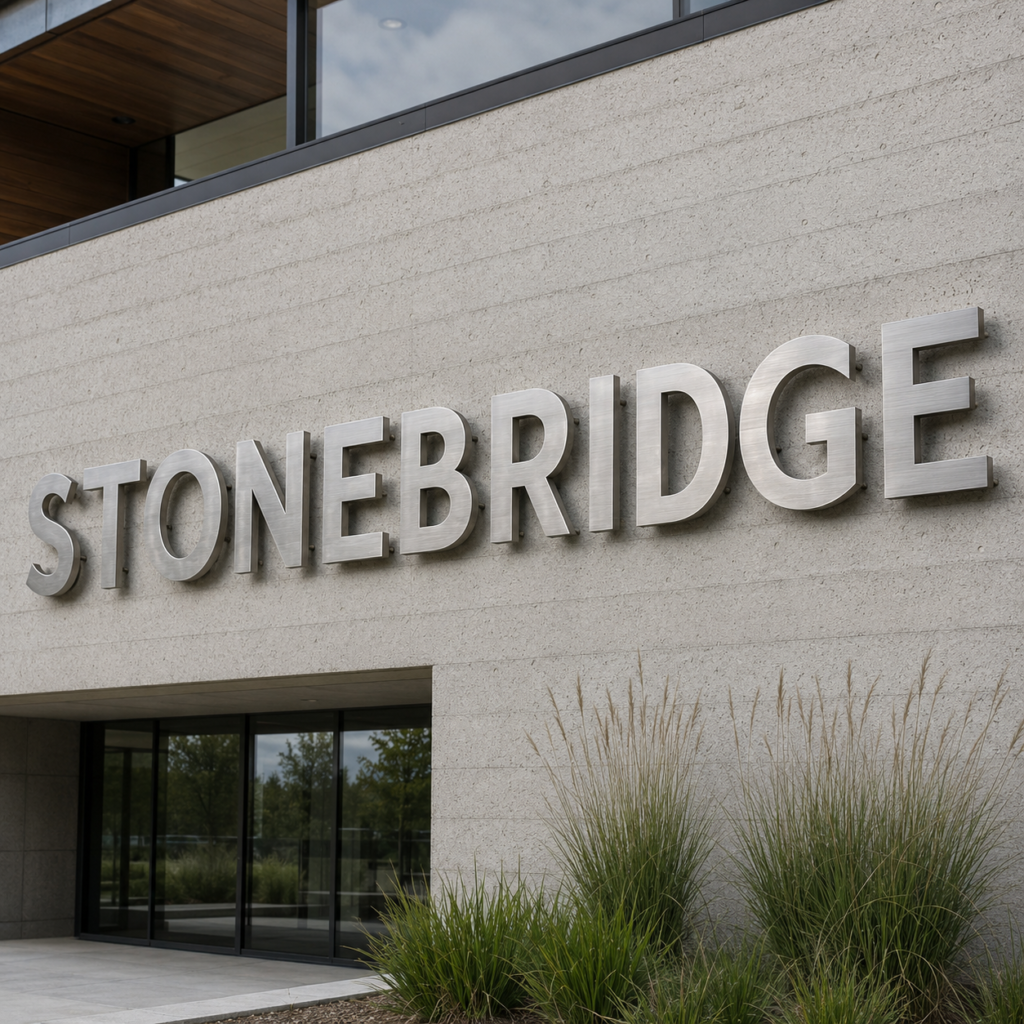
For non-illuminated exterior signs, stainless steel letters are still one of the safest choices when the building has enough ambient light and the priority is a clean, durable finish. No LED modules. No power supply. No electrical servicing. Just properly fabricated metal letters and a correct mounting system.
| Exterior Sign Type | Where It Works Best | What You Need to Know |
|---|---|---|
| Front-lit channel letters | Retail, industrial façades, storefronts | Best for direct night-time readability |
| Backlit letters | Offices, hotels, premium entrances | Wall finish affects the halo result |
| Metal letters | Daylight locations, corporate buildings | Low-maintenance, no power required |
| LED light box signs | Menus, wall graphics, brand panels | Need uniform internal illumination |
| Pylon and freestanding signs | Entrances and roadside sites | Structure and wind loads matter most |
Material Selection: Aluminum, Stainless Steel, Acrylic, and Panels
Here is what many buyers learn too late: the material data sheet matters less than the material’s response to your real failure risk.
UV fade? Salt corrosion? Thermal expansion? Water trapped behind letters? Freeze-thaw cycles? Pick the wrong combination and your exterior signs will look tired long before the warranty discussion starts.
Aluminum is lightweight, corrosion resistant, and practical for many inland projects. It is easier to handle on site than stainless steel, especially for large letter sets installed high on a wall. Powder-coated aluminum can work very well when the coating, edges, fasteners, and installation environment are properly considered.
Stainless steel is the default choice for many premium outdoor signs. Grade 304 works well for normal exterior conditions. If the building is near salt water, in a coastal city, or exposed to harsher industrial air, I would seriously consider 316 stainless steel. It costs more, but corrosion repairs on a finished building cost more than that.
Acrylic is about light quality. Good outdoor-grade acrylic gives a clean illuminated face and stable colour. Cheap acrylic may look acceptable during inspection, then turn yellow, cloudy, or brittle after prolonged UV exposure. For illuminated acrylic letter signs, ask what acrylic is being used, how thick it is, and how the face will be supported.
For panel-based exterior signs, aluminum composite panels can be useful—but only when they are correctly supported and finished. A flat panel on a large wall still has to deal with wind movement, edge sealing, and mounting strength.
Code Compliance, ADA, and Wind-Load Safety
I cannot tell you how many times someone has asked us for a sign that will “probably pass” inspection.
That is not how exterior signs work. Local codes, landlord rules, electrical requirements, accessibility rules, and permit conditions vary by project. A factory can build to an approved specification; it should not guess what a local inspector will accept.
For electric signage in the United States, confirm the applicable requirements with the local authority having jurisdiction before production. UL Solutions’ electric-sign guidance explains certification services for electric signs and sign components. Do not assume that one certified component means the full sign or installation is automatically approved.
IP ratings cause similar confusion. The IEC guide to IP ratings explains that these ratings classify protection against dust and liquid ingress. An IP rating is useful, but it is not a force field. It does not replace correct drainage, sealed cable exits, suitable power supplies, or a proper installation method.
For large exterior signs, pylon signs, rooftop letters, projecting signs, and exposed façades, wind load is not optional. ASCE 7-22 covers structural design loads, including wind. The final anchors, steelwork, wall connection, and foundation should be reviewed by a qualified local engineer.
ADA requirements can also apply to certain permanent identification signs. The U.S. Access Board’s sign guidance covers tactile characters, Braille, contrast, and non-glare finishes where applicable. Not every exterior display needs tactile lettering, but the project team should confirm it before fabrication.
Designing Exterior Signs for Legibility and Brand Impact
Here is another hard truth: brightness is not legibility.
A high-brightness white sign might work well on a highway-facing warehouse. Put that same light on a boutique hotel or restaurant, and it can make the whole façade feel cold and overbuilt.
For industrial and long-distance viewing, cooler white lighting can provide a crisp, visible result. For retail, hospitality, and premium commercial buildings, warmer colour temperatures often create a more refined appearance.
The fastest way to make exterior signs difficult to read is to use thin artwork, weak contrast, oversized secondary text, or a letter height that does not match the viewing distance.
Before production, check:
- How far customers will stand or drive from the sign
- Whether the sign is viewed straight on or at an angle
- The wall colour and texture behind the sign
- Ambient street and building lighting
- The narrowest stroke in the artwork
- Whether small text should be illuminated or use another method
- The letter height required for the intended viewing distance
For white channel letters, LED module layout is usually more important than the number printed on the module box. A poor layout creates hot spots and dark corners. A correct layout creates an even, readable face.
Manufacturing Processes: Cutting, Welding, Lighting, and Assembly
A good exterior sign does not happen because someone owns a laser machine.
It happens because the factory controls the boring details that buyers do not see in a catalogue photo.
At HLW Sign, a typical illuminated-letter project moves through artwork confirmation, metal cutting, bending, welding, grinding, acrylic fabrication, LED installation, sealing, lighting tests, and packing. The exact process changes according to the sign type, but the quality checks should not disappear just because the deadline is tight.
Most sign failures are not caused by the front face. They start with poor sealing, weak soldering, overloaded power supplies, poor drainage, or cable exits that were never planned correctly.
Before shipment, we complete lighting tests and provide photos or videos for confirmation. That does not replace correct site installation, but it helps identify issues before the sign is in a wooden crate on the way to another country.
Installation, Maintenance, and Total Cost of Ownership
Look, the product price is not the project cost.
A factory-direct letter set may be competitively priced, but the real installed cost can include freight, duties, crating, engineering, permits, lifting equipment, electrical work, local installation labour, and future maintenance.
This is where buyers either save money or lose it.
A low-cost sign that needs a crane twice because the power supply cannot be accessed is not low cost. A large sign with no clear mounting drawing is not a bargain. A coastal letter set made from the wrong stainless steel is not a saving.
For exterior signs, calculate the full project cost:
| Cost Area | What Buyers Often Forget |
|---|---|
| Fabrication | Materials, lighting, finish, and internal structure |
| Freight | Crate size, weight, shipping terms, and insurance |
| Engineering | Wind load, anchors, structure, and local approval |
| Installation | Lift, crane, electrician, wall access, and labour |
| Permits | City, landlord, and property requirements |
| Maintenance | LED, power-supply, and graphic-replacement access |
Good exterior signs should be serviceable. Staff should not need to dismantle the complete sign just to replace a power supply or repair a connection.
Measuring ROI and the Factory-Direct Advantage
Here is the real factory-direct advantage: control.
You can control the material specification, approve the production drawing, confirm the lighting effect, inspect photos before shipment, and work with your local installer on the final connection. But that only works when everyone understands who is responsible for each step.
HLW Sign is a 15+ year signage source manufacturer. We support custom production from one set upward, provide drawings before fabrication, complete pre-shipment lighting checks, and use export-safe wooden-crate packing. Our role is to manufacture the approved exterior-sign system accurately. The local installer, engineer, and authority remain responsible for the final site conditions and approvals.
Measure ROI by lifespan and maintenance—not only first cost.
A properly specified stainless steel letter set, outdoor-grade acrylic face, sealed LED system, and serviceable installation can deliver a far better return than a cheap replacement project two years later.
The sign industry is not magic. It is material science, process control, installation planning, and honest math.
If a supplier cannot explain the material, show a clear production drawing, define the lighting system, or discuss service access, walk away.
Explore HLW Sign’s illuminated signage solutions or contact HLW Sign with your artwork, dimensions, wall photos, and destination details.
FAQs
Q: Do I need 316 stainless steel for exterior signs?
Use 316 when the sign is exposed to coastal salt air, high humidity, or harsher industrial conditions. For many inland projects, 304 stainless steel is suitable. Confirm the full environment before choosing.
Q: What IP rating do I need for an outdoor illuminated sign?
The correct rating depends on the environment and installation method. IP ratings address ingress protection, but drainage, cable sealing, power-supply placement, and installation quality are equally important.
Q: How long do illuminated exterior signs last?
Service life depends on the material, LED modules, power supply, weather exposure, installation quality, and maintenance. A properly designed sign should allow practical replacement of serviceable components.Under normal conditions, it can be used for 5,000 hours.
Q: Can I order one custom exterior sign from China?
Yes. HLW Sign supports custom projects from one set. However, oversized one-off signs may involve higher freight, crating, engineering, and installation costs, so the complete project should be evaluated before ordering.