
When planning an illuminated sign, many buyers ask for the brightest option first. But brightness is not the real question. The more useful question is: does your sign need front and back lit channel letters, or will a single lighting effect produce a better result?
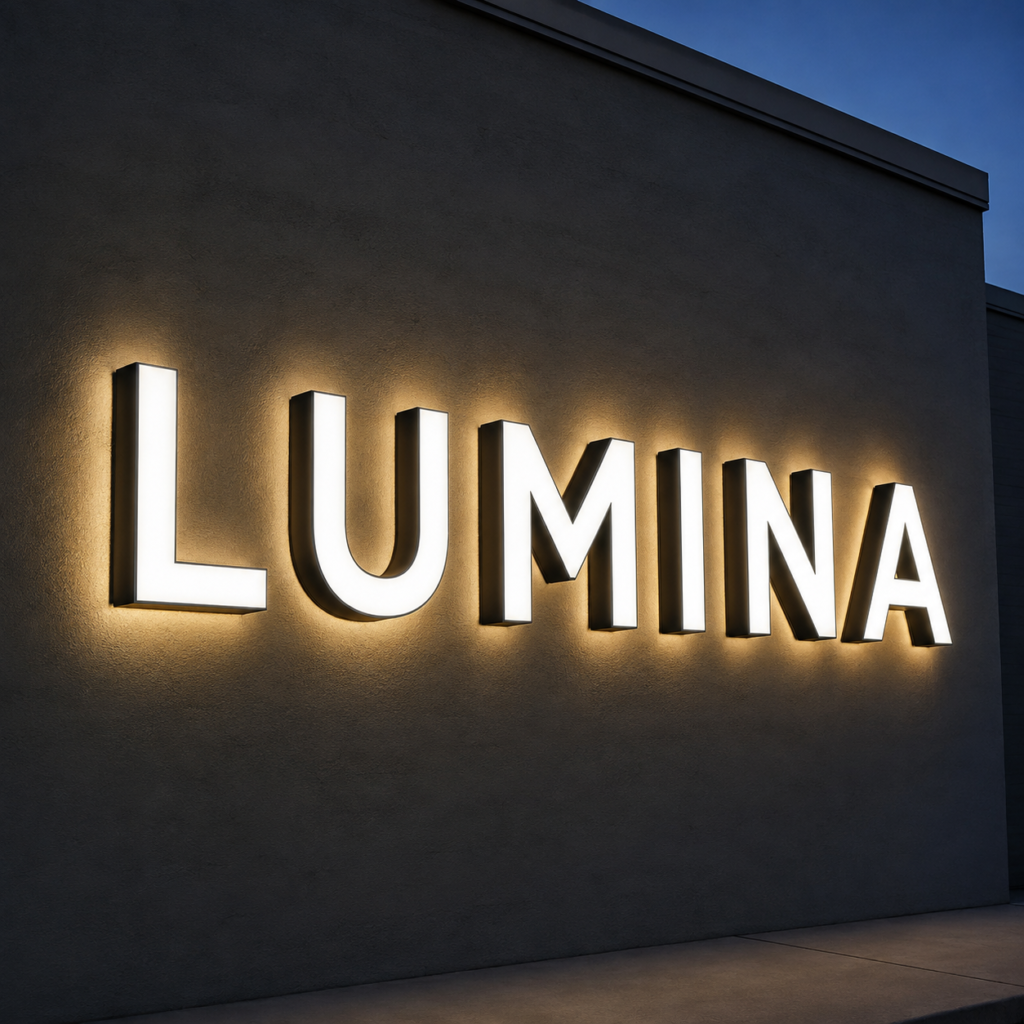
Front and back lit channel letters use two effects in one sign. The acrylic face illuminates forward so customers can read the brand clearly. A separate rear lighting effect creates a halo on the wall, adding depth around the letters.
This combination can make a storefront look more premium and more visible at night. It can also add unnecessary cost if the wall, letter size, location, or brand style does not benefit from it.
From a sign factory’s perspective, the decision should be made before production. The correct option depends on the wall surface, viewing distance, operating hours, letter design, lighting environment, and expected brand image.
1. Choose Front and Back Lit Channel Letters When Day and Night Visibility Both Matter
A front-lit sign is primarily designed for direct readability. Customers can see the illuminated letter face from the front, which makes it effective for shops, restaurants, clinics, and commercial façades.
A backlit sign creates a halo around the letters. It can look refined and architectural, but the letter faces may appear less direct or less visible from a distance—especially on a light-coloured wall.
Front and back lit channel letters are appropriate when the sign must do both jobs:
- Stay clear during daytime business hours
- Remain visually strong after dark
- Stand out from a dark or detailed wall
- Create a more premium evening appearance
- Support a brand that relies on a polished storefront presentation
The front light gives the name direct presence. The rear halo separates the sign from the wall. Together, they create a layered result that a single-lighting design cannot always achieve.
2. Your Wall Surface Determines Whether a Halo Is Worth Paying For
The wall behind the sign is part of the lighting design. A halo is visible only when light can spread onto a suitable surface.
A smooth, medium- or dark-coloured wall generally gives the clearest rear glow. A white wall can soften the halo, while rough stone, brick joints, corrugated metal, or highly reflective cladding can interrupt it.
| Wall Condition | Is Dual Lighting Suitable? | Factory Recommendation |
|---|---|---|
| Smooth dark painted wall | Very suitable | Use front and back lit channel letters for strong contrast |
| Smooth neutral concrete wall | Suitable | Confirm halo colour and stand-off distance with a sample or rendering |
| Light or white wall | Sometimes suitable | Use a stronger front-lit effect; rear halo may appear softer |
| Uneven natural stone | Depends on texture | Review installation photos before finalising the design |
| Corrugated metal cladding | Often less suitable | Consider front-lit letters or a backing panel |
| Glass storefront | Usually unsuitable for standard halo | Use front-lit letters, window graphics, or another mounting method |
A rear halo should not be promised simply because a sign has LEDs behind it. The cabinet depth, wall colour, stand-off distance, and installation quality all affect the final result.
For more focused halo-light options, see HLW Sign’s backlit letters.
3. Choose Dual Lighting When the Brand Needs a Premium, Layered Look
Some brands need a straightforward, highly readable sign. Others need the sign to become part of the space.
Front and back lit channel letters are often a good fit for:
- Premium retail stores and shopping-centre façades
- Beauty salons, aesthetic clinics, and spas
- Restaurants, cafés, wine bars, and hotel entrances
- Jewellery, fashion, and cosmetics brands
- Corporate headquarters and office reception walls
- Fitness studios, showrooms, and property-development sales centres
These environments often benefit from a sign that looks professional in the daytime and atmospheric in the evening.
For example, a front-lit face can make a white logo readable from the street, while warm rear illumination gives the same logo more depth against a dark stone or charcoal wall. The effect feels more considered than simply making the face brighter.
However, a discount store, warehouse, roadside sign, or very high-mounted sign may benefit more from strong front illumination than from a subtle halo effect.
4. Do Not Select Front and Back Lit Channel Letters for Very Small or Thin Artwork
Dual-lit construction needs space inside the letter body. The front face requires uniform illumination, while the rear lighting needs enough depth and stroke width to create a clean wall glow.
Small text, narrow lines, and complex logo details can be difficult to illuminate from both directions evenly.
Before approving front and backlit letters, our factory reviews:
- Letter height and total sign width
- Narrowest stroke width in the artwork
- Letter depth available for LED placement
- Face material and return material
- Wall stand-off distance
- Power-supply and cable-routing position
- Whether smaller text should use a different sign method
For small secondary wording, non-illuminated acrylic letters, printed graphics, or a slim light box may produce a cleaner result. It is better to combine suitable sign methods than force every detail into a dual-lit structure.
5. Compare the Three Main Lighting Choices Before Ordering
The right solution depends on what the sign needs to achieve, not on which option has the most LEDs.
| Sign Type | Best For | Main Advantage | Consider Before Choosing |
|---|---|---|---|
| Front-lit channel letters | High visibility, roadside, retail, busy façades | Clear illuminated face | Can look flatter on a large wall |
| Backlit channel letters | Premium offices, hotels, reception walls | Refined halo and dimensional appearance | Less direct visibility from a distance |
| Front and back lit channel letters | Premium storefronts needing day-to-night impact | Face visibility plus halo depth | Higher fabrication and installation complexity |
| Non-illuminated metal letters | Well-lit interiors and architectural signage | Clean, durable, low-maintenance appearance | No night-time illumination |
If the main goal is direct visibility from a vehicle or a long viewing distance, front-lit channel letters may be sufficient. See HLW’s face-lit LED letters for this option.
If the goal is to make the sign look more dimensional at close and medium range, a backlit or dual-lit design may be more appropriate.
6. Consider Operating Hours and Surrounding Light
A sign outside a breakfast café may be seen mostly in daylight. A sign for a bar, salon, restaurant, or late-opening retail shop may be seen mainly after sunset.
This changes the recommended effect.
Choose front and back lit channel letters when:
- The business operates into the evening
- Nearby street lighting is limited
- The façade needs to look attractive at night
- The sign is close enough for customers to notice the halo
- The wall colour supports visible rear illumination
Choose front-lit letters when:
- Fast name recognition is the priority
- The sign is mounted high or viewed from a long distance
- The business is in a bright retail strip
- The logo has thin details or small text
- The budget should focus on front-face brightness
Choose backlit letters when:
- The sign is mainly architectural or decorative
- The wall is smooth and darker in colour
- The viewing distance is relatively close
- The project is an office lobby, hotel, reception wall, or premium interior
A dual-lit letter does not automatically double the useful visibility. It creates two different lighting functions. The installation environment determines whether both functions add real value.
7. Plan the Structure and Installation Before Fabrication
Front and back lit channel letters require more planning than a simple non-illuminated sign. The letter body must accommodate LED modules, face materials, rear halo lighting, mounting hardware, cable exits, and access to the power supply.
HLW Sign can provide a production drawing that confirms:
- Front elevation and overall sign dimensions
- Letter depth and rear stand-off distance
- Acrylic face colour and metal return finish
- Front-light and halo-light colour temperature
- Mounting positions and cable exits
- Individual-letter or concealed-raceway wiring method
- Power-supply position and installation reference
For exterior signage, the cabinet and electrical components must suit the actual environment. The IEC guide to IP ratings explains how ingress-protection ratings classify protection against dust and water; the final specification should match the local installation conditions.
Before shipment, HLW completes lighting tests and can provide photos or videos for confirmation. A clear drawing and pre-shipment inspection reduce surprises when the sign reaches the installation site.
So, Does Your Sign Need Front and Back Lit Channel Letters?
Choose front and back lit channel letters when your sign needs both clear face visibility and an elevated evening appearance. They are most effective on suitable walls, for premium brands, and in locations where customers will see the sign after dark.
They may not be necessary when:
- The sign is very small or has thin lettering
- The wall texture disrupts the halo
- The sign is mainly viewed from a long distance
- The budget is better used for stronger front illumination
- The location has limited evening visibility requirements
The best sign is not the one with the most lighting effects. It is the one that matches the actual building, customer viewing conditions, and brand objective.
Explore HLW Sign’s illuminated signage solutions or contact our team with your artwork, dimensions, wall photos, and installation location for a practical recommendation.
FAQs
Are front and back lit channel letters brighter than front-lit letters?
They can look more visually prominent because the rear halo separates the letters from the wall. However, direct face brightness still depends on LED layout, face material, letter size, ambient light, and power configuration.
Can front and backlit letters use different colours?
Yes. The front face and rear halo can use different colours. For many commercial projects, matching white tones provide the most balanced and professional result.
Are front and back lit channel letters suitable for outdoor signs?
Yes, provided the cabinet, LEDs, wiring, drainage, power supply, and mounting method are specified for the outdoor environment.
What wall is best for a halo-lit effect?
A smooth, medium- to dark-coloured wall generally gives the clearest halo. The final effect depends on wall colour, texture, letter depth, and stand-off distance.
What information is needed for a quotation?
Please provide vector artwork, overall dimensions, installation photos, wall material, lighting preference, quantity, destination country, and target delivery date.