Restaurant menu boards are not decoration. When a menu is difficult to read, unevenly illuminated, damaged by heat or moisture, or inconvenient to update, it affects ordering speed and the customer experience—usually during the busiest part of the day.
The expensive mistake is choosing a board only by its initial price. A practical menu board should be selected around menu-update frequency, viewing distance, lighting conditions, cleaning routines, service access, and the installation environment.
1. Restaurant Menu Boards Should Match How Often Content Changes
The first question is simple: how often will the menu change?
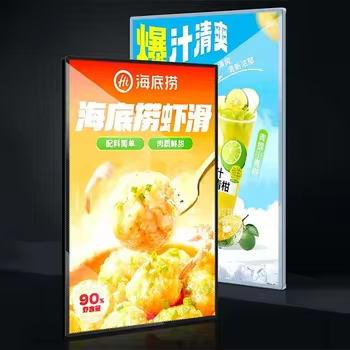
Static restaurant menu boards are a practical choice for cafés, food courts, bakeries, and restaurants with stable menus. A printed graphic, acrylic panel, or illuminated light box is straightforward, visually consistent, and requires little day-to-day management.
Digital menu boards are more suitable when prices, promotions, meal periods, or product availability change frequently. They offer flexibility, but they also require a content-management process, power planning, display servicing, and reliable network or controller support.
| Requirement | Better Choice | Why |
|---|---|---|
| Stable menu and consistent branding | Static light box menu boards | Clear, reliable, and simple to maintain |
| Frequent price or promotion changes | Digital menu boards | Content can be updated more easily |
| Indoor food-court counter | Slim illuminated or non-illuminated board | Good readability without excessive construction |
| Outdoor ordering lane | Drive-thru menu boards | Built around weather, viewing distance, and service access |
| Premium dining wall | Custom menu boards with acrylic or metal elements | Supports a more refined brand presentation |
For illuminated static designs, see these LED light box signs.
2. Do Not Let a Cheap Face Panel Ruin the Menu Board
Many menu board problems begin with the face panel. The cabinet may remain intact, but a warped, yellowed, cracked, or cloudy panel makes the restaurant look poorly maintained.
For indoor restaurant menu boards, acrylic can provide a clean illuminated surface and support detailed graphics. In kitchens, semi-outdoor counters, and drive-thru locations, the panel must also handle heat, grease, cleaning routines, UV exposure, and possible impact.
Choose materials according to the installation:
- Indoor counter or mall location: slim acrylic or aluminum-framed menu board signage is often sufficient.
- Kitchen-adjacent location: prioritize sealed edges and easy-clean surfaces.
- Outdoor or drive-thru location: use a suitable cabinet structure, protected electrical components, and a face material selected for sunlight.
- Large-format menu: use correct internal support and mounting to reduce panel movement or vibration.
A thicker panel is not automatically a better panel. Size, support, mounting method, and environment are more important than simply increasing material thickness.
3. Light Box Menu Boards Solve Visibility Problems—When Built Correctly
A properly designed light box is often a dependable choice for restaurant menu boards. It provides clear contrast in dim dining areas, evening storefronts, and drive-thru lanes without the operating demands of a fully digital system.
However, illumination alone does not guarantee readability. Poor LED spacing can create hot spots, dark corners, glare, or uneven brightness across the menu. That can make some products easy to read while others are lost in reflections.
Before approving light box menu boards, confirm:
- Cabinet depth and face-panel material
- LED layout and illumination uniformity
- Power-supply position and access method
- Graphic replacement process
- Cleaning method for the installation area
- Lighting effect in both daytime and nighttime conditions
For exterior applications, confirm what the stated ingress-protection rating actually covers. The IEC guide to IP ratings explains that these ratings classify enclosure protection against dust and liquid ingress; they do not automatically prove suitability for every climate or installation method.
4. Drive-Thru Menu Boards Need More Than a “Waterproof” Label
Drive-thru menu boards face rain, dust, vehicle exhaust, direct sun, temperature changes, cleaning, and constant viewing from different distances.
A standard indoor light box is not automatically suitable for this environment. The right drive-thru menu boards need planning before fabrication, not repair work after installation.
Confirm these details in advance:
- Viewing distance and required text size
- Daytime glare and nighttime brightness
- Cabinet access for future maintenance
- Appropriate enclosure and wiring protection
- Mounting frame, footing, and wind-load requirements
- One-sided or double-sided visibility
- The process for replacing future menu graphics
A restaurant should not need to dismantle the complete cabinet to replace a graphic, power supply, or lighting component. Service access is part of the design.
5. Indoor Menu Board Signage Should Be Clear, Not Overbuilt
Food-court menu boards have different challenges from roadside signs. They do not need heavy outdoor construction, but they must compete with ceiling lighting, reflections, nearby storefronts, and customers standing close to the counter.
For indoor menu board signage, focus on:
- Strong contrast between text and background
- Logical grouping of prices and menu categories
- Consistent lighting color across multiple boards
- Easy-to-clean surfaces near food preparation areas
- Brand colors that stay legible under ambient lighting
- A cabinet depth that fits the available wall space
When a restaurant logo is part of the overall wall display, acrylic letter signs can add depth without making the menu wall visually crowded.
6. Custom Menu Boards Require a Controlled Approval Process
Multi-location restaurants need consistency. The menu board installed in one location should match approved colors, dimensions, illumination, and graphic layout at every other location.
Before bulk production of custom menu boards, approve:
- Final artwork and dimensions
- Graphic-change method
- Metal finish and acrylic color
- Lighting effect and color temperature
- Wiring position and mounting details
- Packaging suitable for the shipping route
A prototype can be particularly useful for a new restaurant concept, a new wall layout, or a multi-store rollout. It is far easier to correct a finish, graphic layout, or access detail before full production.
7. Check Compliance Before Production, Not After Installation
Restaurant menu boards may involve electrical, accessibility, building, landlord, and local permitting requirements. These vary by country, city, property, and project type.
For electric signage in the United States, confirm whether listed components, safety approvals, or inspection requirements apply before ordering. UL Solutions’ electric-sign guidance outlines certification services related to electric signs and sign components.
Accessibility requirements can also apply to permanent identification and tactile signs, although these requirements do not apply in the same way to every visual menu display. The U.S. Access Board’s sign guidance covers tactile characters, Braille, contrast, and non-glare finishes where applicable.
Always verify the final requirements with the relevant local authority, architect, contractor, or landlord before production.
Choosing the Right Restaurant Menu Boards
The right restaurant menu boards support faster ordering, clearer communication, and a more consistent brand experience. The wrong specification can lead to glare, fading, difficult graphic changes, water-related damage, and avoidable maintenance work.
A practical specification should answer these questions:
- Does the menu change often enough to justify a digital system?
- Is the board installed indoors, near a kitchen, or outdoors?
- Can customers read the menu from the intended distance?
- Can staff clean and service it without disrupting operations?
- Are lighting, electrical, and local compliance requirements confirmed?
For product options and technical support, review HLW Sign’s illuminated signage solutions or contact the team with artwork, dimensions, installation photos, and destination details.
FAQs
Are static restaurant menu boards better than digital menu boards?
Neither option is always better. Static boards suit stable menus and low-maintenance operation. Digital menu boards are useful when content changes frequently and the restaurant has a dependable process for managing the system.
What material is suitable for outdoor restaurant menu boards?
The correct material depends on sunlight, rain, temperature, cleaning, and local conditions. Outdoor menu boards need a suitable structure, protected electrical system, appropriate face panel, and serviceable cabinet design.
Can menu board graphics be changed without replacing the complete sign?
Yes. Many light box menu boards can be designed with replaceable graphics or accessible panels. Confirm the replacement method before placing an order.
What information is needed for a custom menu board quote?
Provide artwork, dimensions, installation photos, lighting preference, quantity, destination country, and target delivery date. These details help determine the appropriate structure, electrical configuration, and packing method.