


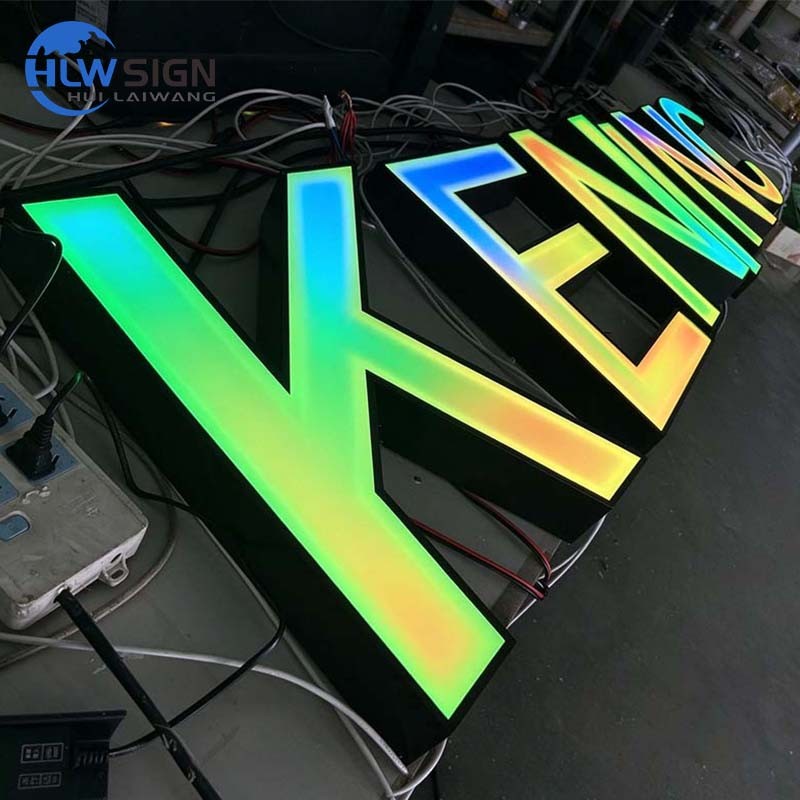
Why the voltage matters more than the module
The LED module gets the attention, but on a long letter run it is the supply voltage that decides whether the last letter matches the first. Every metre of cable drops voltage, and at 12 V that drop is a larger share of the total, so the far end dims and shifts colour while the near end looks correct.
12 V and 24 V compared
| Factor | 12 V | 24 V |
|---|---|---|
| Maximum run before voltage drop is visible | Shorter — split earlier | About twice the length of 12 V |
| Cable size for the same load | Thicker | Thinner |
| Driver availability | Widest | Wide, slightly fewer small units |
| Best fit | Small letters, short runs, retrofits | Long fascia runs, large letter sets, pylon cabinets |
| Fault behaviour | More sensitive to poor joints | More tolerant, still needs sealed joints |
Work out the run before you choose
Add up the cable path from the driver to the last module, not the width of the sign. A 6 m fascia with a driver at one end is a 6 m run; the same fascia with the driver in the middle is two 3 m runs, which often lets you stay on 12 V. For led channel letters in long runs we plan the driver positions on the drawing, not on site.
Size the driver with headroom
Total the module wattage, then add 20 percent. A driver running at 100 percent of its rating will run hot and fail early; 80 percent loading is the practical ceiling, and it also leaves room for a module added during a repair.
On backlit signs with volt-drop issues the fix is usually two smaller drivers rather than one larger one — cheaper than re-cabling the sign.
Voltage drop is not the only cause of uneven letters
Mismatched module batches, undersized cable, corroded joints and a driver in a hot cabinet all produce the same symptom: one end of the sign looks different. Before changing the voltage, check the joints and the module batch. Our guide to halo lit letters on 24V explains why the wall behind the letter changes the perceived colour as well.
Outdoor, wet and coastal installations
Anything outdoors needs a sealed driver enclosure, glands on every cable entry and IP-rated connectors. Coastal sites add salt, so specify 316 stainless fixings and keep the driver indoors where possible. A led sign board power sizing check is worth doing at design stage for exactly this reason: the cabinet has to fit the driver, the wiring and the access panel.
A worked example: one long fascia
Imagine a set of letters with 60 W of LED modules and a cable path of 8 m from the driver to the last module. At 24 V the current is about 2.5 A. At 12 V the current is about 5 A, so the same cable produces roughly twice the voltage drop and four times the cable loss.
That does not automatically make 24 V better. It means the 12 V layout needs a shorter run, larger cable or a driver placed closer to the load. A 24 V layout is more forgiving when the driver must sit at one end of a long sign.
Place the driver where it can be serviced
The driver should be reachable without removing letters or dismantling the sign face. Put it in a dry, ventilated enclosure with a removable cover, allow space for cable bends and keep the label visible. Heat is the main enemy of driver life, so do not seal it into an unvented cabinet with no airflow.
For a permanent installation, record the driver model, wattage and circuit number in the handover file. A future maintenance visit should not require guessing which supply feeds which group of letters.
Commission the circuit, not only the sign
- Measure voltage at the driver and at the last module under full load.
- Confirm the driver is loaded below about 80 percent of its rated output.
- Check polarity, dimming response and every connector before closing the cabinet.
- Run the sign for a sustained period and check for hot spots at the driver and joints.
- Record the voltage readings and take a night photo for the maintenance file.
These checks catch the most common causes of flicker, uneven brightness and early driver failure. If a sign is already flickering, review the channel letter power supply guide before replacing modules.
When 12 V is still the right choice
Small letter sets, short runs and retrofit projects often have an existing 12 V supply and limited space for new wiring. In those cases, keep the run short and place the driver close to the load. A custom channel letter set can be designed around the available supply rather than forcing a new voltage architecture into an old installation.
Frequently asked questions
Can I mix 12 V and 24 V modules on one sign?
No. They need separate drivers and separate circuits, and the two halves will behave differently as they age. Keep one voltage per sign.
Does 24 V use less electricity?
No — the wattage is the same for the same light output. 24 V reduces cable losses, which is a small saving, but the real benefit is even brightness over distance.
What voltage should a retrofit use?
Match what is already there unless the cabling is being replaced. If you are re-cabling, 24 V is usually the better long-term choice for anything above a small letter set.
Design the circuit, not just the sign
Send the letter layout, the driver location and the supply voltage available on site. We will return a circuit plan with run lengths, driver ratings and cable sizes, and specify the modules so the whole set comes from one batch. If you are comparing suppliers, ask for the same plan from each — custom led signs for outdoor use are rarely equal once the driver and the wiring are on the table.
Sources and further reading
- LED lamp — how LED modules and drivers work.
- Glare — why over-bright signage is harder to read.
- Illuminance — measuring light output at the sign face.