
Choosing the right material for a storefront sign is not simply a question of price. For a small business owner, the sign has to balance weather resistance, appearance, budget, maintenance, size, and installation requirements.
See our custom metal signs for a non-illuminated storefront option.
Two materials often considered for commercial signage are PVC and aluminum. Both can be useful, but they are suited to very different applications.
If you are comparing PVC vs aluminum signs for outdoor use, the most important question is not “Which material is better?” but rather:
Where will the sign be installed, how long should it last, and what appearance do you want?
For a temporary indoor sign, PVC may be a practical and economical choice. For an exposed storefront, dimensional lettering, or a long-term exterior branding project, aluminum is often the more appropriate material.
This guide explains five practical standards that small and medium-sized business owners can use when choosing between PVC and aluminum signs.
PVC vs Aluminum Signs: The Basic Difference
PVC, often called expanded PVC or foam PVC, is a lightweight plastic sheet that is easy to cut, route, paint, print, and shape. It is widely used for indoor signs, temporary displays, dimensional lettering, and sheltered applications.
Aluminum is a lightweight metal with a high strength-to-weight ratio and natural corrosion resistance. The Aluminum Association notes that aluminum naturally develops a protective oxide layer, while surface treatments can provide additional protection and decorative finishes.
This makes aluminum particularly attractive for custom aluminum storefront signs, outdoor dimensional letters, fabricated sign cabinets, and architectural branding.
However, material selection should always consider the actual environment rather than relying on a generic lifespan claim.
1. Installation Location and Expected Service Life
The first question to ask is simple:
Where will the storefront sign be installed?
A sign mounted inside a shopping center has completely different requirements from one installed on an exposed building façade.
PVC: Better for Indoor and Sheltered Applications
PVC can be a good option for:
- Indoor reception areas
- Interior wall graphics
- Indoor 3D lettering
- Covered storefronts
- Temporary promotional signs
- Short-term retail displays
- Areas protected from direct sunlight and heavy rain
For a storefront under a deep canopy or awning, PVC may perform adequately depending on the grade and local conditions.
However, standard PVC should not automatically be considered a long-term solution for an exposed exterior. Outdoor durability depends on the specific PVC formulation, thickness, color, surface treatment, UV exposure, temperature, and installation environment.
ASTM International specifically points out that plastic weathering performance can vary significantly according to UV radiation, temperature, moisture, pollutants, and geographic location.
Aluminum: A Stronger Choice for Exposed Outdoor Signs
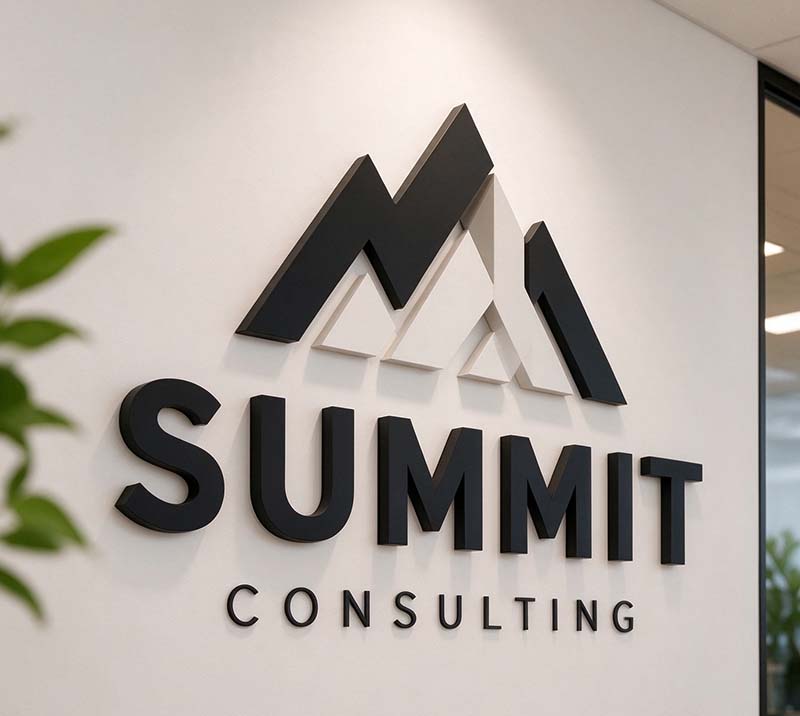
For an uncovered storefront, building façade, rooftop sign, or other location exposed to sun and rain, aluminum is often a more suitable choice.
Aluminum naturally forms a protective oxide layer when exposed to air, helping it resist atmospheric corrosion. European Aluminium also describes aluminum as a durable material for demanding outdoor applications and notes that suitable surface treatments can provide additional protection and decorative finishes.
For this reason, aluminum storefront signs are commonly specified when the sign is expected to remain in service for many years.
Ask Yourself
Before choosing a material, ask:
- Will the sign receive direct sunlight every day?
- Is the storefront exposed to rain?
- Is the location near the ocean?
- Is the climate very hot or cold?
- Do you want to replace the sign after a few years or keep it for the long term?
If the answer is long-term + exposed outdoor installation, aluminum deserves serious consideration.
2. Budget: Initial Cost vs. Long-Term Value
Budget is often the first concern for a small business.
PVC generally has a lower material and fabrication cost than fabricated aluminum. It is easy to CNC route and can be produced efficiently for relatively simple sign designs.
That makes PVC attractive when you need:
- A low-cost storefront sign
- A temporary business sign
- A promotional display
- Indoor 3D lettering
- A simple flat sign
- A sign for a new business testing its branding
But the cheapest initial quotation is not always the lowest total cost.
Imagine two scenarios.
Scenario A: Low Initial Investment
A business chooses a low-cost PVC sign for an exposed storefront.
If the material or finish does not perform well under the local climate, the business may eventually need:
- Replacement
- Repainting
- Repairs
- New installation labor
The original low price may therefore become less attractive over time.
Scenario B: Higher Initial Investment
A business chooses a fabricated aluminum sign with a suitable exterior finish.
The initial cost may be higher, but the sign can provide better structural stability and outdoor durability, potentially reducing the need for frequent replacement.
The Aluminum Association highlights aluminum’s combination of low weight, strength, corrosion resistance, and durability, which is one reason the material is widely used in construction.
So when comparing PVC vs aluminum signs, consider total ownership cost, not only purchase price.
3. Desired Appearance: Flat Sign or 3D Illuminated Storefront?
Material selection should also follow the visual effect you want.
This is where the difference between PVC and aluminum becomes especially important.
PVC for Simple and Creative Sign Shapes
PVC is easy to machine and can be used for:
- Flat lettering
- Routed lettering
- Painted 3D letters
- Printed signs
- Custom shapes
- Interior branding
It is especially useful when the main goal is a lightweight decorative sign.
However, for a premium outdoor illuminated storefront, the construction requirements become more demanding.
Aluminum for Premium Dimensional Signage
Aluminum can be formed, cut, folded, welded, fabricated, and finished in different ways. The Aluminum Association describes aluminum as lightweight, strong, flexible, corrosion resistant, and suitable for a wide variety of shapes and applications.
This makes it suitable for:
- 3D metal letters
- Illuminated channel letters
- Front-lit letters
- Backlit letters
- Logo signs
- Large storefront signs
- Architectural building signs
- Metal sign cabinets
For businesses such as restaurants, salons, hotels, clinics, offices, retail stores, and premium service brands, aluminum can provide a more substantial and professional appearance.
If your goal is a custom aluminum storefront sign with dimensional lettering, aluminum is usually the more logical starting point.
You can also combine aluminum with acrylic to create illuminated letters. See HLW Sign’s custom illuminated signage range for examples of front-lit, backlit, RGB, and other customized sign constructions.
4. Maintenance and Environmental Conditions
Many small business owners focus on the appearance of a sign when purchasing it but forget about maintenance.
The local environment can make a major difference.
Rain and Humidity
PVC itself is not a metal and does not rust. However, long-term outdoor performance still depends on the grade, UV stability, construction, and temperature.
Aluminum is naturally corrosion resistant because of its protective oxide layer. Additional coatings, powder coating, anodizing, or other finishes can further improve appearance and protection.
Coastal Locations
If your business is near the ocean, salt and moisture become more important considerations.
Aluminum generally performs well in many outdoor environments, but it is not completely immune to corrosion. European Aluminium notes that chloride ions, such as those found in seawater and road salt, can cause localized corrosion under certain conditions.
For coastal signage, the alloy, finish, fasteners, drainage, electrical protection, and overall construction should therefore be specified appropriately.
Strong Sunlight and High Temperature
UV exposure is another important factor.
ASTM’s outdoor weathering guidance emphasizes that plastic durability varies according to exposure conditions and that short-term testing should not automatically be interpreted as an absolute prediction of service life.
Therefore, rather than simply asking a supplier:
“How many years will this PVC sign last?”
ask:
“What PVC grade, thickness, surface finish, and outdoor weathering performance are you recommending for my specific climate?”
This is a much better purchasing question.
5. Sign Size and Installation Requirements
The fifth consideration is size, weight, and wall structure.
PVC: Lightweight and Easy to Handle
One advantage of PVC is its low weight.
For smaller signs, this can simplify:
- Transportation
- Handling
- Wall mounting
- Installation
- Temporary displays
It can be particularly convenient for interior applications where structural strength is not a major concern.
However, large thin PVC panels can be susceptible to dimensional changes or deformation depending on temperature, thickness, support, and exposure.
Aluminum: Better for Larger Fabricated Structures
Aluminum provides a useful combination of low weight and structural strength. The Aluminum Association notes that aluminum can weigh substantially less than steel while still providing useful strength for construction applications.
For larger signs, fabricated aluminum can therefore provide a better structural solution.
However, large aluminum panels or sign cabinets still require proper engineering.
The installer should consider:
- Wall construction
- Fixing points
- Wind load
- Sign weight
- Brackets
- Anchor type
- Mounting surface
- Access for maintenance
For large commercial signage, a professional manufacturer should ideally provide an installation drawing rather than simply supplying the finished sign.
PVC vs Aluminum Signs: Quick Comparison
| Feature | PVC Sign | Aluminum Sign |
|---|---|---|
| Initial cost | Lower | Higher |
| Weight | Very light | Lightweight metal |
| Indoor use | Excellent | Excellent |
| Sheltered outdoor use | Suitable for selected applications | Excellent |
| Fully exposed outdoor use | Depends strongly on grade and conditions | Generally preferred |
| UV resistance | Material/grade dependent | Strong with suitable finish |
| Corrosion | Does not rust | Naturally corrosion resistant |
| 3D lettering | Good | Excellent |
| Illuminated signage | Limited by construction/environment | Excellent |
| Premium appearance | Good | Excellent |
| Large signage | Requires careful support | Very suitable with proper structure |
| Maintenance | Application dependent | Generally low |
| Surface finishes | Paint, print, laminate | Paint, powder coat, anodizing, brushed, mirror, etc. |
| Best for | Budget and indoor/sheltered signs | Long-term commercial exterior signage |
A Simple Decision Guide for Store Owners
Still not sure which material to choose?
Use this quick checklist.
Choose PVC when:
- The sign is primarily indoors
- The sign is under a protected canopy
- Direct sunlight is limited
- You need a low initial cost
- The sign is temporary or promotional
- The sign is relatively small
- You need lightweight lettering
- You are producing a simple decorative display
Choose Aluminum when:
- The sign will be installed outdoors
- The storefront receives direct sunlight
- The sign will be exposed to rain and weather
- You want long-term commercial signage
- You need dimensional metal letters
- You want illuminated channel letters
- You want a premium metal appearance
- You are producing a large storefront sign
- The sign is part of a permanent brand installation
For buyers looking for the best material for storefront signs, the correct answer depends on the building, climate, design, size, and expected service life—not simply the material price.
What About Illuminated Storefront Signs?
If your goal is not just a static sign but an illuminated storefront sign, material selection becomes even more important.
A professional illuminated sign may combine:
- Aluminum or stainless-steel returns
- Acrylic faces
- LED modules
- Waterproof power supplies
- Internal wiring
- Mounting brackets
- Installation templates
- Weather-resistant construction
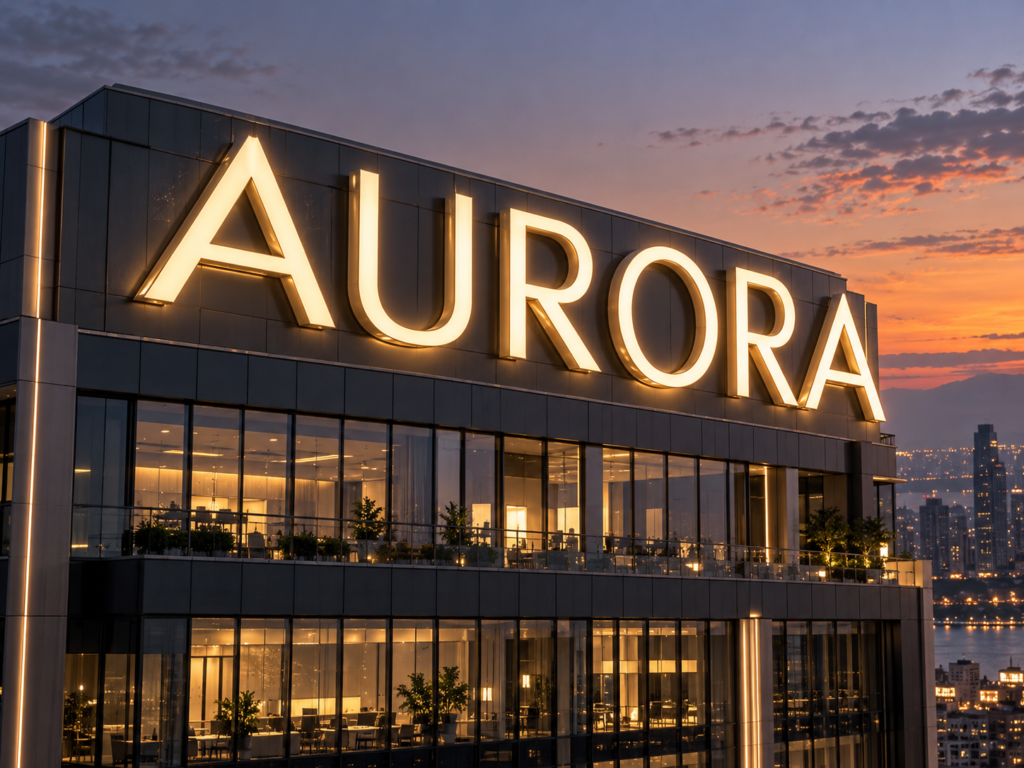
For front-lit channel letters, the metal return provides structural support while the acrylic face diffuses the LED light.
For halo-lit letters, the metal body and mounting system determine the spacing between the letters and the wall, which directly affects the appearance of the halo.
Electrical design is also important for outdoor illuminated signage. UL’s guidance for electric signs distinguishes between dry, damp, and wet-location applications, emphasizing that outdoor signs need to be evaluated and marked appropriately for their intended environment.
This is why purchasing a complete signage solution from a manufacturer can be more useful than buying materials separately.
For example, HLW Sign provides customized illuminated letters, metal signs, light boxes, RGB signage, and other commercial signage solutions directly from the factory. Explore custom signage solutions from HLW Sign
The Best Material Is the One That Matches the Project
There is no universal winner in the PVC vs aluminum signs debate.
PVC makes sense when low weight, low cost, easy fabrication, and indoor or sheltered installation are the priorities.
Aluminum becomes more attractive when weather exposure, structural stability, dimensional lettering, premium appearance, and long-term outdoor use are more important.
For a small business owner, the decision can be simplified to five questions:
- Where will the sign be installed?
- How many years do you expect it to remain in use?
- What is your total budget?
- Do you need a flat sign, 3D letters, or illuminated signage?
- What are the local weather and installation conditions?
Answer those five questions first, and the material choice becomes much easier.
Get a Material Recommendation Before Ordering
A professional sign manufacturer should not simply ask you, “PVC or aluminum?”
The better approach is to understand your logo, dimensions, building façade, installation location, climate, lighting requirements, budget, and expected service life before recommending a construction.
At HLW Sign, we manufacture custom illuminated and non-illuminated signage for international commercial projects, including front-lit letters, backlit letters, metal logos, storefront signs, RGB signage, and custom architectural signs.
Request a custom signage solution from HLW Sign
Send your logo, preferred size, installation photo, destination country, and required lighting effect. Our team can recommend the appropriate material and construction and provide free design support and a factory-direct quotation.