

Introduction: Why the Cheapest Sign Is Not Always the Lowest-Cost Solution
When purchasing outdoor architectural signage, many buyers immediately compare the initial quotation price.
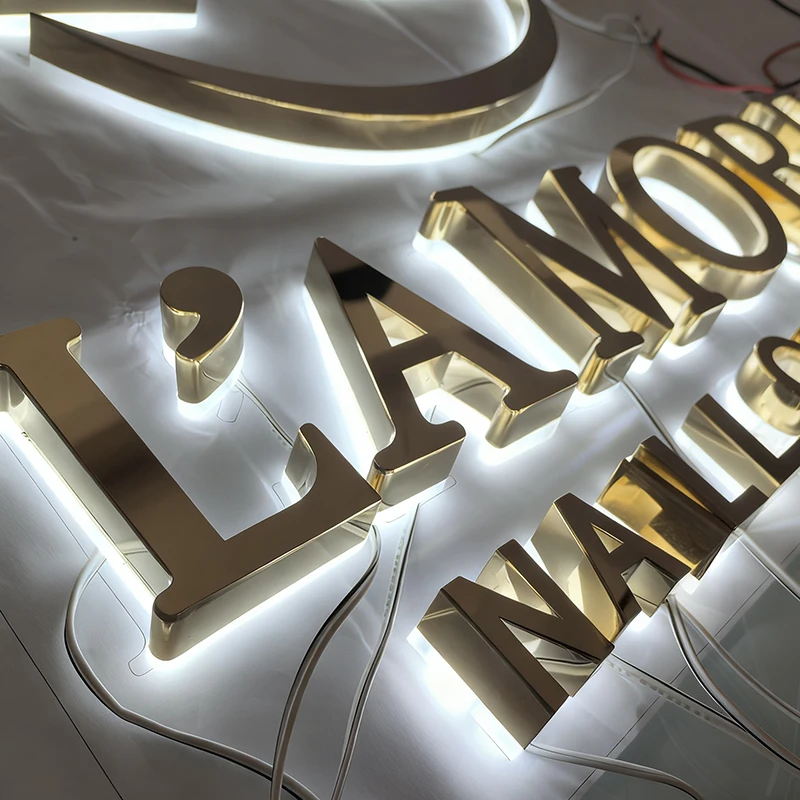
See our 316 stainless steel LED letters for a factory-direct specification.
One of the most common questions from project managers and procurement teams is:
“316 stainless steel is 30%–50% more expensive than 304. Is the additional investment really worth it?”
This question is especially important for hotels, commercial buildings, coastal developments, and industrial facilities where signage is expected to perform for many years.
The reality is that signage is not a short-term purchase. It is a long-term asset connected to installation costs, maintenance requirements, replacement risks, and brand presentation.
Therefore, evaluating only the purchase price can lead to incorrect decisions.
A professional stainless steel sign TCO (Total Cost of Ownership) analysis considers the complete lifecycle cost, including:
- Initial material investment
- Fabrication and installation
- Maintenance requirements
- Replacement frequency
- Business interruption risks
- Compliance and brand protection
This article provides a practical framework to understand 316 stainless steel sign cost and determine when the higher initial investment creates better long-term value.
For coastal projects, you can also review our guide:
[316 Stainless Steel Signs for Coastal Environments: The Complete Buyer’s Guide]
1. How Much Higher Is the Initial Cost of 316 Stainless Steel?
The first step in understanding 316 stainless steel sign cost is recognizing that the premium is real.
316 stainless steel generally costs more than 304 because it contains molybdenum, an alloy element that improves resistance against chloride exposure and pitting corrosion.
According to technical information from the Nickel Institute, molybdenum improves stainless steel performance in environments where chloride exposure is a concern.
In practical purchasing situations:
- Raw material cost of 316 stainless steel is often approximately 30%–50% higher than 304.
- Final product pricing depends on size, thickness, fabrication complexity, surface finishing, and installation requirements.
- 316 stainless steel letters or logos may have a higher fabrication cost because welding, polishing, and finishing require stricter quality control.
For custom stainless steel signage, the final price difference is not only the material itself.
The total manufacturing cost includes:
- Stainless steel grade
- Sheet thickness
- Cutting method
- Welding quality
- Surface treatment
- LED components (for illuminated signs)
- Mounting system
- Packaging and transportation
For example, a small indoor stainless steel logo may have a limited price difference between 304 and 316, while a large outdoor coastal sign with brushed finishing and waterproof LED systems may show a much larger gap.
A very low-priced “316 stainless steel sign” quotation should also be carefully verified.
Common material substitution risks include:
- 201 stainless steel sold as 304
- 304 stainless steel sold as 316
- Unverified material certificates
For premium projects, buyers should request:
- Material certificate (MTC)
- Stainless steel grade confirmation
- Fabrication photos
- Surface finishing details
2. Coastal Sign Cost Comparison: 316 Stainless Steel vs Other Materials
A proper coastal sign cost comparison should not only compare purchase prices.
Different materials have different expected lifetimes, maintenance requirements, and replacement risks.
| Material | Initial Cost | Expected Outdoor Life | Typical Applications |
|---|---|---|---|
| Painted galvanized steel | Lowest | 3–5 years | Temporary signs, budget projects |
| Aluminum | Medium | 5–8 years | Commercial buildings, retail signs |
| 304 stainless steel | Higher | 8–15 years | General outdoor environments |
| 316 stainless steel | Highest | 10–20+ years | Coastal and high-corrosion locations |
In mild inland environments, 304 stainless steel may provide excellent performance without unnecessary cost.
However, coastal environments create completely different conditions.
Salt spray, airborne chlorides, and high humidity accelerate corrosion processes. According to corrosion guidance from organizations such as the Nickel Institute, stainless steel selection should always consider environmental exposure.
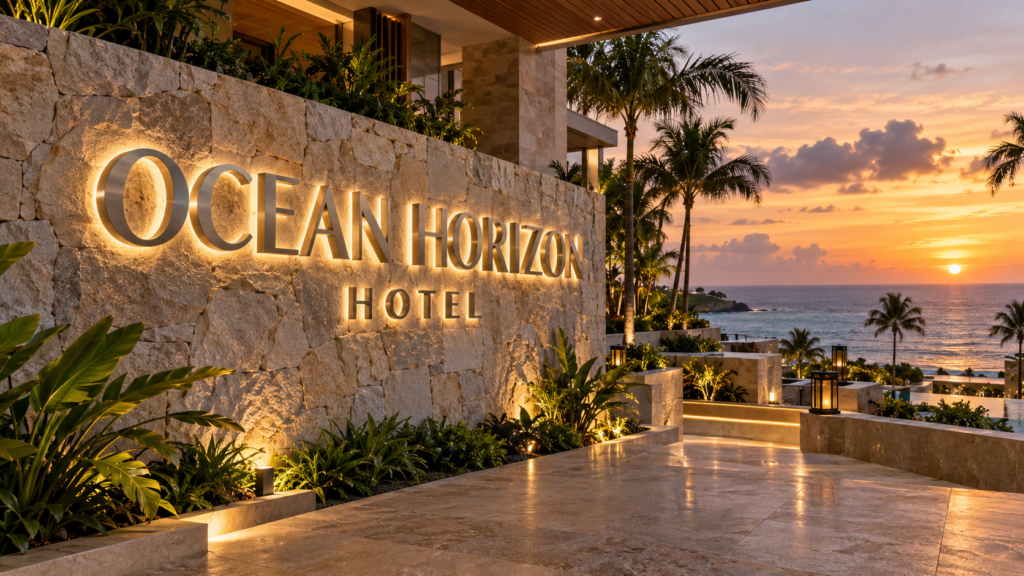
For beachfront hotels, marinas, and oceanfront commercial buildings, choosing 304 instead of 316 may reduce initial cost but increase:
- Cleaning frequency
- Corrosion inspection requirements
- Repair costs
- Replacement risks
You can read more about material selection here:
[Stainless Steel Signs for Beachfront Projects: A Decision Framework]
The key question is not:
“Which material is cheaper?”
The better question is:
“Which material provides the lowest cost over the expected service life?”
3. Maintenance Cost: The Hidden Difference Between 304 and 316
Maintenance is often the largest overlooked factor in signage purchasing decisions.
A cheaper sign may appear attractive during procurement, but ongoing maintenance can significantly increase total ownership costs.
A complete stainless steel sign TCO calculation should include:
Annual Maintenance Cost = Cleaning Frequency × Labor Cost + Corrosion Treatment Cost + Hardware Replacement Cost
Typical maintenance activities include:
- Surface cleaning
- Salt deposit removal
- Inspection of mounting hardware
- Tea staining treatment
- Surface restoration
316 stainless steel provides advantages because the molybdenum content improves resistance against chloride corrosion.
This does not mean 316 is maintenance-free.
However, compared with lower-grade materials, it usually requires:
- Less frequent corrosion treatment
- Fewer surface repairs
- Lower long-term maintenance labor
For coastal signage, recommended maintenance normally includes regular cleaning with neutral cleaners and soft materials.
Learn more:
[How to Maintain 316 Stainless Steel Signs in Coastal Areas: A Practical Maintenance Guide]
A proper maintenance plan helps protect the passive layer of stainless steel and prevent early surface damage.
4. Replacement Costs and Business Interruption Risks
Many buyers only calculate the replacement material price.
However, replacing signage involves much more:
Direct Replacement Costs
Including:
- Removing old signage
- Producing new signs
- Transportation
- Installation labor
- Equipment rental
- Disposal costs
Hidden Business Costs
For commercial properties, replacement can also create:
- Brand appearance issues
- Customer perception problems
- Operational disruption
- Additional contractor costs
For example:
A hotel entrance sign with corrosion damage cannot simply be replaced overnight.
The process may require:
- Site inspection
- New production
- Shipping coordination
- Installation scheduling
For premium hospitality projects, this downtime can affect brand image.
A properly specified 316 stainless steel sign can often remain functional for many years with routine maintenance, reducing replacement frequency and operational disruption.
5. Compliance Risk and Brand Protection
Signage is not only a visual element.
In many industries, clear and durable identification is part of operational requirements.
Examples include:
- Industrial equipment
- Medical facilities
- Commercial buildings
- Transportation projects
A damaged or unreadable identification sign may create unnecessary compliance issues.
For international buyers, additional factors should also be considered.
For example:
- Import regulations
- Documentation requirements
- Product classification
- Sustainability expectations
Long-life materials are increasingly important for European and North American buyers because they support:
- Lower replacement frequency
- Reduced material waste
- More sustainable procurement strategies
316 stainless steel’s durability makes it suitable for projects where lifecycle performance matters.
6. A Practical 5–10 Year TCO Calculation Model
A simple stainless steel sign TCO model should include:
Total Ownership Cost Formula
TCO = Initial Purchase Cost + Installation Cost + Maintenance Cost + Replacement Cost + Risk Cost
Annualized:
Annual Cost = TCO ÷ Expected Service Life
Example Scenario
Assume:
- 20 outdoor signs
- Coastal commercial project
- Expected usage period: 10 years
Option A: Low Initial Cost Material
Initial advantages:
- Lower purchase price
Long-term disadvantages:
- More frequent maintenance
- Earlier replacement
- Higher installation costs
Possible timeline:
Year 0:
Installation
Year 4–5:
Replacement required
Year 8–10:
Second replacement required
Option B: 316 Stainless Steel Signs
Initial investment:
Higher
Long-term advantages:
- Lower corrosion risk
- Minimal replacement requirements
- Lower maintenance frequency
Over 10 years:
The annualized cost can become lower than cheaper materials because replacement and labor costs are reduced.
This is why many coastal projects choose 316 stainless steel despite the higher upfront price.
7. When Is 316 Stainless Steel the Right Investment?
316 stainless steel is not always the correct choice.
The decision depends on three factors:
1. Environmental Exposure
Recommended for:
- Beachfront locations
- Marine environments
- High humidity areas
- Chemical exposure zones
2. Expected Service Life
If the sign needs to perform for:
- 10 years
- 20 years
- Building lifetime
316 becomes more attractive.
3. Replacement Difficulty
316 is especially valuable when:
- Installation access is difficult
- Replacement requires cranes or equipment
- Brand appearance is critical
For simple indoor projects or dry inland locations, 304 stainless steel or aluminum may provide better economic value.
Conclusion: Evaluate 316 Stainless Steel by Lifecycle Value, Not Purchase Price
The question is not whether 316 stainless steel costs more.
It does.
The important question is whether the additional investment creates better long-term value.
For coastal and high-corrosion environments, a complete coastal sign cost comparison usually shows that 316 stainless steel provides advantages through:
- Longer service life
- Reduced maintenance requirements
- Lower replacement risk
- Better appearance retention
A professional 316 stainless steel sign cost evaluation should always consider the complete lifecycle instead of only the initial quotation.
If your project is located near the ocean or requires long-term outdoor performance, HLW Sign can help analyze the most suitable material, fabrication method, and lifecycle cost strategy.
Contact HLW Sign for a customized stainless steel signage TCO analysis.