
If a project in the United States or Canada specifies “UL-listed LED signage”, the requirement is not a formality. It decides which power supplies can be used, how the letters are wired, and whether an inspector will sign off the installation. This guide explains what UL certification actually covers for LED signs, what the labels mean, and how to specify it without overpaying.
What UL certification means for a sign
UL Solutions is a testing and certification body. For signage, the relevant standards are UL 48 (electric signs) and UL 879 (sign components), while the LED drivers and power supplies inside the sign carry their own listings under UL 8750 or UL 1310. A “UL-listed sign” usually means the sign assembly was evaluated to UL 48, using components that are themselves recognized or listed.
Three labels are commonly confused:
- UL Listed — the finished product has been tested and listed.
- UL Recognized Component — a component (for example a driver) is approved for use inside a listed product.
- cUL / cULus — the same evaluation accepted for Canada; cULus covers both markets.
What is actually inspected
An inspector looking at a sign cares about the electrical construction, not the marketing copy:
- Driver listing and correct input voltage for the site
- Wiring gauge, strain relief and separation of line and low-voltage conductors
- Grounding of metal housings and bonding of removable panels
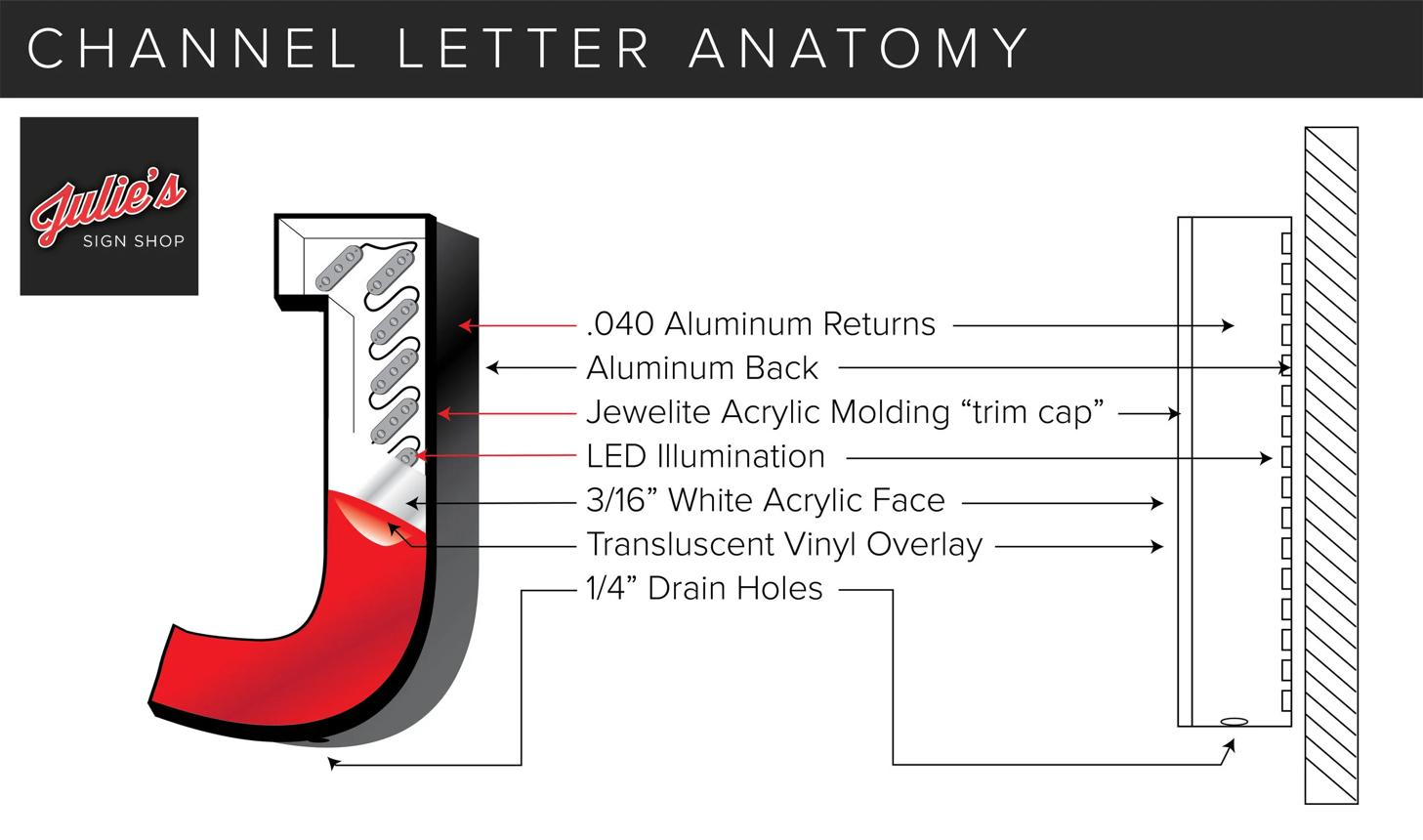
- Temperature rise inside the letter and clearance around the driver
- Wet-location rating when the sign is outdoors; see IP65 backlit letters for outdoor use
- Disconnect means and overcurrent protection
This is why a sign can use the same LEDs as a competitor and still fail: the difference is in the driver, the enclosure and the wiring method.
UL 48 versus UL 879
UL 48 applies to complete electric signs. UL 879 applies to sign components such as lampholders, electrode receptacles and letter housings. A manufacturer may hold a UL 879 component listing and still not be able to supply a UL 48 listed sign; ask which one the certificate covers. The distinction matters when a general contractor needs a listed assembly for a permit.
Where the power supply fits
The driver is the component most often questioned. A UL-recognized constant-voltage driver rated for the load and ambient temperature is the baseline. Undersizing the driver causes heat build-up and shortens LED life; the selection method is covered in the channel letter power supply guide and the 12V vs 24V LED modules comparison.
Does a UL sign cost more?
Yes, typically 8–15% more than a non-listed equivalent, mostly from certified drivers, listed wiring methods and the documentation trail. For a single small interior sign the premium may be unnecessary; for a permitted storefront, a chain rollout or any sign above a public walkway, it is usually required and cheaper than a failed inspection.
How to verify a certificate
- Ask for the UL file number (E-number), not just a logo on a brochure.
- Look the file up in the UL Product iQ database.
- Check that the listed product category matches sign assemblies or components, not an unrelated product.
- Confirm the manufacturing location on the certificate matches the factory quoting you.
What to put in the specification
- Sign assembly: UL 48 listed, or components UL 879 recognized where a field evaluation is planned.
- Driver: UL recognized, constant voltage, rated for the ambient temperature at the installation.
- Wiring: listed conductors, correct gauge, strain relief, separate line and low-voltage compartments.
- Outdoor: wet-location rated components and drainage at the low point of each letter.
- Documentation: certificate copies, wiring diagram and driver datasheets delivered with the shipment.
Common mistakes
Buyers often accept a “CE and UL compliant” line in a quotation without a file number. Others assume a UL-recognized driver makes the whole sign listed. A third mistake is mixing listed and unlisted components on site during installation, which voids the assembly listing. Specify the file number and require a photo of the label before shipment.
FAQ
Is UL mandatory for LED signs?
Not everywhere, but many US jurisdictions require listed signs for permitted installations, and insurers increasingly ask for it. Local electrical codes and the authority having jurisdiction decide.
Can a sign be field-evaluated instead?
Yes. A field evaluation by an approved body can certify an installed sign, but it is slower and often more expensive than buying a listed assembly.
Does UL cover the LED modules too?
The modules are evaluated as part of the sign or as recognized components. What matters for approval is the combination of driver, wiring and enclosure, not the LED brand alone.
Next step
If your project needs a listed sign, send the destination country, mounting height and whether a permit is required. We will confirm which listing applies and quote the sign with certified drivers rather than substituting at the last minute. See the channel letters range for construction options.
Reference: UL Solutions, UL Product iQ, IEC 60529 IP ratings, NFPA / National Electrical Code, US Department of Energy on LED lighting.
Related reading: sign permit requirements for channel letters.