
Branded Storefront Signs: Turning a Storefront Into a Brand Asset
A storefront sign does more than tell people where a business is. It is often the first physical contact a customer has with the brand.
Before someone reads a menu, enters a hotel lobby, or speaks to a salesperson, they see the logo, letter style, colour, lighting, and overall finish of the sign. Strong branded storefront signs make that first impression feel clear, consistent, and worth trusting.
For independent shops, restaurants, hotels, and growing retail groups, the right sign can help a location become recognisable long after a customer has left. For multi-location brands, consistent signage helps every site look like part of the same business.
This guide explains how to specify branded signage that supports recognition—not just visibility.
A Sign Is Part of the Customer Experience
Customers do not separate a sign from the business behind it. A faded logo, uneven lighting, cheap-looking letters, or an unclear entrance can make an otherwise good business feel less established.
By contrast, well-made branded storefront signs communicate care before the customer walks through the door.
They can help a business appear:
- Easy to find from the street
- Consistent with its online identity
- More professional and established
- More memorable at night
- Suitable for photographs and social sharing
- Clearer for first-time visitors
This matters especially where customers have several nearby options. On a busy retail street, hotel district, restaurant row, or shopping centre, the sign is often the fastest way for people to decide which entrance belongs to your brand.
The International Sign Association provides useful industry resources on the role of signs in the built environment. For buyers, the practical point is simple: signage is not only an installation cost. It is a long-term brand touchpoint.
Recognition Comes From Repetition, Not One Decorative Detail
A memorable sign does not need to be visually complicated. In fact, a simple logo often works best when its key elements are repeated accurately from location to location.
Those elements may include:
- Logo proportions
- Typeface and letter spacing
- Brand colours
- Metal finish
- Lighting colour and brightness
- Sign depth and mounting style
- The relationship between wording and symbol
A black metal logo with warm-white backlighting creates a different identity from a bright red acrylic face. Neither is automatically better; the question is whether the construction supports the way customers already recognise the brand.
Custom illuminated logo signs are most effective when the physical sign follows the same visual rules as the website, packaging, menus, interiors, uniforms, and social-media content.
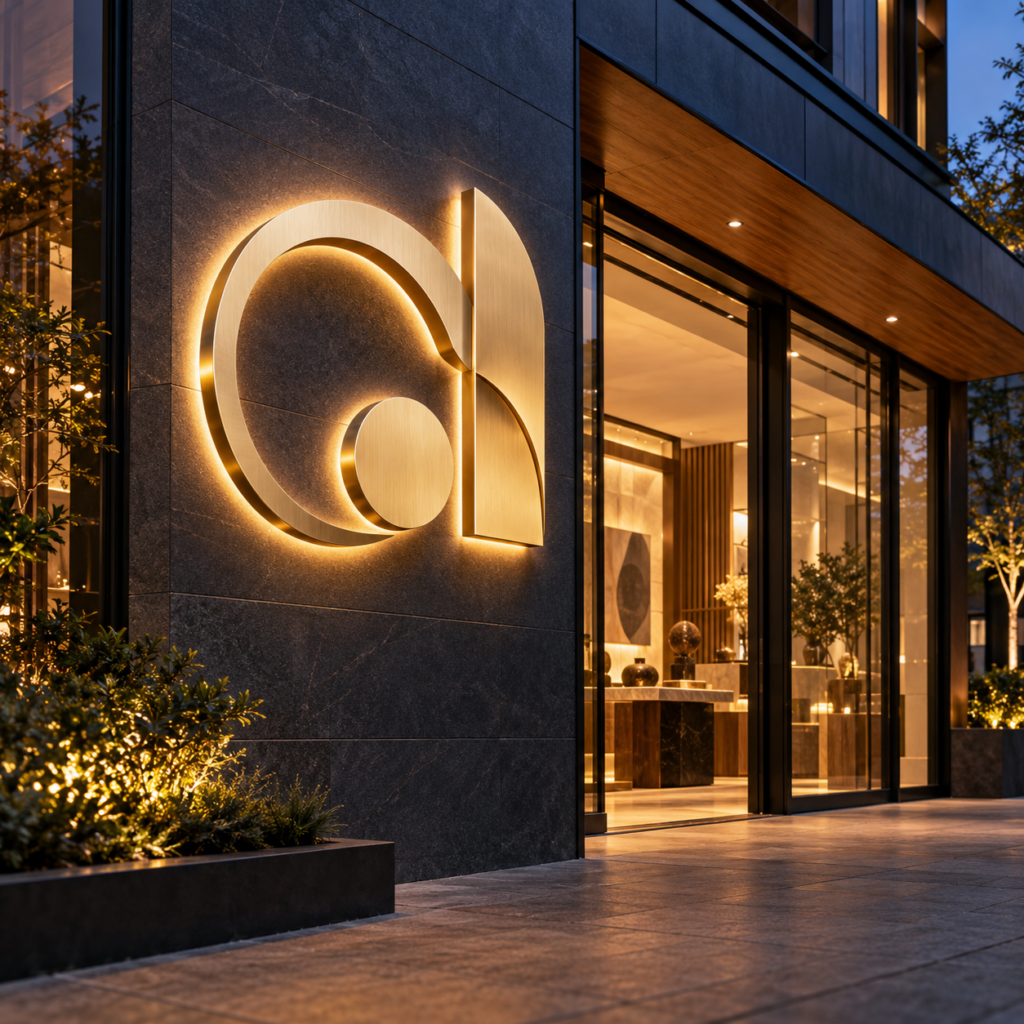
For example, a premium beauty brand may choose brushed stainless-steel letters with a subtle halo glow. A quick-service restaurant may need brighter front-lit letters that are clear from a moving vehicle. A nightlife venue may use pinpoint lighting or colour-changing effects to create a more expressive evening identity.
Choose a Sign Style That Matches the Brand Personality
Different types of retail brand signage create different impressions.
| Sign Style | Brand Impression | Suitable Applications |
|---|---|---|
| Front-lit channel letters | Direct, bright, high visibility | Retail façades, restaurants, shopping centres |
| Backlit metal letters | Refined, architectural, premium | Hotels, offices, beauty brands, luxury retail |
| Acrylic illuminated letters | Modern, colourful, approachable | Interiors, cafés, fashion and lifestyle stores |
| Logo light boxes | Clear, graphic-led, versatile | Storefronts, reception areas, wayfinding |
| RGB or pixel-lit signs | Dynamic, energetic, event-focused | Entertainment venues, gaming, pop-up campaigns |
| Perforated starry letters | Textured, memorable, night-focused | Bars, lounges, clubs, creative retail |
A sign should support the customer’s expectation of the business. A hotel may need calm and confidence; a bar may need atmosphere and curiosity; a retail chain may need instant recognition from a distance.
For bright, direct branding, explore front-lit LED channel letters. For a softer architectural result, see our backlit sign options.
Daytime Appearance Matters as Much as Night Lighting
Many buyers focus only on how a sign looks after dark. Illumination is important, but the sign is also visible for most of the day with the LEDs switched off.
The metal finish, face colour, letter depth, edge quality, mounting method, and relationship with the building façade all affect the daytime result.
Before approving branded storefront signs, review both conditions:
| Daytime Review | Night-Time Review |
|---|---|
| Does the finish match the building and brand palette? | Is the sign readable from the intended distance? |
| Are the letter edges, seams, and returns clean? | Is illumination even without visible hot spots? |
| Does the logo remain recognisable without lighting? | Does the lighting colour match the intended brand mood? |
| Are cables and fixings concealed where possible? | Is the brightness appropriate for the street and surroundings? |
A sign that only looks impressive at night may not carry the brand well during business hours. The strongest projects are designed for both views from the beginning.
Make Every Location Feel Like the Same Brand
For a business with more than one site, inconsistent signage can weaken recognition quickly.
One location may use bright white lighting, another may use warm white. One logo may be mounted directly to the wall while another sits on an oversized panel. Small changes can make customers question whether the locations are connected.
A practical signage specification should record:
- Approved artwork files
- Exact logo colours and finishes
- Letter height and depth ranges
- Lighting type and colour temperature
- Installation method
- Power-supply and cable requirements
- Approved material alternatives for indoor and outdoor locations
This does not mean every sign must be identical. A small mall unit and a large roadside façade may need different construction. The brand elements, however, should remain consistent.
HLW Sign can prepare production drawings for each project, showing dimensions, materials, lighting, mounting points, and cable exits before fabrication begins. This helps franchise owners, designers, and purchasing teams approve a repeatable standard.
Use Lighting to Be Seen, Not to Overpower the Brand
Lighting should strengthen the logo rather than distract from it.
For most long-term commercial signage, a stable and even light output is more valuable than extreme brightness. Customers should be able to read the sign comfortably, understand the logo shape, and recognise the brand without glare.
Common choices include:
- Warm white for hospitality, restaurants, and premium interiors
- Neutral or cool white for crisp retail visibility
- Brand-colour acrylic faces for direct recognition
- RGBW lighting for locations that need dynamic scenes plus a clean white mode
- Controlled pinpoint lighting for feature signs and nightlife façades
If a brand needs changing colour scenes for campaigns or events, read What Is RGB Lighting? before choosing the controller and LED system.
For a more textured night-time identity, starry effect channel letters can create a distinctive logo without relying on rapid flashing or excessive motion.
Specify Materials for the Real Installation Environment
A visually strong sign still needs to perform outdoors.
The correct material depends on the installation location, sign size, wall structure, local climate, maintenance access, and expected service life. Stainless steel, aluminium, acrylic, ACP, and coated metal all have useful roles when selected correctly.
For exterior commercial channel letters, confirm:
- Indoor, covered outdoor, or full outdoor use
- Rain, heat, wind, salt air, or dust exposure
- Wall material and fixing points
- Local voltage and electrical connection
- Driver location and future service access
- Cable-entry position and drainage
- Required permits or landlord approval
The IEC guide to IP ratings explains how resistance to dust and water is classified. However, an IP rating is only one part of a reliable sign. Good drainage, sealed cable entries, suitable mounting, and accessible electrical components are equally important.
For more detail on electrical planning, see our guide to outdoor sign power supplies.
Build Brand Value Into the Manufacturing Process
A branded sign should not be treated as a generic product with a logo added at the end. The fabrication process should protect the visual details that make the brand recognisable.
HLW Sign manufactures branded storefront signs, custom illuminated logo signs, channel letters, light boxes, and architectural signage from one set upward.
With more than 15 years of production experience, an approximately 3,250 m² source factory, and exports to over 40 countries, we help buyers convert logo artwork into practical, export-ready signage. Our team can support material selection, fabrication drawings, lighting specification, power planning, and packing for international delivery.
For suitable projects, we provide:
- Free design support and production drawings
- Custom metal, acrylic, and lighting options
- 24-hour lighting tests
- Pre-shipment photos or videos
- Export-safe wooden-crate packing for larger signs
- Two-year LED-module warranty and one-year power-supply warranty
To request a quotation, send your vector logo, dimensions or façade measurements, installation photos, destination country, local voltage, preferred finish, and lighting requirements through our contact page.
FAQs
What are branded storefront signs?
Branded storefront signs are signs designed around a business’s logo, colours, typeface, lighting style, and visual identity. They help customers identify the business and recognise it across different locations.
Which sign type is best for a retail brand?
Front-lit channel letters are often suitable for high visibility, while backlit metal letters can create a more premium appearance. The best choice depends on viewing distance, building style, operating hours, and brand personality.
Can custom illuminated logo signs be used outdoors?
Yes. The letters, LEDs, power supply, wiring, drainage, cable sealing, and mounting system must be specified for the actual outdoor environment.
How can a chain keep signage consistent across locations?
Create an approved signage specification covering artwork, finishes, lighting, dimensions, mounting methods, and electrical requirements. Each location can then use the same brand standards while adapting to its available space.
What do you need for a branded sign quotation?
Please provide vector artwork, overall dimensions or installation photos, quantity, destination country, local voltage, indoor or outdoor use, preferred materials, lighting colour, and target delivery date.