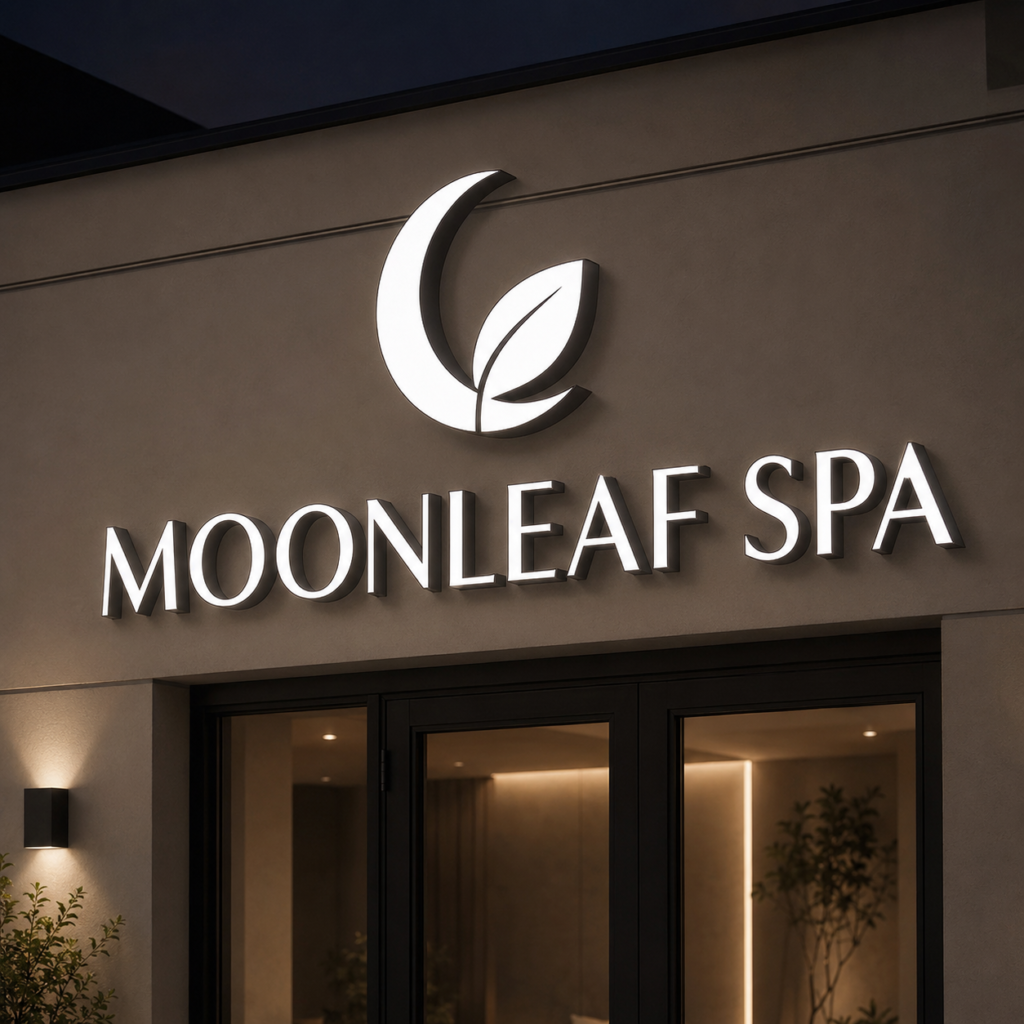
When picking out a custom sign, choosing the right LED sign depends on your location, viewing distance, brand style, and installation environment. A storefront may require a bright LED sign for high‑visibility street exposure, while an office or reception area typically works better with softer, more professional‑toned lighting.
This guide compares the main sign types and helps you choose a custom sign that matches your business goals, budget, and maintenance needs.
Start With the Result You Want
Before comparing materials or prices, decide what the sign must achieve. Most buyers have one or more of the following goals:
- Make the storefront easy to find at night
- Create a premium reception or interior feature wall
- Show accurate brand colors and logo details
- Attract attention with changing colors or animation
- Display detailed printed graphics, menus, or service information
- Withstand rain, sunlight, wind, humidity, or coastal air
- Reduce installation time at the project location
- Keep future maintenance simple
A successful custom sign begins with these practical questions. If the goal is clear, it becomes much easier to choose the right lighting structure rather than paying for effects that do not improve the final result.
Quick Comparison: Which Illuminated Sign Should You Choose?
| Sign type | Best visual result | Ideal applications | Main consideration |
|---|---|---|---|
| Front-lit channel letters | Bright, direct nighttime visibility | Storefronts, malls, restaurants, commercial buildings | Face color and brightness must suit viewing distance |
| Backlit or halo-lit letters | Soft, premium glow around metal faces | Offices, hotels, spas, clinics, reception walls | Requires a suitable wall and space behind the letters |
| Front-and-back-lit letters | Strong face light plus decorative halo | High-end retail, entertainment venues, feature facades | More wiring and a deeper structure may be required |
| RGB or RGBW letters | Programmable colors and dynamic effects | Bars, clubs, events, gaming, entertainment | Controller type and lighting program should be confirmed |
| Neon-style sign | Artistic lines and flexible shapes | Cafés, salons, social-media walls, boutiques | Fine details and minimum bending radius affect production |
| LED light box | Even lighting with printed or cut-out graphics | Menus, logos, projecting signs, retail information | Single-sided or double-sided structure must be selected |
| Perforated starry letters | Sparkling points of light on metal surfaces | Weddings, entertainment, landmark displays | Hole density, brightness, and viewing angle affect the result |
| Infinity mirror sign | Deep, tunnel-like visual effect | Clubs, gaming rooms, events, creative retail | Works best where the sign can be viewed at close range |
This table provides a quick starting point. The sections below explain when each LED sign type is most effective and what buyers should confirm before production.
1. Front-Lit Channel Letters: Best for Maximum Visibility
Front-lit channel letters use internal LEDs to illuminate an acrylic face. Stainless steel, galvanized steel, or aluminum can be used for the returns and back structure.
This business sign offers high brightness and clear long-distance visibility, making it ideal for storefronts, restaurants, pharmacies, salons, shopping malls, and office buildings. Buyers can customize the face color, printed graphics, day/night acrylic, light color, letter depth, and mounting method. For outdoor use, choose UV-resistant acrylic, waterproof LEDs, drainage, and corrosion-resistant metal.
2. Backlit Metal Letters: Best for a Premium Brand Image
Backlit metal letters use metal faces with LEDs directed toward the wall, creating a soft halo around each letter or logo.
This custom sign is suitable for hotels, offices, beauty salons, clinics, jewelry stores, restaurants, and reception walls. Stainless steel surfaces can be brushed, mirror-polished, electroplated, or painted in gold, rose gold, bronze, black, silver, and other colors. A smooth, light-colored wall provides the most even halo, so buyers should provide wall photos and confirm the mounting distance before production.
3. Front-and-Back-Lit Letters: Best for Visibility and Depth
Front-and-back-lit letters combine a bright acrylic face with decorative halo lighting behind the sign.
This structure works well for hotels, restaurants, casinos, bars, entertainment venues, and premium retail stores. The front and rear light can use matching or contrasting colors, including RGB effects. Because this LED sign requires a deeper structure and additional wiring, buyers should confirm the total depth, power system, wall spacing, and maintenance access.
4. RGB and RGBW Signs: Best for Color-Changing Effects
RGB LED signs support multiple colors and effects such as static lighting, gradients, flashing, chasing, and synchronized programs. RGBW adds a dedicated white channel for cleaner white illumination.
This custom sign is ideal for nightclubs, bars, gaming centers, events, amusement venues, and entertainment brands. Before ordering, confirm:
- RGB or RGBW lighting
- Static, gradient, chasing, or addressable effects
- Remote, app, DMX512, TTL, or SPI control
- Indoor or outdoor controller
- Power-off memory and synchronization functions
Choose dynamic lighting only when it matches the brand. Professional offices and luxury stores may benefit more from fixed warm-white or cool-white lighting.
5. Neon-Style Signs: Best for Creative Shapes
Custom LED neon signs use flexible silicone to create smooth illuminated lines for text, icons, outlines, and simple logos.
They are popular in cafés, spas, nail salons, restaurants, weddings, boutiques, and social-media spaces. This type of LED sign is lightweight, decorative, and available in many colors. Very small text, sharp corners, or complex artwork may need simplification. Buyers should confirm the silicone width, backing material, light color, cable position, and installation method.
6. LED Light Boxes: Best for Graphics and Double-Sided Visibility
Custom LED light boxes are suitable for detailed logos, printed images, menus, and service information that cannot easily be divided into individual letters.
Single-sided light boxes are normally wall-mounted, while double-sided projecting signs can be seen by pedestrians approaching from both directions. This business sign can be produced in circular, square, rectangular, or custom shapes. Confirm the face material, printing method, frame color, sign depth, drainage, bracket, and maintenance access before production.
7. Perforated Starry Letters: Best for Sparkling Effects
Perforated LED letters use small holes in the metal face or sides to create bright points of light and a sparkling effect.
This custom sign is suitable for rooftop letters, weddings, landmarks, shopping centers, clubs, events, and large outdoor projects. Single-color, RGB, and RGBW lighting are available. Buyers should confirm the hole size, spacing, perforated area, light density, viewing distance, drainage, and waterproof structure.
8. Infinity Mirror Signs: Best for Immersive Displays
Infinity mirror signs combine a semi-reflective front, mirrored back, and internal LEDs to create a deep tunnel-like effect.
This LED sign is ideal for clubs, gaming rooms, exhibitions, events, and creative retail spaces. It works best at close viewing distances where the depth effect is clearly visible. Buyers should confirm the sign thickness, mirror materials, lighting program, controller, ventilation, mounting position, and indoor or outdoor rating.
Indoor or Outdoor: The Most Important Technical Decision
An indoor sign and an outdoor sign may look similar in a rendering, but the internal construction requirements can be very different. An exterior business sign must withstand rain, ultraviolet exposure, temperature changes, dust, wind, and sometimes salt air.
For standard exterior projects, 304 stainless steel is widely used because it provides good corrosion resistance and fabrication performance. For coastal, island, poolside, or highly humid locations, 316 stainless steel may be more appropriate. The Australian Stainless Steel Development Association recommends grade 316 or an equivalent corrosion-resistant grade as a minimum within five kilometers of the surf in its guidance on preventing coastal corrosion.
Outdoor LED modules and electrical components should be selected according to the installation environment. Waterproofing is not only about applying sealant. A reliable exterior LED sign also needs suitable drainage, cable protection, ventilation where required, protected power supplies, and an installation method that prevents water accumulation.
For the North American market, electrical construction and component selection may need to follow relevant standards and local requirements. UL Solutions’ electric sign guidance references UL 48 for electric signs, UL 879 for sign components, UL 879A for LED sign and retrofit kits, and National Electrical Code considerations.
Choose Brightness and Color Temperature for the Environment
More brightness is not always better. A sign installed high on an exterior building may need strong illumination, while a reception-wall sign viewed at close range should feel comfortable and refined.
Common white-light choices include:
- 2700–3200K warm white: welcoming, luxurious, and suitable for hotels, spas, restaurants, and gold metal finishes
- 4000–4500K neutral white: balanced and natural for offices, retail, and general commercial use
- 6000–6500K cool white: crisp and highly visible for exterior facades, clinics, technology brands, and modern stores
- 8000–10000K icy white: cooler blue-white appearance for selected entertainment or highly modern applications
The face color, wall color, surrounding lighting, and viewing distance all affect the final result. Ask for a nighttime rendering or lighting sample when color temperature is critical to the project.
LEDs are popular in signage because they can provide long operating life and flexible color control. The U.S. Department of Energy’s LED basics notes that good-quality white LED products may have an expected useful life of 30,000 to 50,000 hours or longer, although drivers, heat management, operating conditions, and overall component quality also affect real-world reliability.
Match the Sign Size to the Viewing Distance
A sign should be designed for the distance from which customers will see it. Small details that look perfect on a computer screen may disappear after installation. Narrow strokes also leave less space for LEDs, wiring, fasteners, and internal structure.
When planning a custom sign, provide:
- The total available installation area
- The maximum width and height
- The approximate viewing distance
- The installation height above ground
- A straight-on photo of the wall or facade
- A wider photo showing the surrounding street or interior
The manufacturer can then recommend letter height, stroke width, spacing, depth, LED density, and mounting structure. For a long-distance exterior business sign, simple typography and strong contrast usually perform better than thin or highly decorative lettering.
Consider Daytime Appearance, Not Only the Lighting Effect
Many buyers focus on how the sign looks at night and forget that it may remain switched off for much of the day. The material and surface finish therefore matter as much as the LED color.
Stainless steel can be brushed, mirror-polished, electroplated, painted, or given antique copper and bronze effects. Acrylic faces can be white, colored, black-and-white day/night material, UV printed, or layered for special effects. A carefully selected finish helps the LED sign look consistent with the architecture even when it is not illuminated.
For premium interiors, brushed champagne gold with warm-white backlighting creates a soft and elegant result. For modern exterior stores, black-painted returns with bright white faces provide strong contrast. For nightlife and entertainment, dark metal shells with RGB lighting can make the colors appear richer.
Select an Installation Method Before Production
The installation method affects the sign structure, wiring, wall holes, maintenance access, and shipping configuration. Common options include:
- Individual stud mounting: clean appearance with each letter fixed directly to the wall
- Standoff mounting: creates space behind backlit letters for an even halo
- Raceway mounting: groups wiring and power components in a metal support channel
- Back-panel mounting: keeps letter spacing accurate and reduces on-site assembly
- Hanging or projecting mounting: suitable for double-sided light boxes and pedestrian traffic
- Freestanding support: used for rooftop letters, event letters, and ground installations
If the wall cannot be drilled, tell the manufacturer before approving the design. Glass, stone, corrugated metal, wood, concrete, composite panels, and insulated walls may require different anchors or support structures.
Local rules should also be checked before production. Sign size, brightness, projection, electrical work, and installation position may require approval. The International Sign Association provides sign permitting resources for businesses and sign professionals in the United States, but final requirements are determined by the relevant local authority.
Compare Total Value, Not Only the Purchase Price
Two quotations for the same-looking business sign may include very different materials and components. A low initial price can become expensive if the sign is difficult to install, uses an unsuitable metal grade, has uneven lighting, or requires frequent maintenance.
When comparing quotations, check:
- Stainless steel, aluminum, galvanized steel, or acrylic specifications
- Metal and acrylic thickness
- Indoor or outdoor rating
- LED brand, voltage, color temperature, and waterproof level
- Power supply and controller specifications
- Sign depth and internal structure
- Surface finish and protective coating
- Installation accessories and template
- Packaging method
- Testing and warranty terms
A reliable custom sign quotation should clearly explain what is included. If two prices differ significantly, compare the technical specification before deciding which offer provides better value.
What Information Should You Send for an Accurate Quote?
The more complete your project information is, the more accurate the design and quotation will be. Prepare the following details:
- Logo or artwork in AI, EPS, PDF, SVG, or high-resolution image format
- Required sign width and height
- Indoor or outdoor installation
- City, country, and climate conditions
- Wall or mounting-surface material
- Preferred illumination type and color
- Daytime finish or brand color
- Installation height and viewing distance
- Voltage and local electrical requirements
- Reference photos showing the desired effect
If you are unsure which structure is suitable, describe the customer experience you want to create. A professional manufacturer can convert that goal into a practical LED sign specification.
Why Choose a Fully Customized Sign?
An off-the-shelf product may be suitable for temporary decoration, but commercial branding often needs accurate dimensions, colors, materials, lighting, and mounting points. A professionally manufactured custom sign can follow the actual logo artwork and installation environment instead of forcing the buyer to accept a standard size or structure.
HLW Sign provides customized metal letters, illuminated logos, channel letters, light boxes, neon-style signs, RGB products, infinity mirror signs, and other commercial signage. With more than 15 years of production experience, our team can assist with design development, material selection, lighting options, installation planning, and production drawings.
Products can be manufactured with 201, 304, or 316 stainless steel, aluminum, galvanized steel, acrylic, PVC, ACP, and other materials according to the project. Lighting options include single-color LEDs, RGB, RGBW, and programmable systems. Before shipment, illuminated products undergo a 24-hour lighting test, and photos or videos can be provided for confirmation.
The purpose of customization is not to make the business sign unnecessarily complicated. It is to ensure that the final product fits the brand, installation site, budget, and expected service conditions.
Final Recommendation
Choose front-lit letters when maximum visibility is the priority. Choose backlit metal letters when the brand needs a premium and comfortable halo effect. Use front-and-back illumination when you need both brightness and depth. Select RGB or RGBW for entertainment and changing-color environments, neon for creative line designs, a light box for detailed graphics, perforated letters for a sparkling effect, and an infinity mirror sign for an immersive close-range display.
Most importantly, choose the sign according to its actual environment. Confirm the viewing distance, wall material, weather exposure, local regulations, installation method, power system, and maintenance access before approving production.
The right LED sign should help customers notice, recognize, and remember your business. If you need help comparing structures, contact HLW Sign with your logo, dimensions, installation photos, and preferred lighting effect. We can recommend a practical custom sign solution and prepare a free design proposal for your project.