
Introduction: Why Coastal Signage Requires Professional Compliance Standards
Coastal environments create some of the most challenging conditions for outdoor signage. Salt spray, airborne chlorides, high humidity, UV exposure, and temperature changes can significantly reduce the lifespan of outdoor signs if the correct materials and manufacturing processes are not selected.
For beachfront hotels, resorts, marinas, commercial buildings, and luxury residential developments, choosing the right signage supplier requires more than checking appearance and price. A complete coastal signage specification should include material certification, corrosion protection procedures, fastening systems, electrical compliance, and installation documentation.
Among premium outdoor signage solutions, 316 stainless steel signs are widely selected for coastal applications because they provide better resistance against chloride corrosion compared with standard stainless steel grades.
However, using 316 stainless steel alone does not guarantee long-term performance. The complete manufacturing process, surface treatment, hardware selection, and compliance documentation all determine whether a sign can withstand demanding marine conditions.
This guide provides a professional coastal signage compliance checklist to help architects, contractors, and project owners evaluate suppliers before production approval.
1. Material Compliance: Certification Requirements for 316 Stainless Steel Signs
Material verification is the foundation of any reliable coastal signage project.
For locations exposed to salt air and marine environments, 316 stainless steel signs are usually recommended because Type 316 stainless steel contains molybdenum, which improves resistance against localized corrosion caused by chloride exposure. 316 stainless steel typically contains approximately 2–3% molybdenum, helping improve resistance to pitting corrosion in marine environments.
However, professional projects should not rely only on a supplier statement. A proper coastal signage specification should require complete material traceability.
Required Material Documents:
316 / 316L Stainless Steel Certificate
The supplier should provide:
- Material Test Certificate (MTC)
- Stainless steel grade confirmation
- Chemical composition report
- Heat number traceability
- Manufacturer information
Applicable Stainless Steel Standards
ASTM A240
ASTM A240 is commonly referenced for stainless steel plates, sheets, and strips used in industrial and architectural applications.
For coastal projects, buyers should request confirmation that the supplied stainless steel complies with the required grade specification.
EN 10088
For European coastal signage projects, EN 10088 stainless steel standards are commonly referenced to verify stainless steel grades, chemical composition, and technical delivery requirements. When specifying 316 stainless steel signs, buyers should request material documentation confirming the stainless steel grade, such as 1.4401 (316) or 1.4404 (316L), together with a material test certificate (MTC).EN standards are developed and maintained by the European Committee for Standardization
Recommended documentation:
✓ EN 10088 material declaration
✓ Inspection certificate when required
✓ Grade confirmation for 316/316L
A professional supplier should clearly identify whether the material used is genuine 316/316L rather than lower-cost alternatives.
2. Surface Treatment Compliance: Passivation After Welding
Even high-quality stainless steel can experience corrosion if fabrication processes are not properly controlled.
During welding, cutting, and grinding, the stainless steel surface can lose its protective passive layer. For this reason, professional manufacturers of marine grade stainless steel signs should include post-welding cleaning and passivation procedures.
Welding Treatment Records
A complete manufacturing file should include:
- Welding process information
- Surface cleaning procedure
- Grinding and polishing records
- Inspection records
Passivation Treatment Documentation
Passivation helps restore the protective chromium oxide layer on stainless steel surfaces.
For premium marine grade stainless steel signs, buyers should request:
- Passivation process record
- Chemical treatment information
- Inspection report
Passivation Quality Inspection: Blue Point Test
For high-end coastal projects, passivation quality can be verified through inspection methods such as the blue point test (copper sulfate test).
The inspection report should include:
- Testing method
- Inspection date
- Tested area
- Result confirmation
This requirement is especially important for:
- Oceanfront hotels
- Yacht clubs
- Luxury resorts
- Marina signage projects
3. Fastener Compatibility: Prevent Galvanic Corrosion
A common reason coastal signs fail is not the stainless steel panel itself, but incorrect hardware selection.
When different metals are connected in a salty environment, galvanic corrosion may occur.
A complete coastal signage specification should define fastener requirements.
Recommended Fastener Solution
Option 1: Matching Stainless Steel Grade
Best practice:
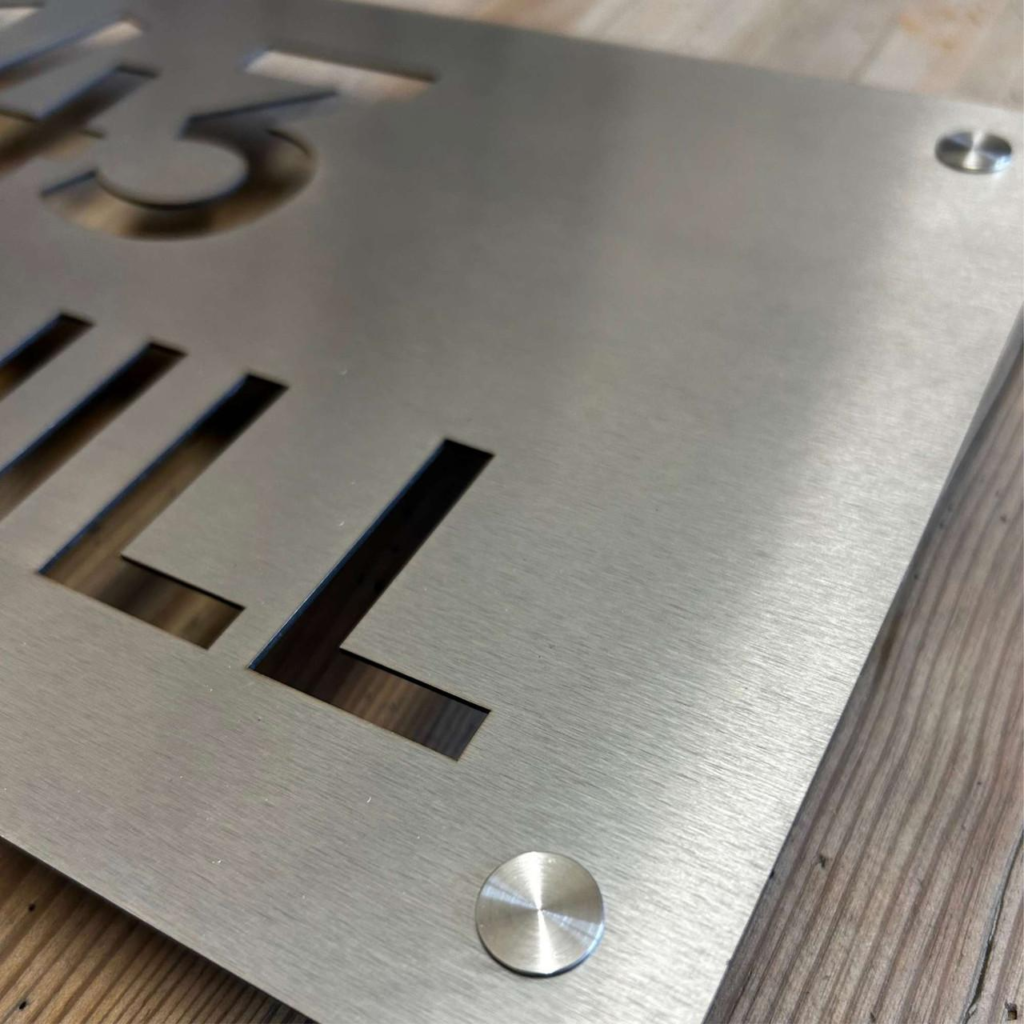
316 stainless steel sign body
+
316 stainless steel screws and brackets
Using the same stainless steel grade reduces compatibility risks.
Option 2: Electrical Isolation System
If different materials must be combined, suppliers should provide isolation protection:
Examples:
- Nylon washers
- EPDM gaskets
- Insulation sleeves
- Isolation pads
Required documents:
☐ Fastener specification
☐ Isolation method
☐ Installation instructions
4. EU Export Compliance Requirements for Coastal Signage
European projects often require detailed technical documentation.
A complete coastal signage compliance checklist should include:
CE Declaration of Conformity
Required information:
- Manufacturer details
- Product identification
- Applicable directives
- Declaration date
Declaration of Performance (DoP)
Where applicable, suppliers should provide performance documentation according to relevant European construction requirements.
EN 12899-1 Reference
Depending on the signage application, EN 12899-1 may be referenced for fixed vertical road traffic signs and related products.
Project owners should confirm:
- Applicable standards
- Testing requirements
- Certification responsibilities
Certification Body Information
When third-party certification applies, documents should include:
- Certification body name
- Identification number
- Certificate validity
5. North American Compliance Requirements
For coastal projects in the United States and Canada, buyers should confirm local requirements before production.
A professional coastal signage specification may include:
UL Documentation
Depending on the product type, UL-related documentation may be requested.
The buyer should confirm:
- Whether the certification covers the complete product assembly
- Whether electrical components are included
- Whether outdoor conditions are considered
Salt Spray Testing Report
For demanding coastal applications, suppliers may provide corrosion testing reports.
The report should identify:
- Testing standard
- Testing duration
- Material combination
- Surface condition after testing
Salt spray testing helps evaluate:
- Coating performance
- Surface protection
- Corrosion resistance
6. Installation Documentation Requirements
A high-quality coastal sign manufacturer should provide complete installation documentation.
The installation package should include:
Installation Manual
Including:
- Mounting structure
- Fixing locations
- Screw specifications
- Electrical connections
Isolation Requirements
The installation guide should clearly explain:
- Where insulation materials are required
- How different metals should be separated
- Waterproof sealing requirements
Maintenance Manual
Coastal environments require regular maintenance.
A maintenance guide should include:
- Cleaning recommendations
- Inspection frequency
- Corrosion prevention methods
7. Final Coastal Signage Compliance Checklist
Before approving production, review the following:
Material
☐ 316 / 316L stainless steel certificate
☐ ASTM A240 compliance
☐ EN 10088 declaration
☐ Molybdenum content confirmation (2–3%)
Surface Treatment
☐ Welding treatment records
☐ Passivation report
☐ Blue point test or equivalent inspection
Hardware
☐ 316 stainless steel fasteners
☐ Isolation solution when required
Export Compliance
☐ CE documentation
☐ Performance documentation when applicable
☐ UL-related documents when required
☐ Salt spray testing report
Installation
☐ Installation manual
☐ Mounting details
☐ Maintenance guide
Conclusion: Compliance Determines the Lifetime of Coastal Signage
For marine and coastal projects, signage quality depends on much more than the visible design.
The combination of correct materials, professional fabrication, corrosion protection, and complete documentation determines whether a sign can maintain its appearance and performance over many years.
Choosing 316 stainless steel signs with proper certification and manufacturing control provides a reliable solution for demanding environments.
For architects, contractors, and developers looking for durable marine grade stainless steel signs, a complete coastal signage specification is the key step to reducing maintenance costs and avoiding premature replacement.
At HLW Sign, we manufacture custom illuminated signage including:
- 316 stainless steel channel letters
- Marine environment outdoor signs
- LED illuminated logo signs
- Custom coastal signage solutions
We support professional projects with:
- Material certificates
- Engineering drawings
- Production inspection records
- Installation templates
- Export compliance documents